

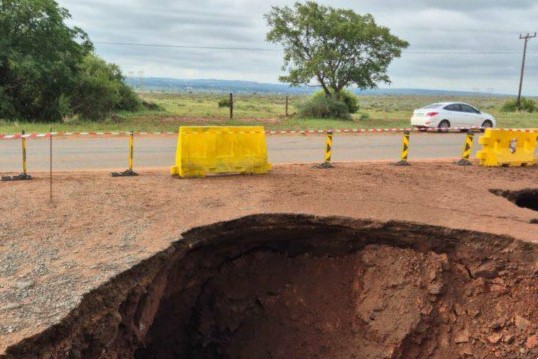
CARLETONVILLE – The formation of new sinkholes on and alongside the R500 outside Carletonville in Gauteng has collapsed more than 80% of a section of this road, leading to traffic being redirected around the affected area.
It is alleged that heavy rain over recent weeks contributed to the rapid formation of the sinkholes on this specific stretch of the R500 between Carletonville and the N14 four-way stop.
The sinkholes are located near the turn-off to Goudvlakte and in the vicinity of Red Cap Ranch Lodge, approximately one kilometre from Rooipoort Primary School.
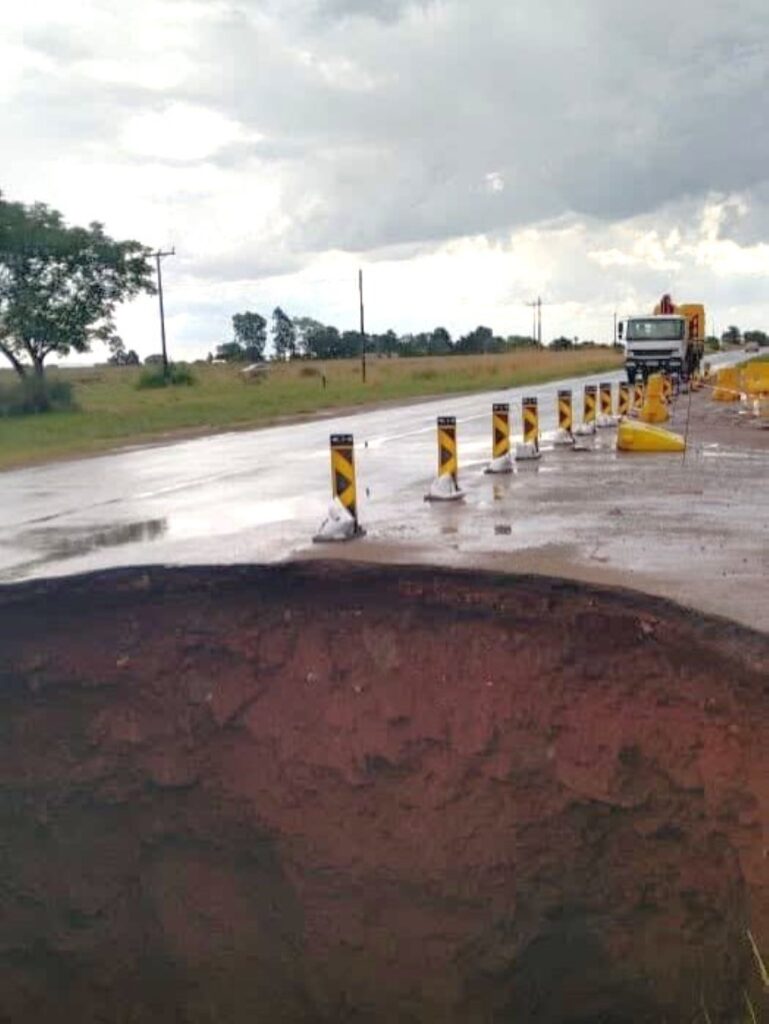
Merafong Local Municipality has partially closed the affected section of the R500, and motorists are advised to adhere to traffic signs and warnings, as some of the sinkholes are extremely deep and wide.
Growing safety crisis
The latest incident highlights a deepening geological emergency across the region, where dolomitic soil makes sinkhole formation a persistent threat. The Freedom Front Plus has called for more extensive closure of the R500, warning that current restrictions do not adequately protect public safety.
“The area around the R500 is known for its dolomitic soil, so the formation of additional sinkholes cannot be ruled out,” party representatives stated, urging extreme caution during the rainy season when sinkholes expand rapidly.
ALSO READ: Holiday roads ahead: Eight essential tips to protect your car – and your family – this festive season
This latest collapse on the R500 forms part of a broader crisis affecting Merafong Local Municipality, which encompasses Carletonville, Fochville, and Wedela. The township of Khutsong alone has recorded more than 209 sinkholes, resulting in property damage, school evacuations, and the closure of a day-care centre.
Gauteng Premier Panyaza Lesufi visited the region in October and is reportedly working with national government and local authorities to develop a comprehensive disaster-management plan. However, political parties have criticised the slow pace of response.
Urgent action required
Evert du Plessis, DA MPL and Gauteng spokesperson for Roads and Transport, has described the situation as “a major safety risk and a threat to local economic activity,” demanding immediate intervention rather than continued delays.
Du Plessis said the road is not closed, but traffic is redirected around the affected area.
Residents of affected areas, particularly Khutsong, are living in fear as sinkhole activity continues to ravage their communities. Local and provincial governments have requested that the National Department of Cooperative Governance and Traditional Affairs declare the municipality a disaster area.
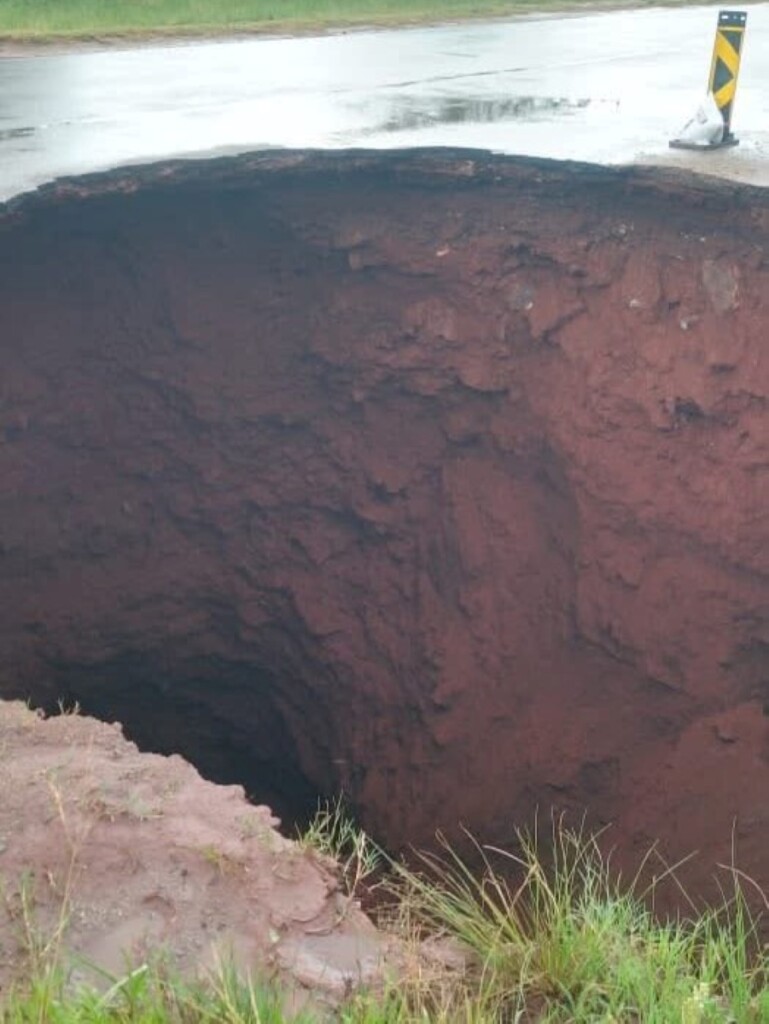
The geological instability stems from the region’s dolomite bedrock with accompanying cave systems, which dissolve easily when exposed to water, exacerbated by heavy rainfall and damage from historical mining activities.
Residents of the Goudvlakte area reportedly alerted authorities on 3 December to a large sinkhole that had opened next to the R500 between Carletonville and the N14. In May, authorities were made aware of a sinkhole that had opened beneath trees next to the gravel road leading to Goudvlakte smallholdings. The sinkhole stretched under the R500 and collapsed further due to recent rain.
Traffic advisory
Motorists travelling through the area are urged to:
- use alternative routes such as the N14;
- obey all road closure signs;
- follow instructions from traffic officers; and
- exercise extreme caution in wet conditions.
Historical tragedy
During the night of 3 August 1964, a sinkhole in the former mining village of Westdene, Blyvooruitzight, buried the entire Oosthuizen family and their domestic worker alive. Westdene, situated some 5,5 kilometres south of Carletonville as one of four mining villages at Blyvooruitzight Gold Mine, was consequently abandoned.
The tragedy involved Johannes Marthinus Oosthuizen (36), his wife Hester, their three children Jacoba (12), Johannes (8), and Marianne (6), and their live-in domestic worker, Elizabeth.
Their house, a neighbouring house, and a car were all swallowed by the sinkhole, which was approximately 100 metres wide. Despite extensive rescue efforts, no trace of the victims or their home was ever recovered, as the debris fell to an unknown depth. A monument was later erected in their memory overlooking the area.
The sinkhole was attributed to the unstable dolomitic terrain in the region, exacerbated by mining dewatering practices and leaking water infrastructure. The incident remains one of the most tragic sinkhole events in South African history.




You must be logged in to post a comment.