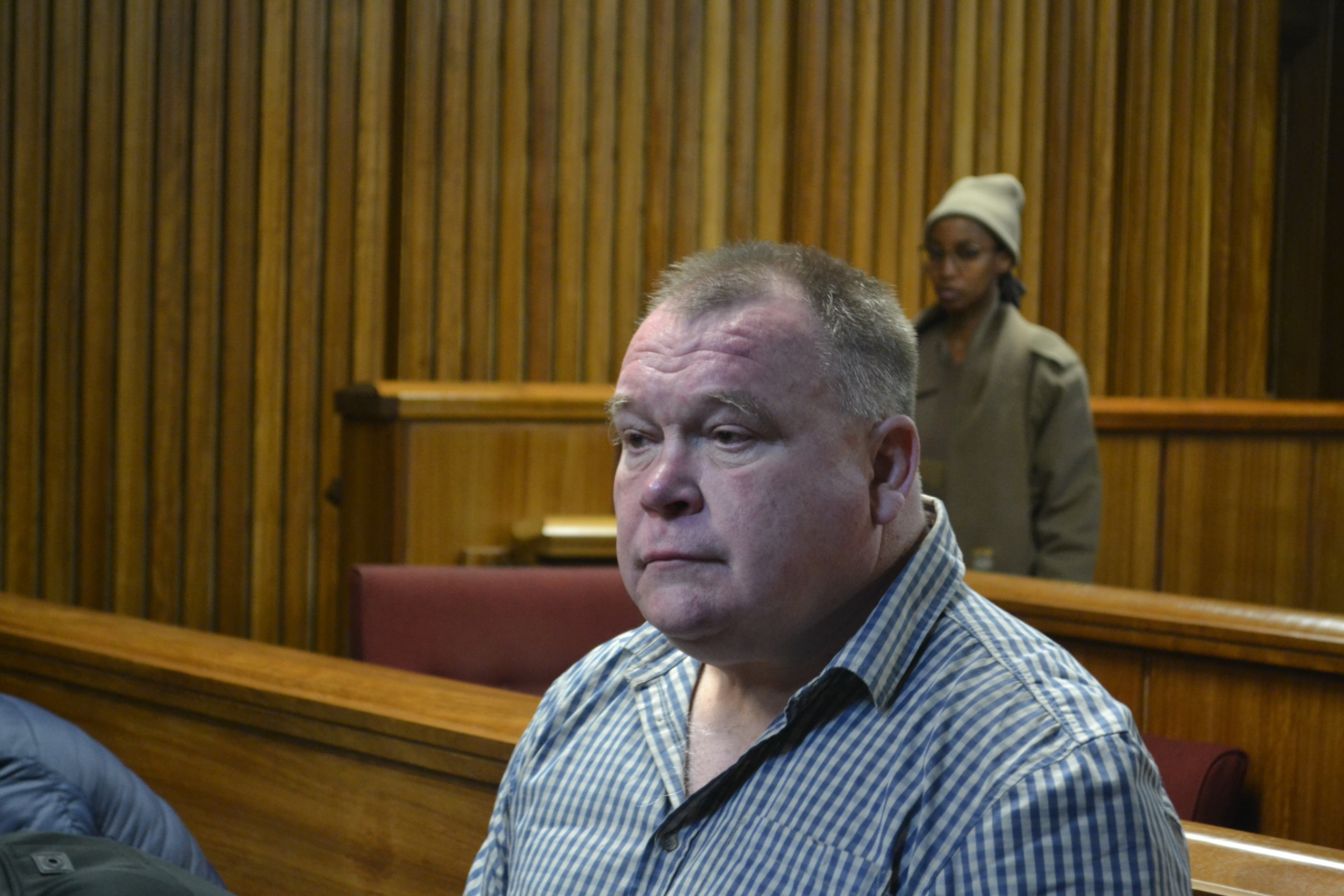
In court proceedings that took place recently on 28 October at the Gqeberha High Court, prosecutor Marius Stander painted a picture of appellant Rob Evans as an “inherently violent person” with a clear pattern of aggressive behavior that led to the brutal murder of his partner Vanessa van Rensburg on Easter weekend.
Stander argued why the lower court’s judgement should be upheld, emphasising that the evidence clearly demonstrates premeditation and a history of domestic violence.
Since May 9, the 58-year-old businessman has been held in police custody after being arrested in Newton Park in connection with the alleged murder of his 36-year-old girlfriend, Vanessa van Rensburg, which occurred at his holiday home in Oyster Bay during Easter weekend.
As previously reported by the Express, Evans faces four charges, including murder, attempted murder, kidnapping, and defeating the ends of justice.
Stander outlined Evans’ propensity for violence, questioning how someone without aggressive tendencies ends up getting into physical altercations in restaurants around Gqeberha. The prosecutor argued that Evans was on a “self-destructive mission from February to April,” engaging in multiple violent incidents leading up to the murder of the Gqeberha mother of two.
“We cannot allow that sort of behavior to be made out to be normal,” Stander emphasised to the court.
Commenting on an incident that occurred earlier in the year at their shared Walmer cottage, prior to Vanessa’s death. “It is not normal for your partner to end up locked up in a vehicle. It is not normal for your partner to jump out of a vehicle.”
Stander argued that Evans’ refusal to provide any account of the murder night was telling. While Evans was “always happy to state how Vanessa was always throwing glasses,” he maintained a strict “no comment” stance regarding the murder that occurred on 19 April.
“He is happy to give a version of when Vanessa jumped out the car in February, but not of the night she was murdered,” Stander told the court. “Why doesn’t he want to tell what happened in this house?”
The prosecutor highlighted an inconsistency: Evans acknowledged one rib injury from the incident but refused to explain the other 22 of the 23 total injuries found during Vanessa’s post-mortem examination.
“What does that tell us?” Stander asked. “Evans chooses not to comment about the 22 injuries. The answer is obvious.”
Stander reminded the court that gender-based violence “happens behind closed doors,” making it difficult for victims to speak out. He described the relationship as “sick” and suggested it was “a question of time before somebody gets killed.”
The prosecutor noted that even Evans’ own brother “was not shocked that Vanessa was dead” given the appellant’s alleged violent history.
Describing the scene, Stander said there was “blood everywhere” that “looked like a seagull had its leg amputated and flew all over the place.” He questioned who had washed away some of the blood stains and emphasised that Evans possessed “intimate knowledge about what happened in that house.”
Stander argued that the murder was planned, supported by Evans’ actions prior to the killing. He noted that by 22:00, Vanessa was dead, but Evans didn’t call the security company until 01:30.
“It can’t be anything else besides premeditated murder,” Stander concluded.