After a week of confusion, controversy, and scathing ministerial criticism, authorities have finally confirmed that the 2026 National High/LSEN Schools Athletics Championships will proceed, just not when or where originally planned.
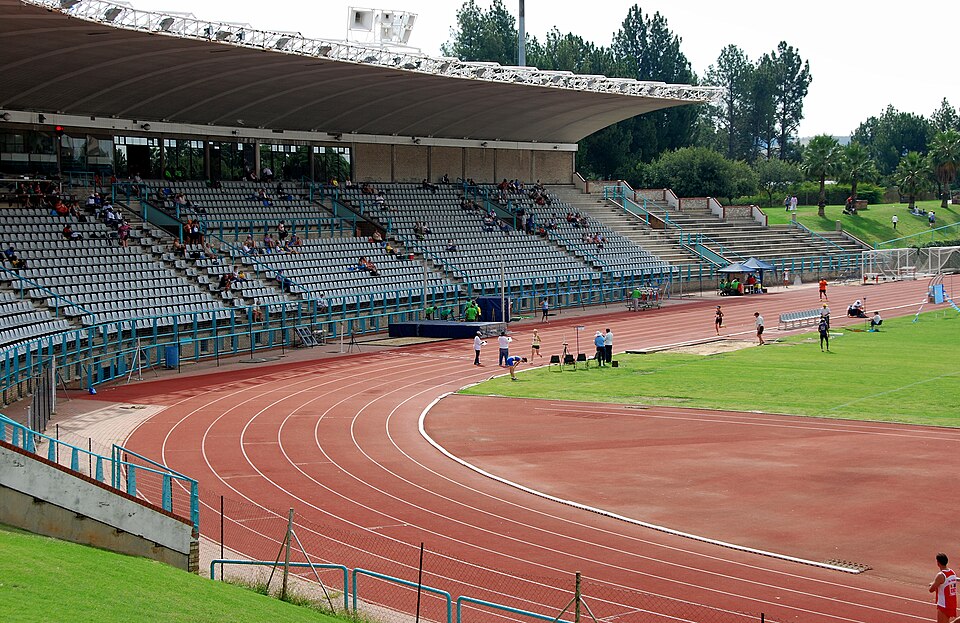
The championships will now take place from 29 April to 2 May at Pilditch Stadium in Tshwane, with North West Province remaining the official host and Gauteng providing operational support. The announcement came via a joint media release from the Department of Basic Education (DBE), the Department of Sport, Arts and Culture (DSAC), and South African Schools Athletics (SASA), bringing relief to thousands of athletes and families left in limbo by last week’s abrupt postponement.
“Absolute rubbish” – Minister’s fury
The resolution follows days of fierce backlash, including an extraordinary public rebuke from Sport, Arts and Culture Minister Gayton McKenzie, who did not mince words when addressing the fiasco.
Speaking to George Herald on Monday, 6 April, during his visit to the Ebrahim Patel Community Cup in George, McKenzie called the postponement “absolute rubbish” and “nonsense of the highest order,” vowing that “heads are going to roll” when he returned to his office.
A timeline of crisis
The controversy began when technical issues emerged at the Royal Bafokeng Stadium in Rustenburg, the original venue for the championships scheduled for 8-11 April.
On 20 March 2026, the DBE informed SASA that DSAC had declared the stadium unavailable. Emergency multi-stakeholder meetings followed on March 20, 24, and April 1, as officials scrambled to find solutions. Three options were considered: canceling the event, postponing it, or securing an alternative venue.
According to SASA’s statement issued on 5 April, stakeholders, including provinces, unions, school governing bodies, and parents—overwhelmingly supported moving forward with an alternative venue on the original dates. SASA had already secured Pilditch Stadium in Pretoria for April 8-11 and believed the event could proceed.
However, on 2 April, Dr. C. Khumalo, Director-General of DSAC, issued an official postponement notice, instructing all provinces to immediately halt preparations, including accommodation bookings and transport arrangements. Critically, no new date or venue was provided.
The Western Cape Department of Cultural Affairs and Sport confirmed the postponement in a letter dated 3 April, and Team Western Cape cancelled all travel arrangements to Rustenburg on Monday, 6 April, just two days before athletes were scheduled to depart.
The financial fallout
Provincial departments had already finalized travel, accommodation, and catering arrangements, resulting in potential financial losses through breached contracts and forfeitures. The postponement notice acknowledged that provinces “may incur damages and financial strain,” but provided no clarity on compensation.
SASA reported that neither DSAC nor DBE provincial structures provided funding to facilitate a move to an alternative venue, leaving provinces and parents facing the prospect of bearing additional costs themselves. Some provinces indicated they would not travel without a formal directive and guaranteed funding.
Joe McGluwa, Chairperson of the Portfolio Committee on Sport, Arts and Culture, also condemned the handling of the situation, describing it as “unacceptable and indicative of poor planning.”
“This breach of trust is deeply concerning. Communities, learners and educators have planned in good faith, only to be let down,” he said.
Following the political pressure and stakeholder outcry, authorities worked quickly to finalize a solution. Three stadiums were evaluated as potential venues: the University of Johannesburg Athletics Stadium, Germiston Athletics Stadium, and Pilditch Stadium. Pilditch was ultimately chosen for its technical compliance and capacity to accommodate athletes, officials, and spectators.
According to the joint media statement, the decision to postpone was “necessitated by the confirmed unavailability of the Royal Bafokeng Stadium, compounded by the operational constraints associated with the long Easter weekend, which had a ripple effect on logistics, stakeholder coordination, and compliance readiness.”
The statement also provided clarification on the Director-General’s controversial communication issued before the Easter weekend, describing it as “a precautionary measure, aimed at sensitising provinces to halt or minimise procurement processes” to avoid “unnecessary and wasteful expenditure, pending final confirmation of venue availability.”
While the DBE, DSAC, and SASA apologized for the disruption and emphasized that the decision was taken in the best interest of athlete safety and fair competition, critical questions remain unanswered.
Most notably, no details have been provided about whether parents, athletes, and provinces who incurred extra costs due to the postponement, including cancellation fees, lost deposits, and other financial penalties, will be reimbursed.
Officials have urged all provinces to redirect travel and logistical arrangements to Tshwane in line with the revised schedule of 29 April to 2 May. Further operational updates and instructions are expected through established intergovernmental and sporting channels.