

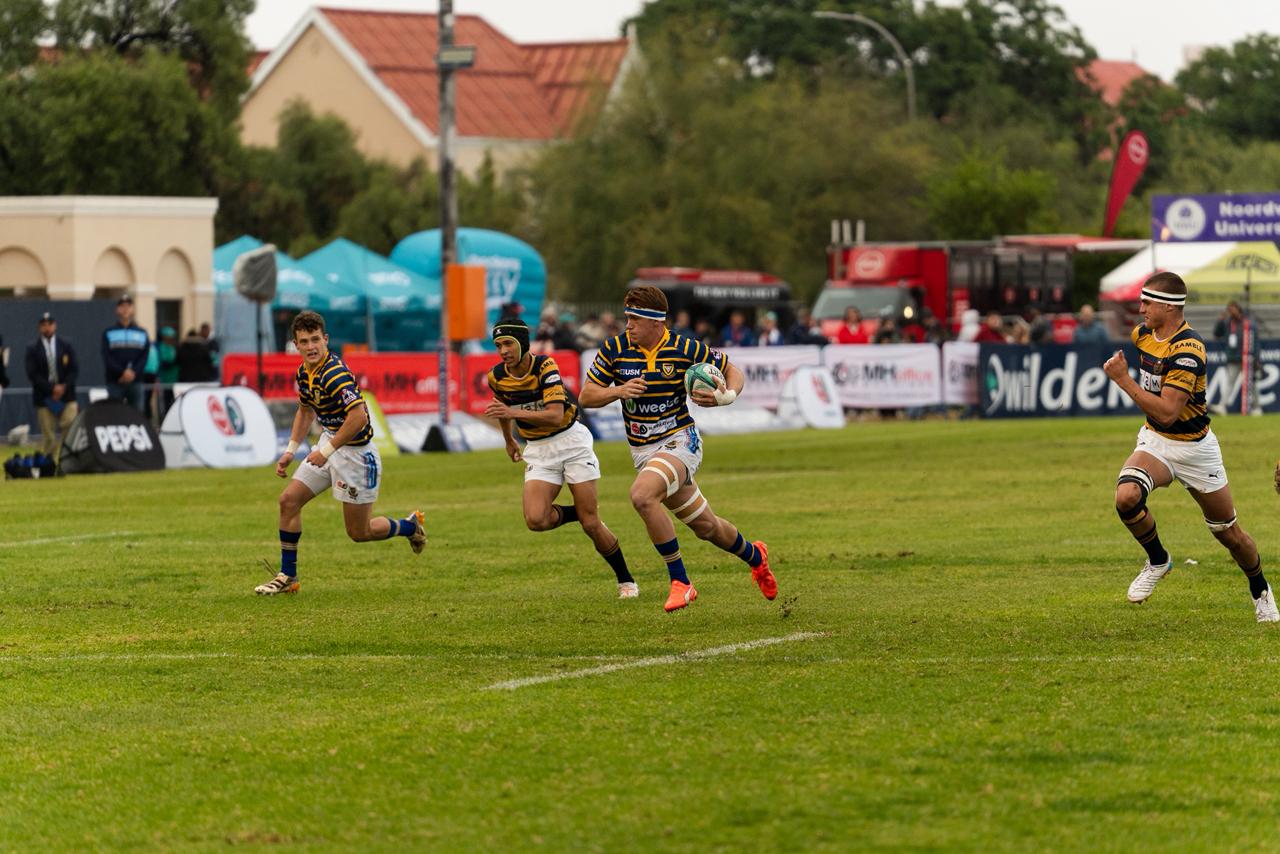
The Thursday morning ritual continues, coffee in hand, previous weekend results dissected, and the inevitable debate about who deserves to sit where in the South African schools rugby rankings. This week’s reshuffle has delivered plenty of talking points, with new blood breaking into the elite bracket and a marquee fixture looming that could reshape the entire landscape.
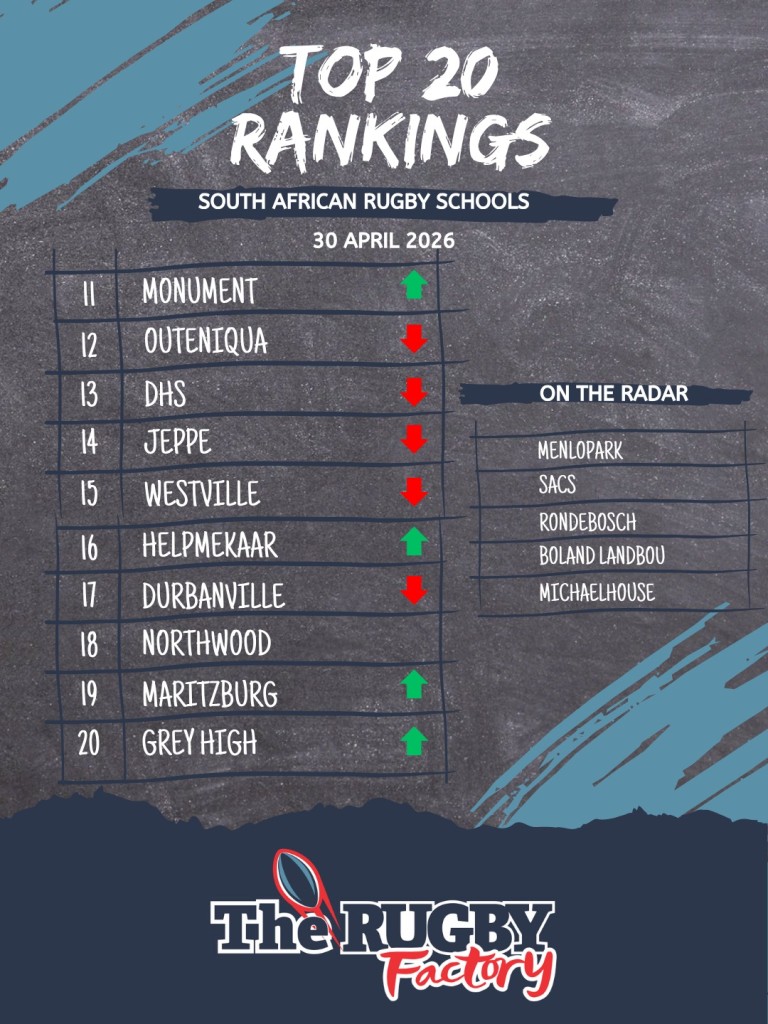
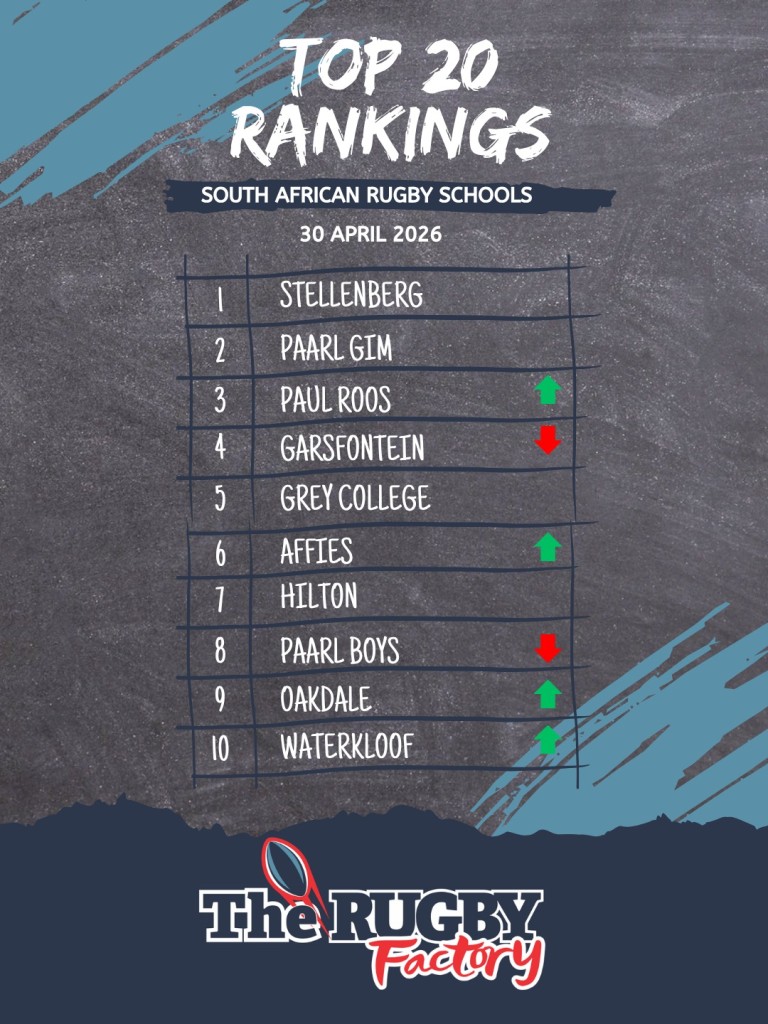
The Stellenberg-Paarl Gim conundrum
At the summit, we find ourselves in familiar territory yet facing an increasingly compelling argument. Stellenberg remain the team to beat. But lurking in the shadows, or perhaps more accurately, announcing their presence with authority week in and week out is Paarl Gimnasium who continues to play rugby that borders on the sublime.
Gim have been nothing short of superb, stringing together performances that would justify top billing at any other time. It’s becoming increasingly difficult not to crown them as the number one outfit in the country. Yet rankings demand respect for consistency, and until Stellenberg slip up, they’ve earned the right to remain the benchmark. Sometimes being the hunted is more impressive than being the hunter.
Hilton’s moment of truth approaches
The Hilton College juggernaut rolls on, undefeated and gathering momentum with each passing weekend. But there’s an asterisk hovering over their campaign, they’ve yet to face a genuine examination from the upper echelons of schools rugby. Their victory over St. Joseph’s Nudgee provides some international credibility and keeps them firmly entrenched in the top tier, but questions remain.
This coming weekend, those questions get answered. Michaelhouse await, and this KwaZulu-Natal derby will serve as Hilton’s sternest test to date. Hilton’s credentials are about to face proper scrutiny.
Grey High announce their arrival
Speaking of Michaelhouse, their weekend didn’t go according to script. The Midlands powerhouse found themselves on the wrong end of a result against Grey High, who’ve stormed into the rankings with a statement victory that cannot be ignored. The Gqeberha outfit have served notice that they’re not here to make up the numbers.
Michaelhouse remain on the cusp, as they have taken some big scalps at the start of the season.
Also Read: On the radar: Five teams knocking on Top 20’s door
Grey’s entry into the top bracket adds another fascinating dimension to an already competitive landscape. When traditional heavyweights meet emerging challengers, the rugby public wins. Their scalp-taking performance suggests they’re ready to mix it with the established elite.
The weekend’s casualties and climbers
Not every story from the weekend brought joy. Durban High School have tumbled out of the top 10 following a disappointing Wildeklawer tournament. It’s a harsh reminder that in schools rugby, reputations count for nothing when you cross the whitewash. DHS now face the challenge of rebuilding confidence and working their way back into the conversation.
Filling the void left by DHS, Waterkloof have muscled their way into the top 10 by doing what matters most, beating teams ranked above them. There’s no substitute for results against quality opposition, and Waterkloof have collected the scalps necessary to justify their elevation. They’ve earned their place at the table.
The ranking riddle
Let’s be honest about what these rankings represent, educated guesses. Well-informed, carefully considered educated guesses, but guesses nonetheless. Until we devise a system where everybody plays everybody, we’re operating in the realm of approximation rather than certainty. Cross-regional comparisons remain fraught with difficulty when teams rarely, if ever, face common opponents.
Imagine, for a moment, a tournament structure modelled on the Virseker Noordvaal Cup competition, a tiered system encompassing schools across South Africa, complete with promotion and relegation. It would definitively answer the question that fuels countless debates: who is truly number one?
Such a competition would provide clarity, meritocracy, and the kind of jeopardy that makes sport compelling. Every match would carry consequence. Every result would feed into an objective structure that rewards excellence and punishes complacency.
The financial reality
But here’s where idealism crashes into reality. Creating a national tiered competition would require serious financial backing, with travelling costs representing the most significant hurdle. Moving teams across the country week after week isn’t cheap.
The logistical challenge of getting a team from Cape Town to Polokwane, or Durban to Upington, creates an immediate barrier. Without substantial sponsorship or institutional support, the dream of a truly national competitive structure remains just that, a dream. Yet dreams have a habit of becoming reality when enough people believe in them and work towards making them happen.


You must be logged in to post a comment.