

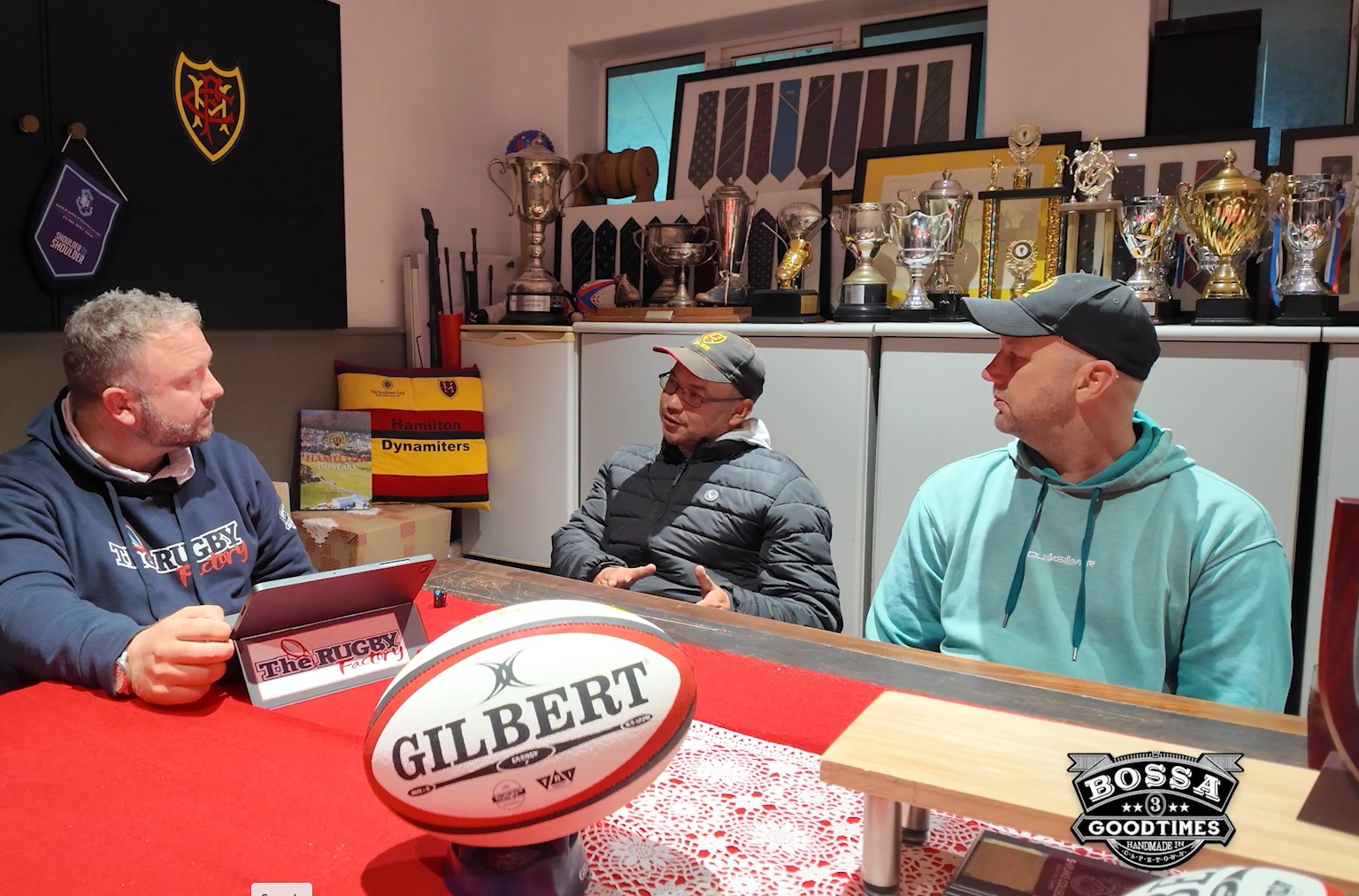
Not every schoolboy star lands a professional contract at 18. For the players who slip through the cracks, Hamiltons Rugby Club is creating a lifeline, and proving there’s more than one route to a rugby career.
The dream is simple, dominate at school level, sign a professional contract at 18, and embark on a glittering rugby career. The reality? Brutally different. For every youngster who steps straight into a union setup, dozens of talented players face the crushing disappointment of being overlooked, left wondering if their rugby journey ends with the final school bell.
The Rugby Factory proudly brought to you by BOSSA, went to find out how Hamiltons Rugby Club, a Western Cape outfit are quietly revolutionising how young players navigate the treacherous waters between school rugby and professional opportunities. With over 200 players in their thriving youth setup, ranging from u.7 right up to senior players. Hamiltons are creating pathways that prove one fundamental truth, your rugby career doesn’t have to end just because the franchises didn’t come calling.
The third or fourth option philosophy
U20 Hamiltons coach Charl Greeff has built his programme on a refreshingly honest premise. He doesn’t promise to make every player a Springbok. He doesn’t guarantee professional contracts. Instead, he positions Hamiltons as the “third or fourth option” for school leavers, and he wears that badge with pride.
“I have reasonably good relationships with most of the school coaches in the Western Cape. There is a crop of guys who get picked up by unions. I often look at 2nd XV players from the Western Cape,” Greeff explained. “I want to be their third or fourth option after leaving school.”
That focus on second-string players from top schools reveals a keen eye for talent that’s been overlooked rather than non-existent. These are players with ability, work ethic, and potential, they just need time, development, and opportunity.
“I am very proud of the players that make the Hamiltons first team, that come through our U20 programme, but what makes me more proud is guys that go on to play elsewhere,” said Greeff. “The year before last I had four guys that have gone on to play Varsity Cup, young guns, throughout the country. Guys that have played provincial U21 competitions. Two guys who just recently joined the Griffons. I want to help put guys on to their career.”
It’s a fundamentally different approach to youth development, measuring success not by who stays, but by who moves on to bigger things.
The reality check
For players emerging from the pressure-cooker environment of elite school rugby, the transition can be jarring. Tristan Fransman, a current Hamiltons U20 player and Paarl Boys’ High old boy, experienced that shift first-hand.
“When you play Grant Khomo, everyone’s watching you, expecting something from you. So when you get to the first team, there is an expectation that you are going to play professionally after school,” Fransman explained. “It’s not the reality for everyone, but there are universities and clubs like Hamiltons, where you can carry on.”
That expectation versus reality gap crushes countless young players every year. At schools like Paarl Boys’ High, where rugby excellence is embedded in the DNA, the assumption is that talented players will seamlessly transition to professional ranks. When the phone doesn’t ring with contract offers, the psychological blow can be devastating.
Fransman fielded interest from various corners during his final school year, navigating the delicate balance between rugby ambitions and academic responsibilities. “You go through the year, hearing about this team is interested, but you must focus on your academics as well,” he said.
When Greeff contacted him, Fransman accepted the opportunity to join Hamiltons, a decision that allowed him to continue developing whilst keeping his options open.
Life after the dream
Alco Bindeman’s journey illustrates another common pathway. The Boland Landbou old boy and current Hamiltons U20 player faced the harsh reality that professional contracts don’t materialise for everyone, regardless of talent.
“No franchises contacted me directly. My father said if I don’t get anything it is fine, I can go and study. There is a life after rugby,” Bindeman revealed. “It was tough for me, because I wanted to pursue it. But now I can study and follow my passion with rugby.”
Bindeman spent time at North West University before returning to the Cape, where Greeff contacted him to join Hamiltons.
The opportunity allowed Bindeman to pursue dual ambitions, academic qualifications that provide long-term security, and rugby development that keeps professional dreams alive. It’s pragmatic without being pessimistic, realistic without being defeatist.
Building bridges, not dead ends
What sets Hamiltons’ approach apart is the refusal to view their U20 programme as a final destination. Greeff’s pride in players who move on to Varsity Cup rugby, provincial U21 competitions, or smaller unions like the Griffons reveals a programme built on building bridges rather than hoarding talent.
It’s a sustainable model that serves multiple purposes. For players, it provides continued high-level rugby whilst pursuing education. For universities and smaller unions, it creates a talent pipeline of developed players who’ve been coached, conditioned, and matured beyond school level. For Hamiltons, it establishes a reputation that attracts the next generation of players seeking similar pathways.
The pathway Greeff has created acknowledges that talent development isn’t linear. Not every player peaks at 18. Some need additional coaching, physical maturation, or simply time to adapt to senior rugby’s demands. By positioning Hamiltons as a development hub rather than a final stop, the club creates space for those late bloomers to flourish.
A model worth replicating
In a rugby landscape increasingly dominated by professional academies and age-grade structures, Hamiltons’ approach offers an alternative model. They’re not trying to replace the traditional pathway, they’re complementing it, catching players who fall through the gaps and giving them routes back towards professional rugby or meaningful club careers.
For every Fransman and Bindeman, there are dozens of similar stories playing out across South Africa. Talented schoolboy players facing the harsh reality that talent alone doesn’t guarantee professional opportunities, needing pathways that combine rugby development with academic qualifications and personal growth.
In a sporting landscape littered with broken dreams and unfulfilled potential, that approach deserves recognition.
The road to a rugby career doesn’t have to be straight. Sometimes the scenic route, via clubs like Hamiltons, leads to destinations just as rewarding.
Watch the full episode of the podcast here:

