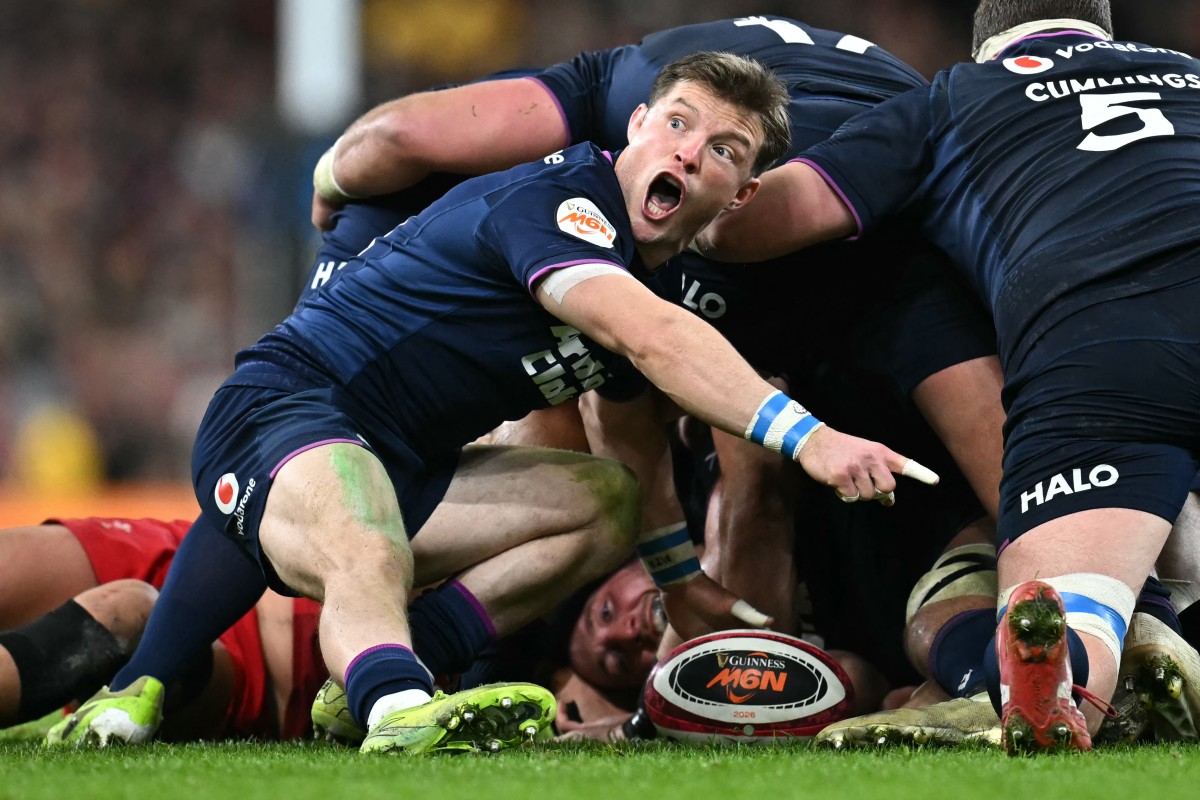
CARDIFF – Gregor Townsend could finally exhale. His Scotland side had just escaped Cardiff with a heart-stopping 26 – 23 victory that was equal parts relief, drama, and pure Finn Russell wizardry. For 75 minutes, Wales, a team who’d lost 23 of their last 25 Tests, had the Scots on the ropes.
This was no vintage Scotland performance. Far from it. But in the brutally unforgiving arena of Six Nations rugby, sometimes survival is just as valuable as domination. The Scots trailed for the vast majority of proceedings, weathering a Welsh storm that threatened to derail their title ambitions before Turner’s late intervention rescued the five points that keep them firmly in the conversation.
“That was some game. It would have been great for the neutrals,” Townsend told the BBC, the relief evident in his voice. “We left it late but I’m really proud of the effort in the second half. It’s not just a physical effort, it’s a mental effort too; finding solutions, staying together and riding momentum waves.”
Those momentum waves nearly drowned Scotland completely. Wales, galvanised by new coach Steve Tandy and desperate to shake off the stigma of recent humiliations against England and France, played with an intensity and purpose that belied their woeful recent record. They led, they pressed, they defended with ferocity, and they looked every bit a side capable of pulling off what would have been a statement victory.
Then Finn Russell decided enough was enough.
The Racing 92 playmaker has made a career out of moments that defy conventional rugby logic, and Saturday in Cardiff added two more chapters to his growing legend. First, he sliced through the Welsh defence with trademark audacity, exploiting space that others wouldn’t even see, and touched down to drag Scotland back into contention.
But it was his second act of brilliance that will be replayed in coaching seminars for years to come, and haunt Steve Tandy’s nightmares for just as long.
Wales were busy celebrating a penalty, assuming the pause would allow them to regroup and extend their 23 – 12 advantage. Russell noticed their lack of attention with the predatory instinct that separates good players from great ones. His quick restart caught the Welsh defence completely off guard, the ball bouncing backwards into the grateful arms of Darcy Graham, who gleefully crossed for a try that shifted the entire complexion of the contest.
Three minutes. Two tries. Game transformed.
“That was a big moment in the game and credit goes to Finn for seeing that space and Darcy for being alive to it,” said Townsend. “It wasn’t something we practised. That’s just in the moment.”
Russell himself showed a flash of sympathy for Tandy, who spent six years as Townsend’s defence coach before taking over the Welsh reins last year. The Scot knew exactly how painful that sequence would be for his former colleague.
“He knows that’s something I look for and Darcy scoring is a coach killer,” Russell admitted. “We knew they were going to come out passionately. We weren’t good enough at the breakdown. We expected a tough and tight game, especially with Steve knowing us so well. We got the win even though it maybe wasn’t our best performance.”
That last line encapsulates Scotland’s afternoon perfectly. This wasn’t the fluid, expansive rugby that has become their trademark under Townsend. The breakdown was a mess, their discipline patchy, and for long stretches they looked second-best to opponents languishing near the bottom of the world rankings.
But championship sides find ways to win ugly. They dig deep when the performance isn’t there.
For Wales, the result was agony but the performance offered genuine encouragement. After being demolished 48-seven by England and thrashed by France, they produced a display that suggested Tandy’s methods are beginning to take root.
“We felt it was a game that we could have and should have won, but ultimately the performance was much better,” said Tandy, the disappointment tempered by signs of progress. “We asked the players to be better than last week and they were. We showed a lot more intent. We’re starting to take shape around the way we want to play. The thing we’ve talked about is better performances. If you take the result it’s bitterly disappointing, but ultimately we feel like we are getting to where we need to be.”
Wales captain Dewi Lake echoed that sentiment, heaping praise on his teammates despite the crushing nature of the defeat. “The boys were class today, we were dominant and showed in the first half what we can do,” he said. “I hope everyone can see the improvements today, especially in defence. It’s silly mistakes in the second half and we’ve spoken about these moments and staying in games and unfortunately Scotland punished us today. Finn is fast on his feet and Graham scores in the corner. Even though the scoreline wasn’t there today I think our performance was great.”
There’s nobility in Lake’s words, but also the harsh reality that international rugby is ultimately a results business. Wales can take heart from their improvement, but they’re still collecting losses at an alarming rate. Progress without points only counts for so much, and the Welsh rugby public’s patience is wearing dangerously thin.