
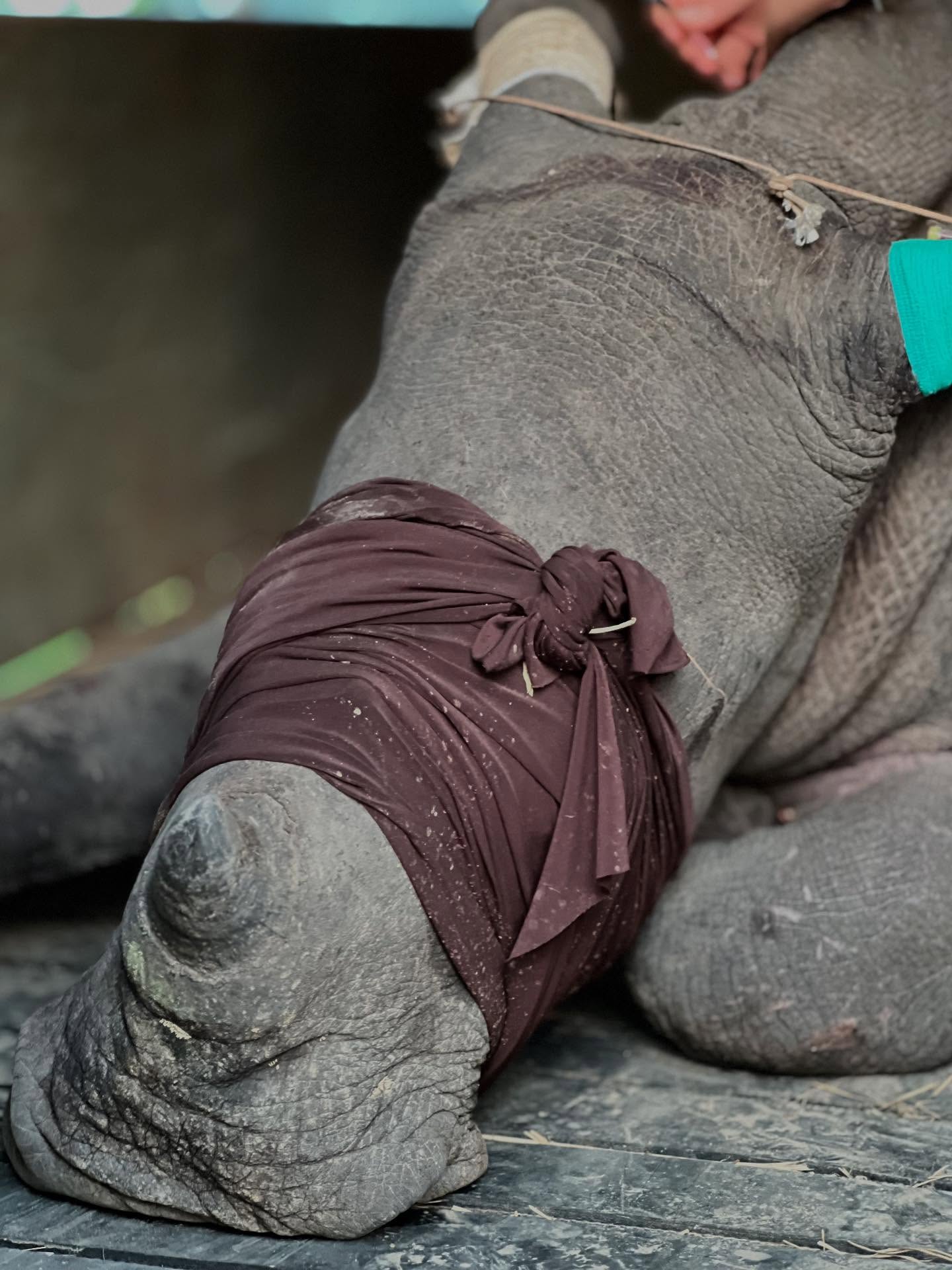
MPUMALANGA – Two rhino calves, believed to have been left orphaned due to poaching, were given a second chance after tourists noticed them wandering alone in distress in the Kruger National Park over the weekend.
According to the South African National Parks (SANParks), rangers acted quickly to secure the animals and move them to safety.
“Following a report from tourists, two young rhinos (aged 12–18 months) were caught and moved to Care for Wild Rhino. One was moved by crate and the other by helicopter,” SANParks said in a social media post.
“We are so grateful for the tourists who used the correct platform to report this incident of the two calves in distress and alone. Our rangers acted swiftly to rescue the rhino. Collaborative efforts always win for conservation.”
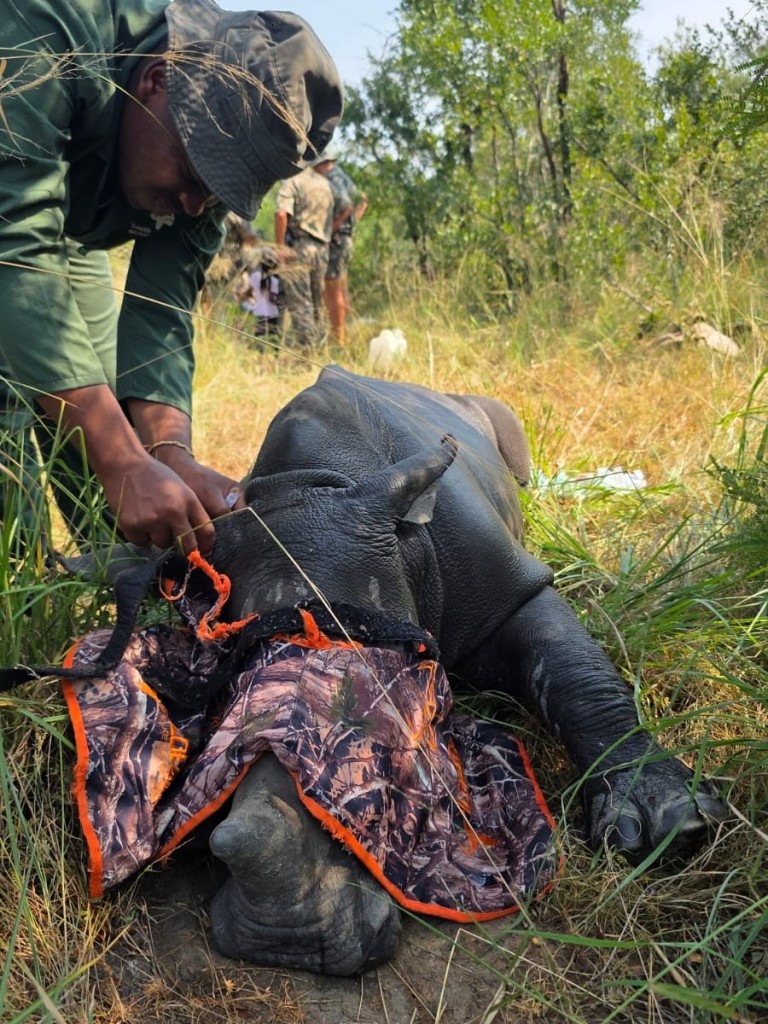
Two rhino calves, believed to have been left orphaned due to poaching, were given a second chance after tourists noticed them wandering alone in distress in the Kruger National Park over the weekend.
In a social media statement posted on Saturday, 28 February, Care for Wild Rhino Sanctuary said it was deeply concerning to find the young rhinos alone in the bush.
“One calf had visible wounds,” the organisation shared. “While it has not yet been confirmed, the reality is deeply concerning, as both calves are most likely orphans as a result of poaching.”
According to the sanctuary, the young animals are far too small to survive on their own in the wild.
The organisation added that its immediate priority was ensuring the calves were stable and receiving the care they needed.
“For now, our focus is exactly where it should be — on these two little calves,” the sanctuary said. “They are now in the care of our dedicated team, who will remain by their side throughout the night to ensure they are settled, supported and closely monitored.”
Challenging rescue operation
Meanwhile, difficult terrain made the operation particularly challenging.
“The rugged terrain meant vehicles couldn’t reach one of the recovery points, so the older calf was airlifted to the nearest accessible road, placed on a drip and transported by trailer back to Care for Wild,” the sanctuary explained.
“The second calf was then airlifted directly to the sanctuary.”
Extreme heat, humidity and approaching thunderstorms added further urgency to the operation.
“With extreme heat and humidity bearing down, and the threat of oncoming thunderstorms, time was critical,” the organisation said.
A coordinated rescue effort involved SANParks, veterinarian Dr Lufuno Netshitavhadulu, Chief Pilot David Simelane, Marius Snyder, Craig Williams, the Jock Environmental Monitoring Unit (JEMU) team and the Care for Wild Rhino Sanctuary team.
“Teams worked tirelessly to keep the calves cool, using fluids, water and constant monitoring — a clear reflection of the power of partnership and training. Every person knew their role. Every decision mattered.”
Ongoing fight against poaching
The rescue comes as South Africa continues efforts to combat rhino poaching.
Earlier this year, Minister of Forestry, Fisheries and the Environment Willie Aucamp said Mpumalanga — home to the Kruger National Park — remained the hardest-hit province in 2025, losing 178 rhinos to poaching. Of those, 175 were poached inside the park.
However, overall rhino poaching in South Africa declined by 16% compared with the previous year.
“From January to December 2025, 352 rhinos were poached in South Africa,” Aucamp said.
“This was a decrease of 68 compared with the 420 rhinos poached in 2024.”
Members of the public can report suspicious wildlife activity to the environmental crime hotline on 0800 205 005 or to the SAPS on 10111.
ALSO READ: Rhino poaching doubles in South Africa’s Kruger Park



You must be logged in to post a comment.