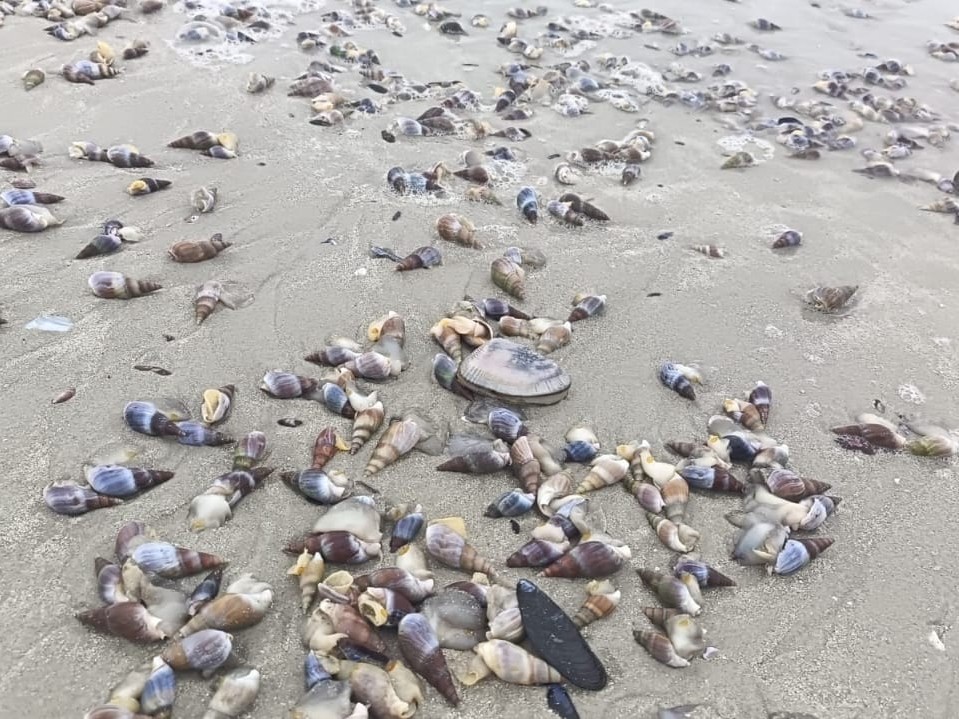
The Western Cape’s West Coast coastline has been hit by a red tide outbreak that has killed thousands of white mussels, whelks, and other shellfish over the past 48 hours, now washing up along St Helena Bay and Elandsbaai beaches.
The Department of Forestry, Fisheries and the Environment (DFFE) confirmed the red tide yesterday, warning residents and visitors that this particular red tide is invisible to the naked eye but carries deadly neurotoxins that pose serious health risks to humans.
“This red tide is colourless and therefore not visible to the human eye, but paralytic shellfish poisoning neurotoxins are extremely toxic to humans,” the department said.
The dead shellfish, paralysed by the toxic algae and unable to burrow into the sand for protection, have been swept ashore in large numbers.
Authorities have issued a warning that no shellfish should be consumed, whether washed ashore or collected from coastal or subtidal areas. The neurotoxins present in the current bloom can cause severe paralytic shellfish poisoning in humans, potentially leading to respiratory failure and death.
“All shellfish, irrespective of being washed out or collected from shore or subtidal, should not be eaten,” the DFFE emphasised. “The Department cautions members of the public to refrain from eating the washed out marine animals as they carry significant health risks, rendering them unsuitable for consumption.”
Red tides, scientifically known as harmful algal blooms (HABs), occur when microscopic algae multiply explosively in marine waters. While algae are essential components of ocean ecosystems, their uncontrolled growth creates toxic conditions for marine life and humans alike.
The DFFE will continue to monitor the situation closely and provide updates through official channels as the red tide develops.