

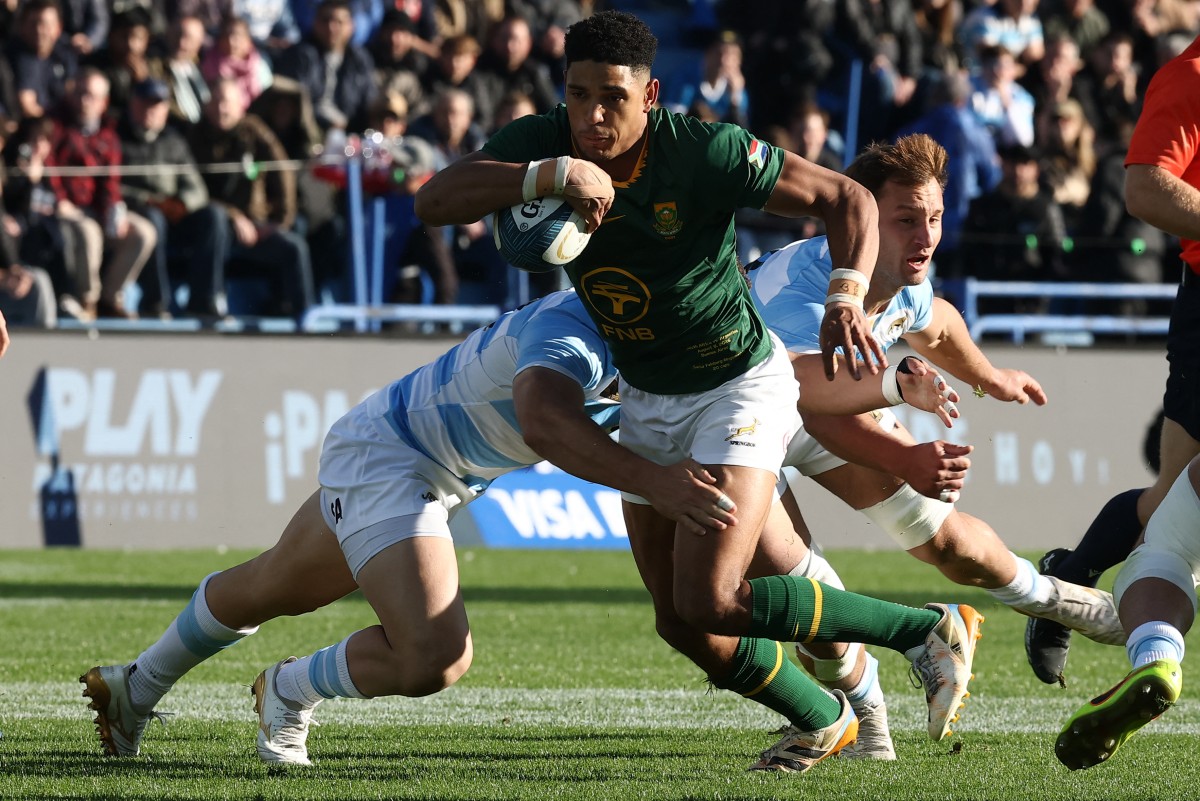
The debate raged all week. Manie Libbok or Handré Pollard? Experience or form? The steady hand or the boot that wins Tests in the final quarter?
Also read: Bok coach throws down gauntlet to All Blacks before Test
Turns out, Rassie Erasmus had a different answer entirely.
Sacha Feinberg-Mngomezulu gets the start at flyhalf for Saturday’s Ellis Park showdown against the All Blacks, a selection that raised eyebrows across the rugby landscape and prompted immediate questions about the Springbok coach’s thinking.
After all, the 23-year-old was admittedly rusty in his last outing against Argentina – his first Test since returning from a three-month injury layoff. Most pundits expected him to be eased back gradually, with Libbok starting and Pollard providing the bench insurance that’s become such a familiar Bok tactic.
Instead, Erasmus has gone all-in on youth, backing Feinberg-Mngomezulu to deliver when the stakes couldn’t be higher and the opposition couldn’t be tougher.
The Wellington factor
Erasmus provided clear reasoning for the selection that’s divided opinion and sparked countless debates across social media, talk radio and rugby club bars.
“Sacha has done wonderful things for us when he’s played,” the Springbok coach explained. “He was the flyhalf last year when we beat them in Wellington.”
That victory in New Zealand’s capital carries enormous weight. Beating the All Blacks in their own backyard, at a venue where they’re historically dominant, with a young flyhalf orchestrating proceedings.
Feinberg-Mngomezulu didn’t just survive that Wellington examination. He thrived, showing the composure, game management and tactical kicking required to control a Test match in the most hostile environment international rugby can offer.
If he can do it there, the logic goes, he can do it at Ellis Park.
Training trumps reputation
Erasmus also highlighted the meritocratic principles underpinning his selection philosophy – nobody gets picked on reputation alone, and recent training performances carry serious weight.
“We look at which players understand what we’re trying to do and which players have trained the best,” he explained. “The players on the other side also help the guys prepare as well as they can. It’s always a tough call.”
Libbok offers attacking spark, unpredictability and the ability to create something from nothing. Pollard brings big-match temperament, a monster boot, and the kind of ice-cold game management that wins World Cups.
But Feinberg-Mngomezulu, according to Erasmus’s assessment of training and tactical understanding, deserves the first crack at the All Blacks.
The rotation reality
Erasmus also hinted at the strategic thinking behind his selection, acknowledging the four-Test series ahead and the need to manage player workloads whilst keeping everyone sharp.
“Hopefully, if things go our way on Saturday, we can make a few changes next week,” he added, the comment suggesting rotation is very much part of the plan across this inaugural Greatest Rivalry series.
That approach allows Erasmus to blood Feinberg-Mngomezulu in the opening Test whilst keeping Libbok fresh for later matches. It spreads the physical and mental load across multiple quality options whilst ensuring everyone gets game time at the highest level.
It’s classic Erasmus – playing the long game, thinking three moves ahead, and refusing to be predictable in his selections.
The rust factor
The elephant in the room remains Feinberg-Mngomezulu’s rustiness against Argentina. Three months out with injury doesn’t just impact physical conditioning – it disrupts timing, decision-making under pressure, and the instinctive reactions that separate good flyhalves from great ones.
He would freely admit that performance wasn’t his best. But context matters. First Test back from serious injury, playing catch-up on match fitness, still finding rhythm after an extended absence.
The bet Erasmus is making is that a week’s additional training, another seven days of preparation, and the adrenaline of Ellis Park against the All Blacks will sharpen Feinberg-Mngomezulu to the point where that rustiness disappears entirely.
It’s a calculated gamble. But Erasmus didn’t build back-to-back World Cup-winning sides by playing it safe.
Saturday’s verdict awaits
Come Saturday around 19:00, we’ll know definitively whether Erasmus made the right call. The scoreboard doesn’t lie, and Test match rugby provides brutal, immediate feedback on selection decisions.
If Feinberg-Mngomezulu delivers – controlling territory, nailing his kicks, making smart decisions under All Black pressure – the selection looks like inspired genius. If he struggles, the second-guessing will be deafening and the calls for Libbok or Pollard will intensify dramatically.
But that’s the job when you’re Springbok coach. Make the tough calls. Back your instincts. Trust the players who’ve earned your confidence through training and previous performances.
Feinberg-Mngomezulu earned this opportunity through what he did in Wellington and what he’s shown on the training paddock. Now he gets 80 minutes at Ellis Park to prove Erasmus’s faith wasn’t misplaced.
The debate ends when the whistle blows at 17:10. Until then, it’s all just noise.
Saturday will deliver the verdict that matters.

