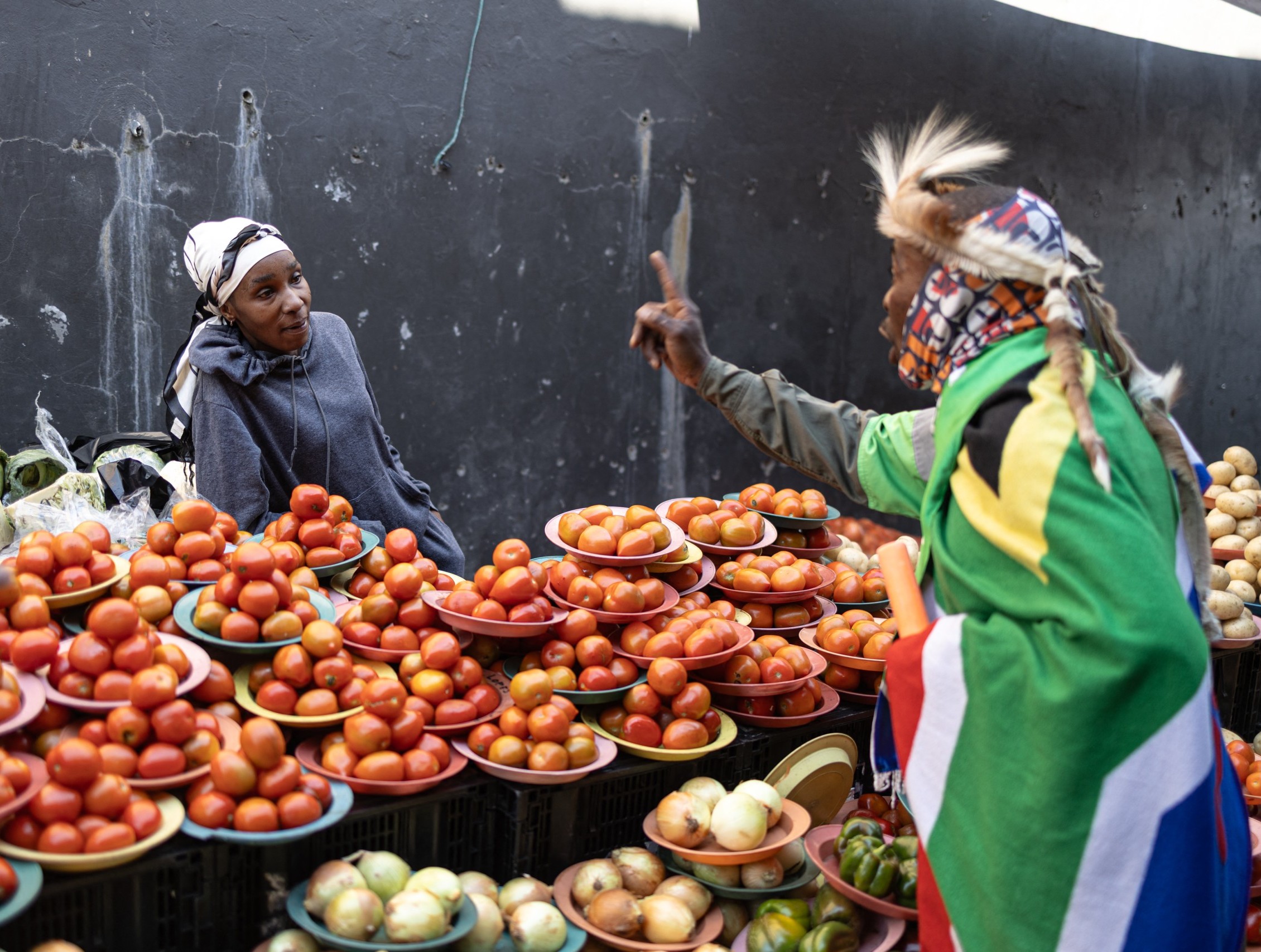

Hundreds of protesters rallied outside the Durban High Court on Friday as the government sought to halt anti-immigration demonstrations that turned deadly last week, leaving one person dead.
The court heard an urgent application by Acting Police Minister Firoz Cachalia and KwaZulu-Natal police commissioner Lieutenant-General Nhlanhla Mkhwanazi to make permanent an interim interdict barring further protests by the March and March movement.
Protesters sang and chanted outside the court, waving placards and sticks as police officers stood watch, footage broadcast by South African media showed. Supporters of several political parties, including the centre-right ActionSA and the uMkhonto weSizwe party led by former president Jacob Zuma, turned out in solidarity.
“The agenda is to try and silence the people,” said March and March legal representative Xolani Zuma. “The real problem are illegal immigrants who are here in the country and terrorising people.”
Violence prompts military deployment
Durban, the Zulu heartland, has emerged as a focal point of anti-immigration agitation led by the March and March movement, which has organised demonstrations against undocumented foreigners across the country for months.
Some demonstrations have turned violent. Last week a mob of about 50 people beat a foreign national to death, prompting President Cyril Ramaphosa to deploy more than 500 soldiers to support the police.
Other incidents included the torching of vehicles and shops, looting, and road blockades. On 6 October, protesters blocked access to the Department of Home Affairs Refugee Reception Centre on Che Guevara Road, disrupting services for asylum seekers. Journalists covering the protests also faced harassment and threats.
Police cited intelligence about an alleged plot to set fire to the refugee centre in Berea, an inner-city suburb of Durban where asylum seekers go to seek documentation.
On 23 October, police arrested five people for investigation into murder, attempted murder and assault of foreign nationals during the protests.
Court hears of lawlessness
An interim interdict granted on Wednesday bars the group from organising marches, protest convoys or encampments in eThekwini Municipality, particularly around the Durban CBD and the refugee centre.
The order also prohibits assault, intimidation, looting, arson and damage to property. It specifically protects the refugee centre from attack.
Counsel for the police told the court on Friday that the situation in Durban had “degenerated into lawlessness” that reactive policing could no longer contain.
More than 400 police officers had been deployed, but this had “proved structurally unable to stem the widespread violence”, they said.
The unrest has been fuelled by misinformation about a July Constitutional Court ruling that asylum seekers cannot be denied access to South Africa’s asylum system solely on procedural grounds, according to the police.
Movement vows to continue
The March and March movement campaigns against illegal immigration. The group demands stronger enforcement of immigration laws, identification of people with legitimate refugee claims, and regulation of sectors such as e-hailing and delivery services.
Movement leader Jacinta Ngobese-Zuma has criticised the military deployment and court action, calling them attempts to suppress legitimate protest. She said the movement will continue its campaign.
The court battle comes days before local elections on 4 November, with lawyers warning that police are already stretched thin ahead of the vote.
The court heard arguments on Friday on whether to make the interim order final. Respondents in the case include Ngobese-Zuma, Xolani Zuma, Mthokozisi Gumede, Nozibusiso Khambule, Lindani Xulu, Uyama Mthembu, eThekwini Municipality, the municipal police head, and the Home Affairs Minister.
A final ruling is expected later today.