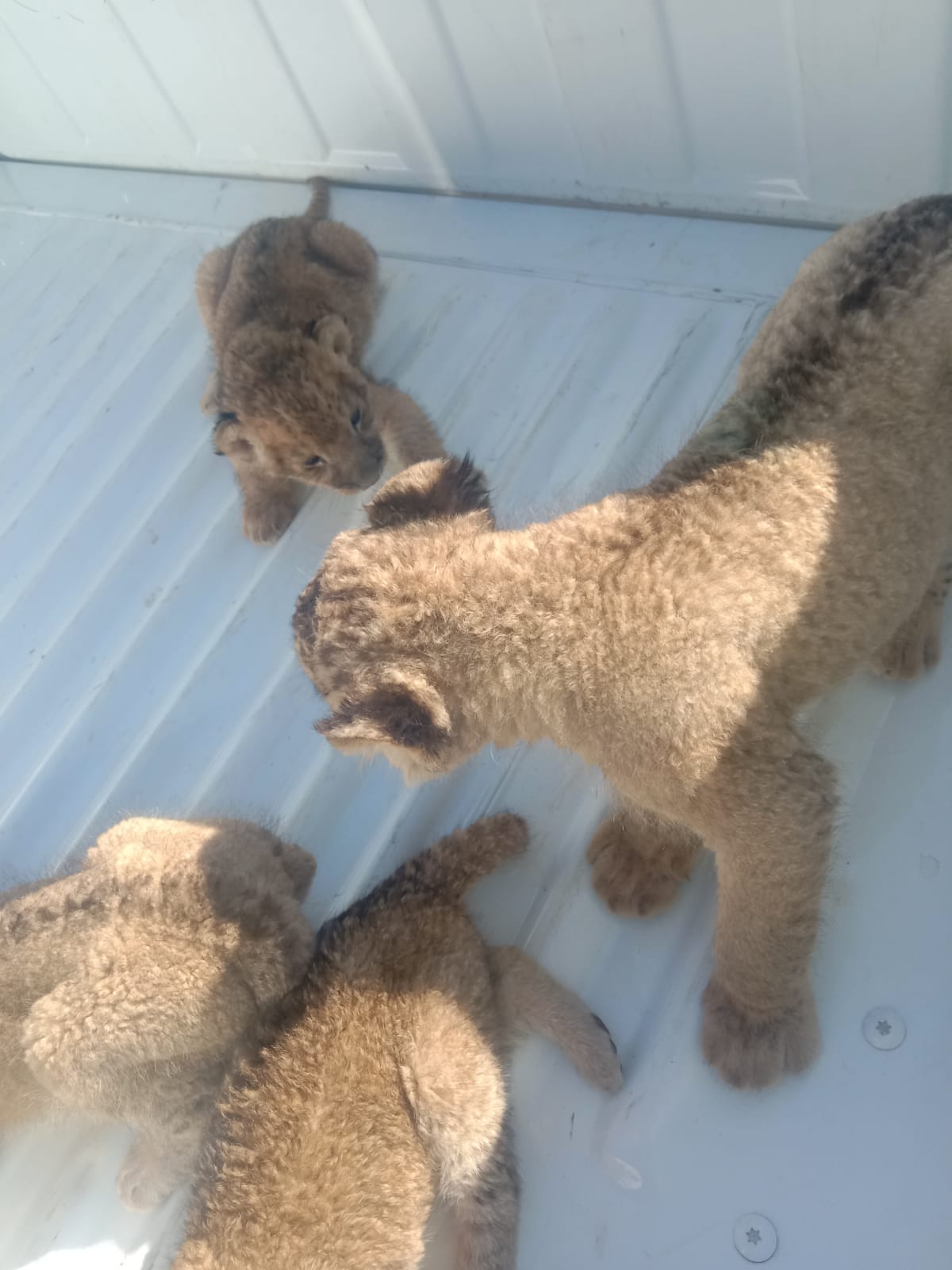
BOTHAVILLE – Two women, including a police administration clerk, and a minor have been arrested for contravening the National Environmental Management Biodiversity Act after attempting to sell stolen lion cubs for R100 000 each in Bothaville.
Elias Moloi, 36, and police administration clerk Mokete Elizabeth Dikoko, 51, who is attached to Bothaville SAPS, appeared in the Bothaville Magistrates Court on 7 April for alleged contravention of the National Environmental Management Biodiversity Act 10 of 2004. They were arrested alongside a 14-year-old minor on Thursday, 2 April, whilst attempting to sell four lion cubs.
The coordinated response demonstrates the serious approach taken by law enforcement to combat wildlife trafficking and protect endangered species.
The arrests followed information received by the Hawks in Welkom about individuals selling lion cubs illegally. A comprehensive police operation was immediately arranged and executed by multiple units, including the Hawks, Tactical Response Team, Local Criminal Record Centre, Stock Theft and Endangered Species Unit, and officials from the Department of Agriculture and Rural Development.
During the operation, four lion cubs were successfully recovered and returned to their lawful owner in Viljoenskroon, where they had been stolen. The coordinated response demonstrates the serious approach taken by law enforcement to combat wildlife trafficking and protect endangered species.
Dikoko has been released on bail but faces additional consequences as she is being subjected to internal SAPS disciplinary processes related to her alleged involvement in the illegal wildlife trade.
Moloi remains in custody and is scheduled to return to court on 9 April to apply for bail. The case against the adult suspects will proceed through the criminal justice system, with both facing potential significant penalties under the biodiversity legislation.
The matter concerning the minor child has been referred to the Department of Social Development, which will handle the case according to protocols for juvenile offenders. The involvement of a minor in wildlife trafficking highlights concerns about how criminal networks may exploit vulnerable young people.