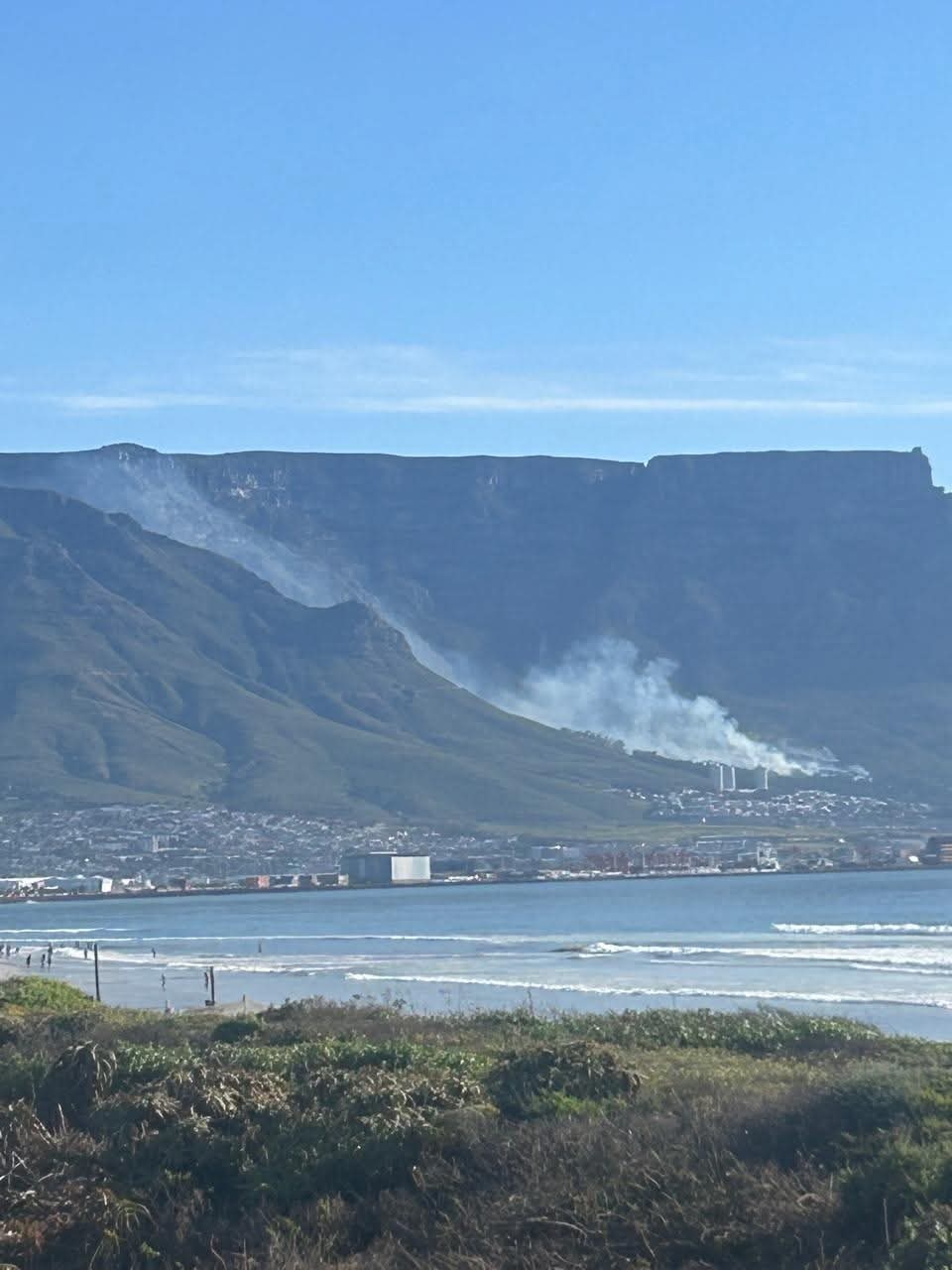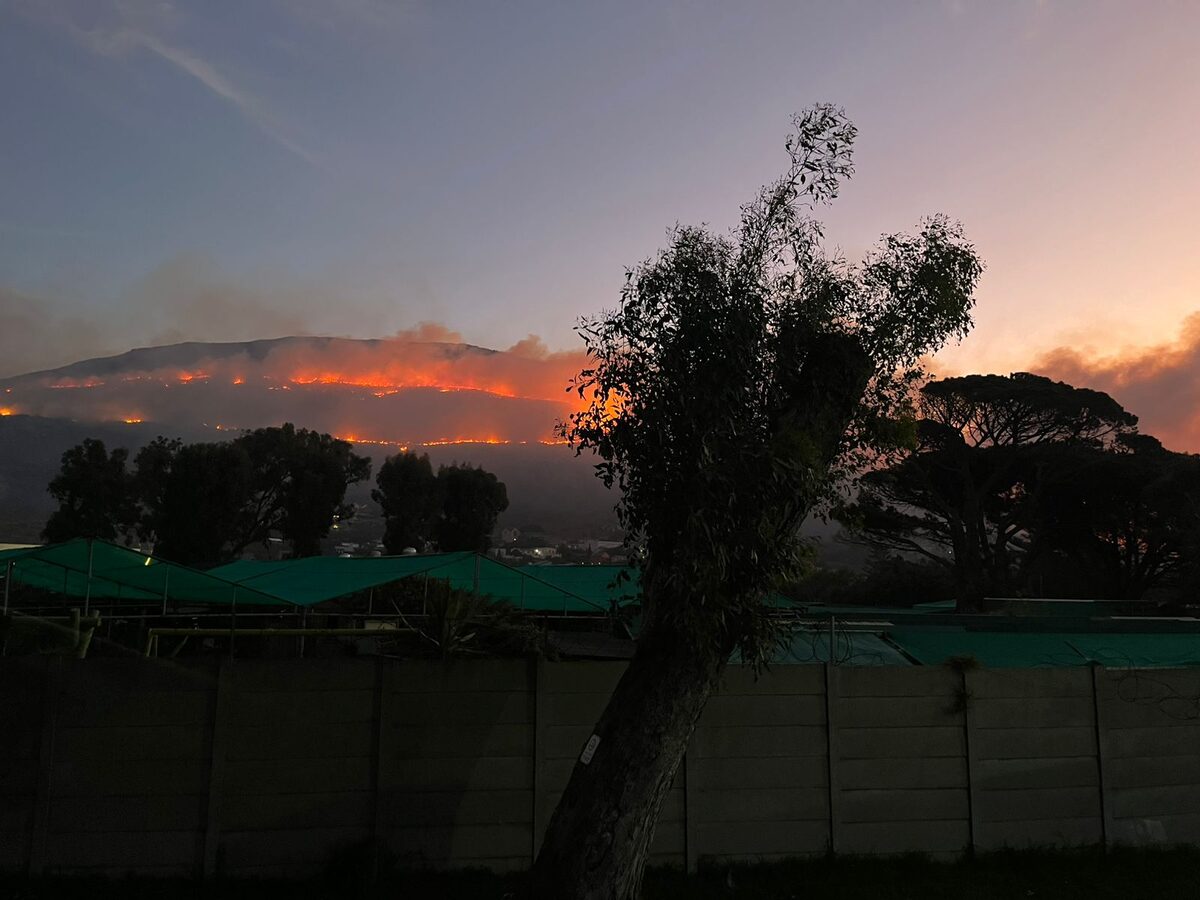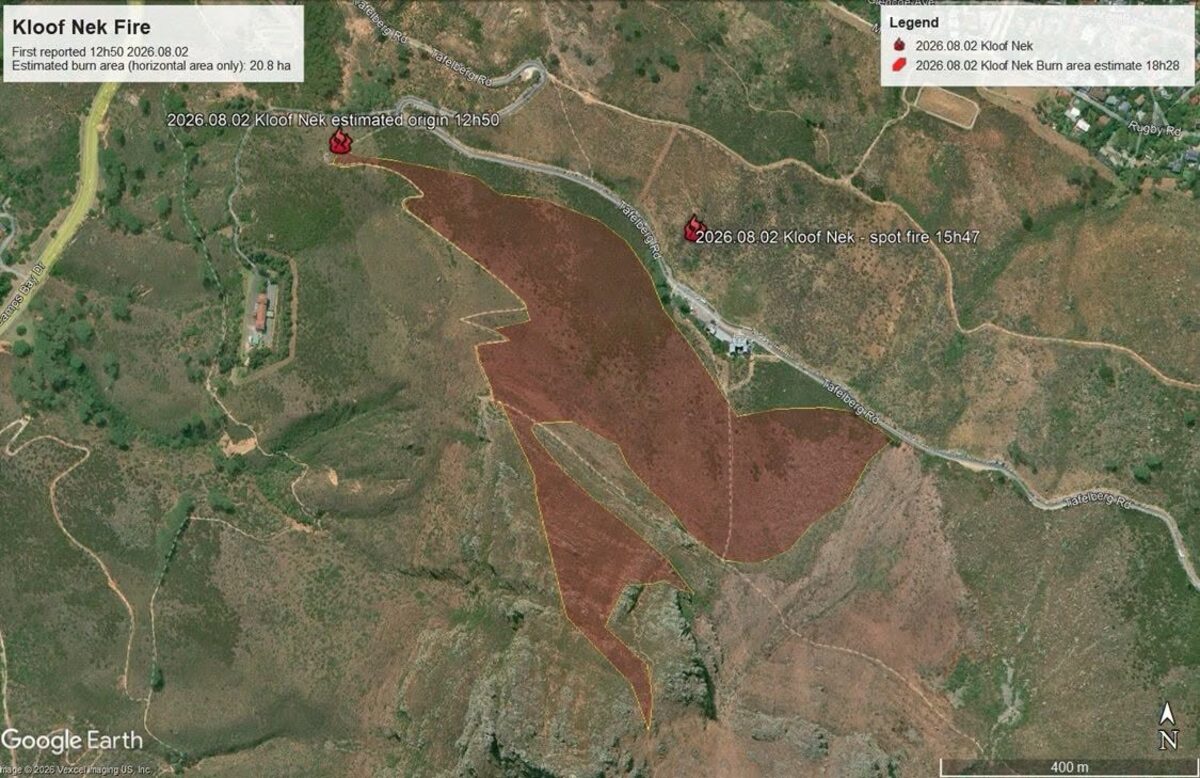
A wildfire that broke out on Table Mountain above Tafelberg Road has burned itself out following an intensive overnight firefighting operation, with aerial resources now deployed to extinguish the remaining hotspots in difficult terrain.
The fire prompted a coordinated response from the City and SANParks, with both agencies working together to bring the blaze under control.
The City of Cape Town’s Fire and Rescue Services confirmed that crews were dispatched to the scene shortly after the fire was reported, with six fire engines, three water tankers, and an Incident Management Team responding.
The blaze produced large volumes of smoke across the surrounding area, and residents were urged to keep windows closed and pets inside as the fire, which shifted direction due to a wind change, advanced towards the mountain’s peak.
Firefighting continued throughout the evening as the situation remained fluid, with Tafelberg Road closed to traffic.
Monitoring flare-ups
Spokesperson for the City’s Fire and Rescue Services, Michael Abrahams, confirmed that the fire had subsequently burned itself out, with crews remaining on scene to watch for flare-ups and monitor hotspots.
“Currently, we await aerial support organised by the Table Mountain National Park to waterbomb any remaining hotspots to ensure the fire is completely extinguished,” he said.
Abrahams confirmed that no evacuations were required and no injuries or property damage had been reported. Crews will remain on scene to ensure the fire does not reignite.
The South African National Parks (SANParks) Table Mountain National Park Fire Management Team has continued its response to the wildfire above Kloof Nek Corner and the Table Mountain Aerial Cableway following overnight operations.
Ground crews remained on the fireline throughout the night, monitoring and suppressing isolated hotspots.
While conditions were favourable overnight due to lighter winds, potential flare-ups are anticipated as temperatures increase, particularly in steep cliff and rocky areas difficult for ground crews to access.
To strengthen suppression efforts, Kishugu Aviation and AG Sprayers, contracted to SANParks, deployed two single-engine air tanker aircraft from AG Aviation from 08:00 this morning.
The aircraft operation will focus on cooling hotspots identified through thermal imaging to reduce the risk of reignition.
Driest month
According to the South African Weather Service, July was reported to be the driest on record in parts of the South Western Cape.
Several severe weather systems impacted parts of the Western Cape during May and early June 2026, which significantly improved water storage across many parts of the province.
Since then, a strong blocking Atlantic high-pressure system to the west of the country has driven cold frontal systems further south of the province.
This significantly reduced the number of cold fronts that made landfall in the Western Cape, with only 3 weak cold fronts moving over the south-western Cape during July.
Additional support
Additional rotor-wing aircraft may be deployed should conditions require.
Fresh firefighting crews have been deployed to relieve the overnight teams, with approximately 43 ground personnel and three water tankers currently assigned.
Tafelberg Road remains closed to traffic, and the public is urged to avoid the affected area and comply with trail closures along the Contour Path and surrounding trails to the Table Mountain Aerial Cableway, to ensure the safety of visitors, firefighting personnel and aviation resources.
SANParks will continue to monitor conditions closely and provide updates as necessary.
ALSO READ: School earns badges in Winter Animal Challenge for Maths