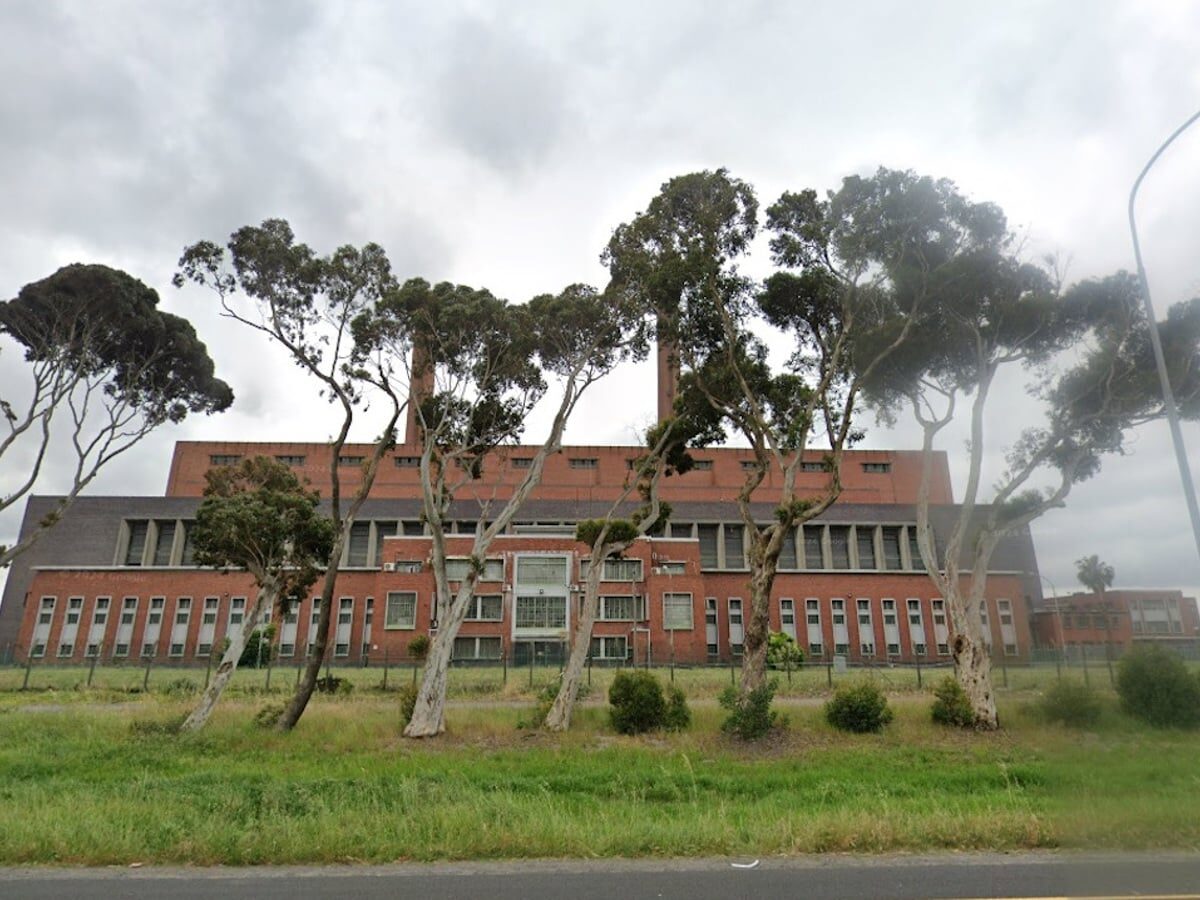
Heritage Western Cape (HWC) has confirmed the declaration of the historic buildings at the Athlone Power Station site as a Provincial Heritage Site, following a nomination by Docomomo, an international organisation dedicated to the conservation of significant modern architecture.
After a thorough public participation process, including extensive engagement with the City of Cape Town, the HWC Council resolved to declare protection over the historic buildings and their immediate surroundings.
Provincial heritage status confirmed
The declaration does not encompass the entire power station site, with the protected extent determined in consultation with the City to balance heritage conservation and future development potential.
Commissioned in 1962 and decommissioned in 2003, the Athlone Power Station is recognised for its striking red face brick modernist design, its now-demolished chimneys and cooling towers as well as its architectural and technical significance.
Designed by architect William John Henry Gregory, it is notable as an early example of sustainable industrial design in South Africa, particularly for its pioneering use of recycled wastewater for cooling.
The famous cooling towers were demolished via controlled implosion on 22 August 2010.
Legal challenge
Following the declaration, the City of Cape Town lodged an appeal with the Heritage Appeals Tribunal (HAT), an independent body appointed by the Office of the Provincial Minister of Cultural Affairs and Sport.
The HAT dismissed the City’s appeal and additionally placed the entire site under provisional protection for two years under Section 29 of the National Heritage Resources Act, 1999.
This provisional protection allows time for further negotiation between the City and HWC regarding site boundaries and a management plan, which would outline routine maintenance activities not requiring heritage permits.
This approach follows the precedent set in the declaration of the Green Point Common, also a City-owned property.
The City is now seeking a judicial review of the HWC declaration as it interprets the Council decision to include the entire erf.
HWC states that the declaration covers only the portion of the site on which the historic buildings are situated. HWC has extended offers to resolve the matter outside of court, but these have not yet been accepted.
Future development
Xanthea Limberg, the Mayco member for energy, says the feasibility study for repowering and repurposing the APS site is being finalised and will determine various options for mixed-use development.
She notes that a protracted court action and other legal processes have hamstrung faster implementation of the site’s next iteration.
HWC emphasises that the heritage protection does not prohibit development of the site. Instead, it ensures that any development appropriately considers and respects the heritage value of the historic buildings.
Adaptive reuse of the buildings in a sustainable way remains entirely possible, and the declaration need not impede the City’s broader plans for green energy initiatives on the site.
ALSO READ: Lotus High gets new computer lab from Bam Foundation