

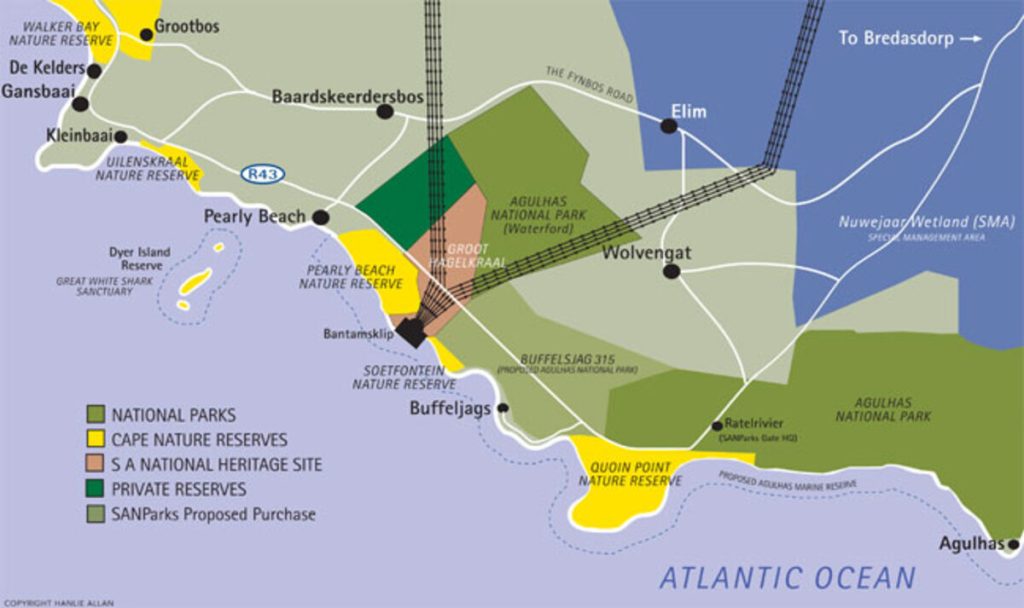
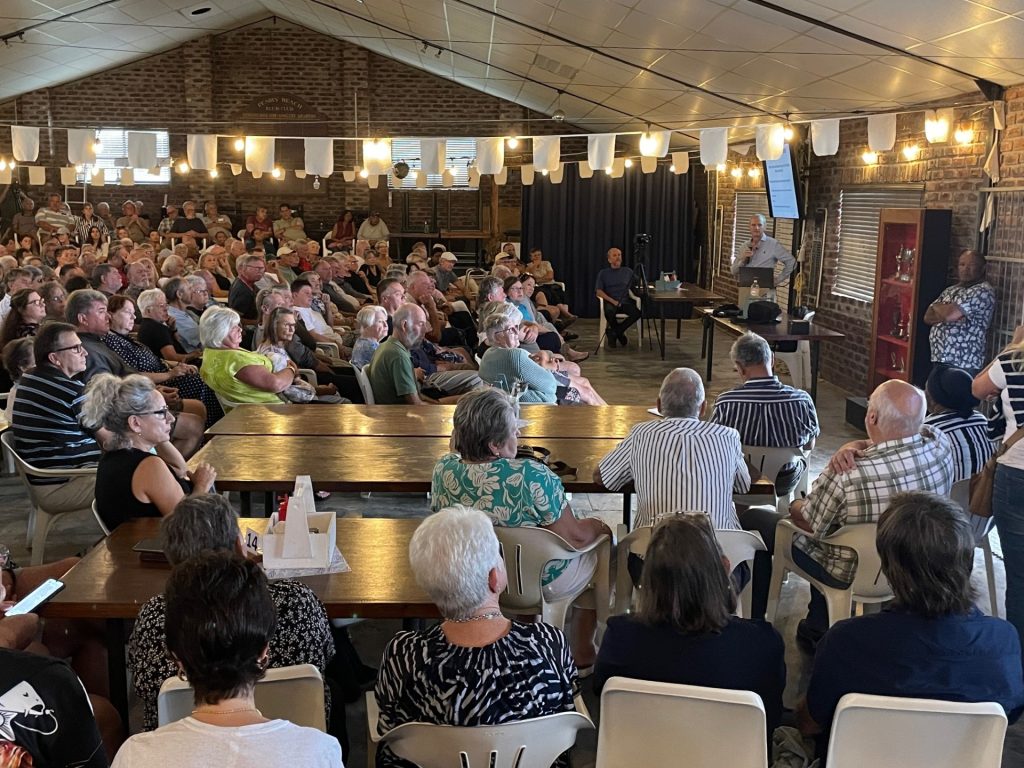
GANSBAAI – Hundreds of residents from Pearly Beach and surrounding Overberg communities gathered last week to voice concerns over government plans to build a nuclear power plant at Bantamsklip, a protected coastal area between Pearly Beach and Buffeljags.
Energy activist Peter Becker led the community meeting in Pearly Beach, highlighting what he described as government’s lack of transparency and inadequate planning on nuclear projects.
Becker urged Overberg residents to join environmental organisations prepared to fight the development. He raised concerns about the independence of the National Nuclear Regulator and questioned why government continues to pursue nuclear energy when renewable alternatives cost less.
The proposed site, located approximately 10km from Pearly Beach, falls within a marine protected area that houses several endangered species. The location has sparked controversy due to its pristine environment and proximity to the Dyer Island marine area, home to African penguins, great white sharks and kelp forests.
Residents attending the meeting raised multiple concerns about the project’s impact on their community. Chief among these was the anticipated influx of between 3 000 and 9 000 temporary workers, predominantly male unskilled labourers, during construction.
“What happens after two years when construction ends? Many will stay behind unemployed,” one resident said at the meeting, citing historical data showing such workforce influxes also lead to increased crime rates.
Property owners expressed fears that values would decline due to proximity to nuclear activities. Whilst initial construction might temporarily boost prices as skilled workers seek accommodation, long-term devaluation appears likely.
Tourism, a cornerstone of the local economy, faces potential collapse if the plant proceeds. The region attracts visitors drawn to its natural environment, and residents warned a nuclear facility would deter nature and environmental tourists.
Questions about basic infrastructure went unanswered. Residents asked where workers would be housed, given existing housing shortages for local communities. Water supply remains unclear, as does the plant’s timeline and exact site boundaries.
Becker addressed the environmental impact assessment process, explaining that public participation offers the best opportunity for community voices to be heard. The scoping report represents the first step, and he encouraged residents to submit objections.
He noted that no environmental assessment has been completed for the project, and various licences must still be issued under the National Environmental Management Act. Eskom must conduct the environmental impact process.
The coastal location suits nuclear plants due to cooling requirements. Becker questioned why the east coast was not identified as an alternative and warned that approval for one plant could lead to construction of all three proposed facilities.
Nuclear waste disposal emerged as another major concern. Koeberg nuclear power station generates 30 tonnes of nuclear waste annually, yet Bantamsklip plans include no identified disposal area. Becker criticised regulators for not requiring waste management plans and funding before construction approval.
He challenged the economic rationale, citing the Lazard study showing nuclear ranks as the second most expensive energy source. Solar and wind alternatives attract private funding, reducing government expenditure.
ALSO READ: Planned nuclear plant at Bantamsklip in the Overstrand sparks objections
Disaster scenarios drew attention, with references to Japan’s nuclear crisis. Any radiation leak would devastate South Africa’s agricultural export market and collapse the tourism industry, which relies on positive perceptions.
The concept of base load generation came under scrutiny. Becker argued no such requirement exists and noted nuclear plants’ extreme running costs necessitate constant operation, creating inconsistencies when combined with renewables on the grid.
Australia’s decision to operate without nuclear power was cited as an alternative model.
Residents questioned whether evacuation plans exist for surrounding communities in case of emergency. No answers were provided.
Becker called on residents to find environmental organisations and unite in opposition to the proposal. The effectiveness of resistance, he said, depends on community action and formal objections during the environmental impact assessment process.


You must be logged in to post a comment.