


Cape Town is experiencing one of its strongest property booms in recent years. New developments are rising across the metro, and nowhere more aggressively than along the Atlantic Seaboard. As someone who has sat on both sides of the table, as a former ward councillor responsible for oversight, and today as a property professional, I’ve always been a supporter of development.
Cities must evolve. They must re-urbanise, modernise, densify and create opportunities. Good development breathes life into a city.
But development without balance, without realistic planning, and without an honest assessment of infrastructure limitations is a recipe for long-term dysfunction, and that is exactly the pattern emerging in Cape Town today.
A boom without a backbone
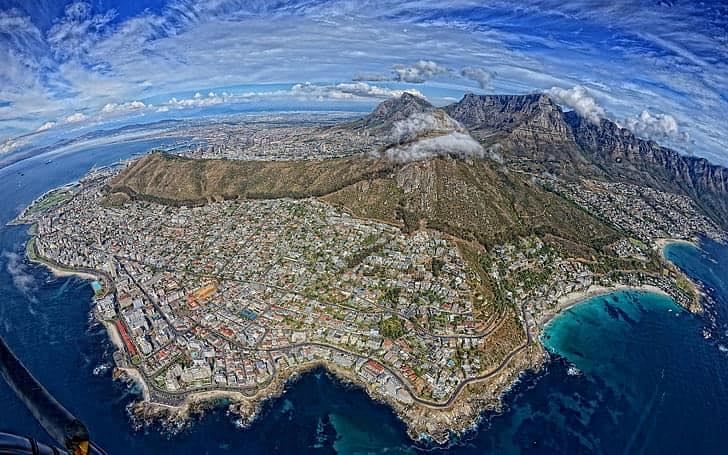
The Atlantic Seaboard is already showing the effects of rapid densification with very little infrastructure planning to support it. Anyone living in Sea Point, Green Point, Fresnaye or the Waterfront corridor can see the trend: traffic congestion is no longer a peak-time problem, it has become an every-time problem.
Road capacity cannot be expanded; we all accept that. But instead of compensating with a world-class, integrated transport system, the City continues with a planning approach that simply assumes such a system exists. It does not.
Just last week, two cruise ships docking, a broken truck, and an event were enough to bring the entire inner city, the CBD, Atlantic Seaboard and surrounds, to a standstill. Hours of productivity vanished as residents and visitors sat trapped in gridlock. There was no coordinated transport plan, no proactive deployment of traffic officers, and no meaningful contingency measures. If one event can collapse an entire city’s mobility, then the planning model is fundamentally flawed.
Development on public land: Growth or overload?
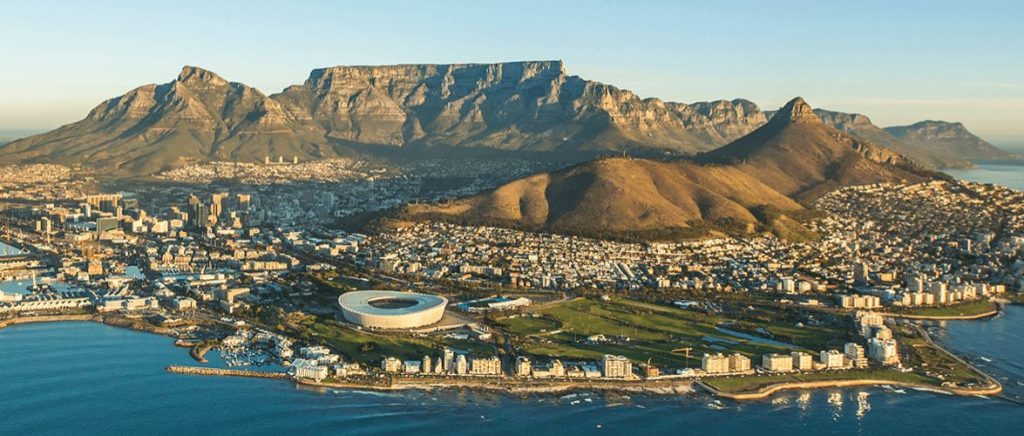
Another growing concern is the continual release of public land for high-intensity private development. The Civic Centre Green Point zone is the latest example, a proposed blend of retail, commercial and other uses that will funnel even more vehicles into an already overloaded area.
This weekend, we have also seen Heritage Western Cape paving the way for the redevelopment of the former Tafelberg School site — a proposal that includes social housing, as well as commercial and retail components. This is yet another example of strategic public land being opened up for mixed-use redevelopment, again raising the crucial question of how the surrounding infrastructure, transport, and community dynamics are expected to absorb these additional pressures.
The problem is not development itself; it is the planning narrative that accompanies it. Reading the City’s proposed framework around this redevelopment, one finds repeated assurances that people will cycle, people will walk, and people will use public transport. While this may sound progressive on paper, it is aspirational at best and misleading at worst. It simply does not reflect reality in Cape Town, where a functional, integrated public transport network does not exist. Writing something down does not make it real.
And if the City intends to continue down the path of redeveloping public land, then it must follow the same principles that were applied around the 2010 development plan for the Cape Town Stadium and its surrounding precinct. At that time, Premier Helen Zille insisted that if major infrastructure was going to reshape Green Point, then meaningful investment had to be channelled back into the community. This resulted in millions being reinvested into the area, most notably the upgrade of the Sea Point Promenade, a project Alderman JP Smith fought tirelessly to secure.
Equally significant was the creation of the Green Point Urban Park, which did not exist until it was argued for, defended, and ultimately won into existence through the relentless efforts of the Green Point Ratepayers, who fought tooth and nail to ensure that the Green Point Common remained an area dedicated to uncommercialised sports, recreation, and community facilities. Without their advocacy, that land could easily have become yet another private development with no broader public benefit.
That period represented a model of balanced development: if public land was to be repurposed, then the surrounding community received tangible, lasting benefits. Today, however, we do not see the same approach. Public land is being earmarked for development with no clear commitment to reinvesting back into the Atlantic Seaboard, where the impact will be felt most. Without this balance, redevelopment becomes extraction rather than partnership.
But development without balance, without realistic planning, and without an honest assessment of infrastructure limitations is a recipe for long-term dysfunction, and that is exactly the pattern emerging in Cape Town today.
The silent pressure on ratepayers
Cape Town is often, and rightly, praised for being better run than most municipalities in South Africa. But there is a worrying trend emerging beneath the surface: middle- and higher-income ratepayers are carrying more and more of the financial load.
Rates have risen sharply, driven by the demand for services the City must provide because national government has failed in areas like policing and public safety. Yet at the same time, the City continues approving thousands of new units, placing additional strain on infrastructure that is already at capacity.
And while “balance” should guide development, it increasingly feels as though anything can be approved and anything can be built as long as it brings in additional income. There is a growing perception, and in many cases a lived reality, that planning principles are taking a back seat to revenue collection. Adding to this frustration is the fact that much of the revenue generated in high-paying areas like the Atlantic Seaboard is ultimately spent outside the communities where it is raised, creating a sense of extraction rather than reinvestment.
The Airbnb effect: A city becoming unaffordable
Globally, cities that permit unregulated Airbnb markets face predictable consequences: locals are pushed out, prices escalate, long-term rental stock disappears, and once-stable neighbourhoods transform into transient hotels.
Yet unlike other international cities, Cape Town has no meaningful Airbnb licensing system, no differentiated rates for short-term letting businesses, and no additional taxation measures to keep the playing field fair.
This imbalance becomes even clearer when one considers that hotels are required to comply with every conceivable levy and regulation, from tourism taxes and business rates to commercial utility tariffs and safety compliance. Airbnbs, in contrast, operate with almost none of these costs, despite competing directly in the same market.
This uneven system drives up property prices, encourages investors to convert long-term rentals into short-term accommodation purely for yield, and contributes directly to making the Atlantic Seaboard unaffordable for ordinary Capetonians. Developers, chasing returns, increasingly build micro-units, shoebox apartments designed for tourists rather than residents.
If the City were to establish a dedicated team, from policy makers to valuators, focused specifically on identifying Airbnbs that operate as full-fledged businesses, they could significantly increase their rates income without continually burdening ordinary ratepayers. Thousands of units across Cape Town function not as casual home-sharing arrangements but as professionally run, revenue-generating enterprises. Yet they continue to be billed at ordinary residential tariffs. Correcting this alone would generate substantial revenue for the City, far more fairly than the constant stream of new levies, cleaning charges, and additional costs imposed on already overburdened ratepayers this year.
In addition to this, there is a growing concern for lower- to middle-income earners, and even those who are steadily progressing into the middle- and higher-income brackets, who now find that owning or even renting on the Atlantic Seaboard is slipping entirely out of reach. These are professionals, young families, essential workers and long-standing residents who once formed the backbone of these neighbourhoods. Yet, despite advancing in their careers and improving their earning capacity, they are still unable to compete with inflated prices driven by unregulated short-term letting and yield-focused developments. When people who are working hard, contributing to the city and moving upward economically still cannot afford to live in these areas, it signals a deeper structural problem in Cape Town’s housing landscape.
Unless something changes, a middle-class 25–35-year-old Capetonian, even one who is thriving professionally, will have almost no chance of living on the Atlantic Seaboard unless they come from significant wealth. That is not urban progress; it is urban exclusion.
Speaking truth, even when it’s uncomfortable
I am fully aware that parts of this article may upset individuals in political office. That has never deterred me, not when I served in government and certainly not now. I have always believed in stating the truth plainly, even when it is uncomfortable, because that is how accountable cities are built.
Those who hold political office must remember that their legacy is not defined by short-term wins, ribbon-cuttings or development announcements. Their legacy rests on whether they build a balanced city, one that thrives today and continues to thrive a decade from now. A city planned only with a two- or three-year horizon is a city heading toward far greater problems later. It is time for decision-makers to listen, and to govern with long-term vision rather than political convenience.
ALSO READ: Property owners take City of Cape Town to Court over controversial tariffs
Where residents must step in
As someone who has worked for years to help the Atlantic Seaboard thrive, I can say with certainty that Cape Town needs strong, organised and vocal ratepayer bodies now more than ever. Residents must come together to demand balanced development, real and functioning public transport, a fair regulatory approach to short-term letting, proper infrastructure planning and responsible use of public land.
Progress must be balanced. Densification must be strategic.
Development must uplift residents, not replace them.
Cape Town has the potential to be one of the world’s most liveable coastal cities, but only if we build a city that works for the people who actually live here.
And no, I am not returning to public office, despite being approached by political parties to challenge the status quo and by influential residents who are prepared to back my entire campaign.
- Jacques Weber is Managing Director, Double.D Property Consultants.




You must be logged in to post a comment.