

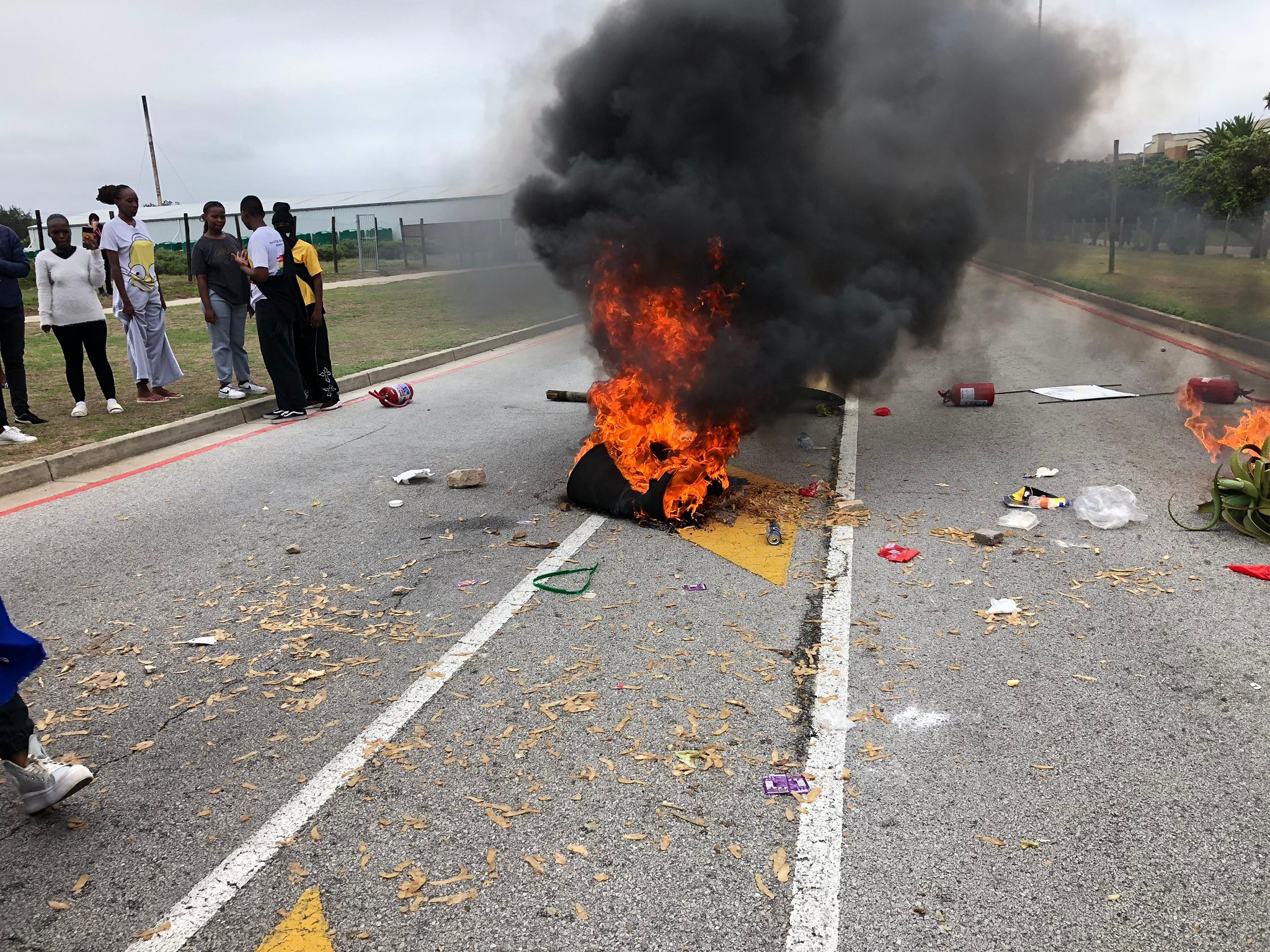
GQEBERHA – Nelson Mandela University (NMU) campuses have been disrupted by student protests over accommodation and funding issues, prompting the High Court to grant an urgent interdict against student organisations, whilst student leaders maintain that no classes will commence until their demands are met.
Yesterday, Sunday 15 February, the Democratic Alliance Student Organisation (DASO)-led Student Representative Council issued a strongly worded statement condemning the university management’s alleged failure to address the accommodation crisis.
“The DASO-led SRC condemns the university management’s continued arrogance and failure to meaningfully address the accommodation crisis affecting unfunded students, following last week’s two-day boycott by student organisations on Thursday and Friday,” the statement read.
“We reject the normalisation of student homelessness and the indifference shown toward the lived realities of our peers,” the statement continued. “Until the university presents clear and implementable solutions to this crisis, no classes will commence. The disruption of academic activity rests squarely on management’s inaction.”

On Friday 13 February, the High Court of South Africa (Eastern Cape Division, Gqeberha) granted the university an urgent interdict against multiple student organisations including the DASO-led SRC, South African Students’ Congress (SASCO), the Economic Freedom Fighters Student/Youth Command (EFFYC) and others.
The court order prohibits students from barricading roadways or preventing campus access, bans unauthorised entry onto university premises and interdicts protesting within 200 metres of controlled premises.
The order is of immediate effect and allows the university to enlist law enforcement assistance if students refuse to comply.
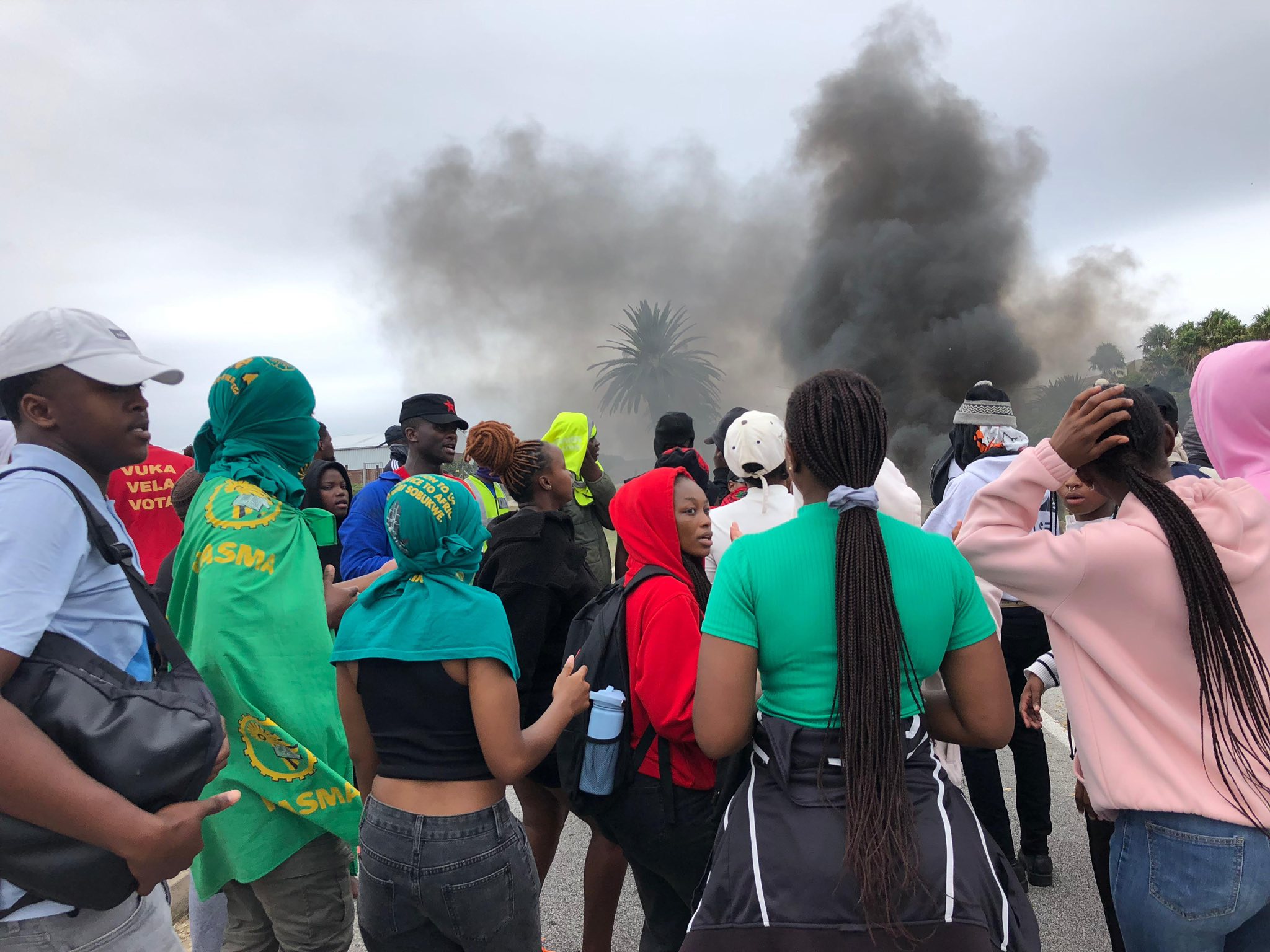
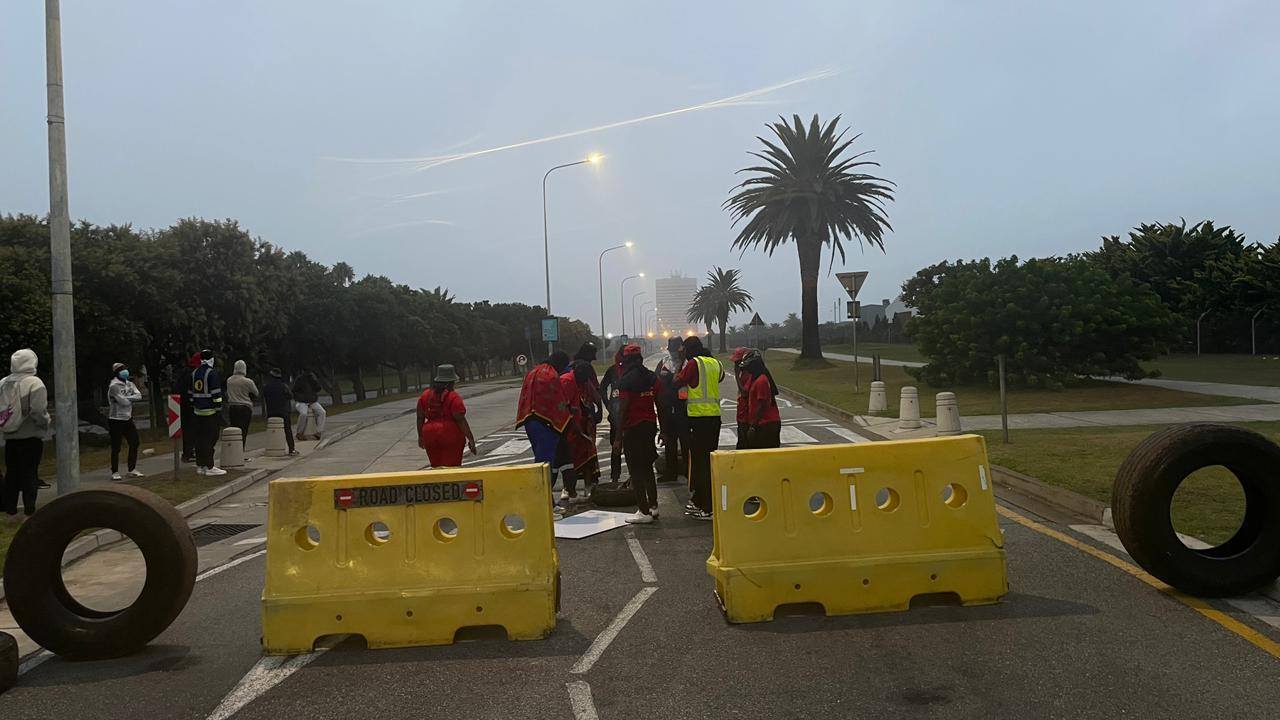
In a statement, NMU management expressed “serious concern” about campus blockages that began on 12 February, when approximately 30 individuals blocked entrances to both campuses with burning tyres and barricades.
Management confirmed that “the group obstructed access with burning tyres and barricades, seeking to prevent students and staff from attending classes and reporting for duty,” with reports of intimidation directed at university community members.

University management stated such actions were “unacceptable and inconsistent with the University’s values and principles,” whilst acknowledging that “the University fully respects and upholds the constitutionally protected right to protest, this right may not be exercised in a manner that infringes on the rights, safety and academic activities of others.”
The protests centre on critical accommodation shortages, with the DASO-led SRC claiming that “only 3% which is 161 of residence beds are available for unfunded students while the university has over 1000 students that are unfunded and registered.”
Student organisations further accused the university of escalating tensions by deploying private security last week.
In social media posts, images of students can be seen with bloody noses and injuries.
“Instead of engagement, we are met with brutality. Instead of solutions, we are met with force. We are being shot at without provocation, treated not as students of this institution, but as threats for simply exercising our democratic right to protest,” the EFFYC wrote.
“Several students sustained injuries during the confrontation. Universities are meant to be spaces of learning, not militarised zones.”
NMU maintained that management has been actively engaging with the SRC and that “matters previously raised as demands have been addressed” and outstanding issues remain under consideration through established engagement processes.



You must be logged in to post a comment.