

GQEBERHA– Nelson Mandela Bay’s water crisis continues to deepen, with the latest data confirming that usable water supply remains critically low while system losses remain alarmingly high.
According to figures released by Nelson Mandela Bay Municipality as of 7 April, the metro’s combined dam levels are at 38.07%.
However, with 9% classified as dead storage, only 29.08% is usable — keeping the city below the critical 30% threshold.
The metro’s main water sources reflect ongoing strain. Kouga Dam, the largest in the system, is at 34.36%, with 31.06% usable water.
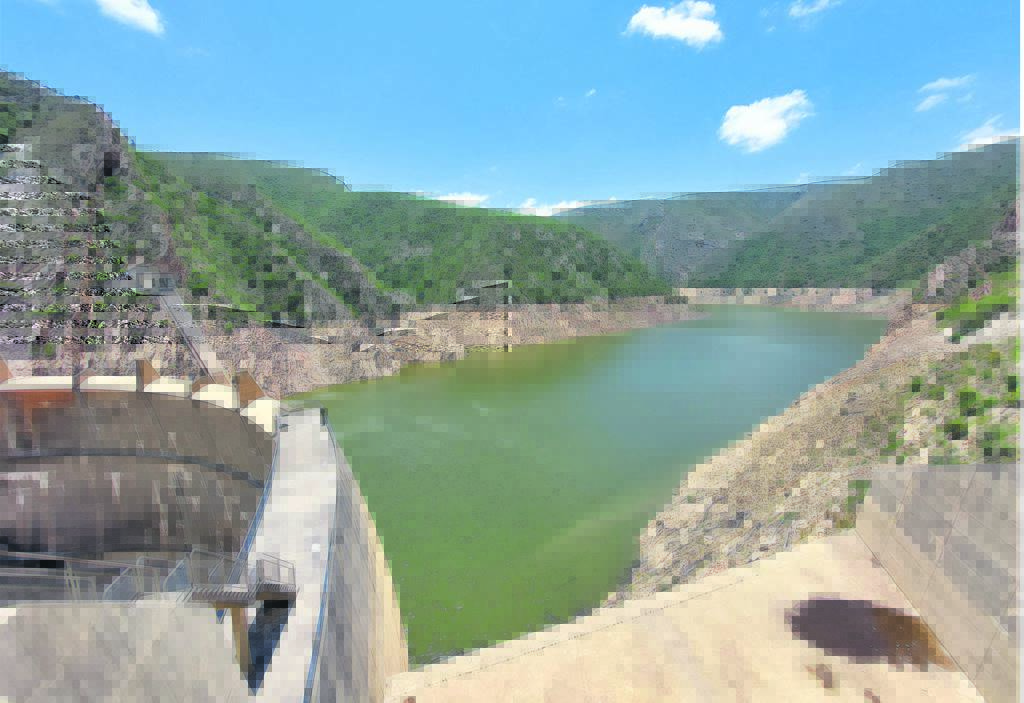
Impofu Dam stands at 37.98%, though only 21.48% is usable, while Churchill Dam is at 38.96%, with 31.46% usable water.
Smaller dams show some resilience, with Groendal Dam at 75.07%, but its contribution to overall supply remains limited.
The situation is further constrained by national water restrictions. The Department of Water and Sanitation has imposed a 25% restriction on the Kromme sub-system (Churchill and Impofu dams) and a 10% restriction on the Kouga sub-system, reducing the volume of water that can be abstracted.
At the same time, infrastructure challenges continue to place pressure on supply. Municipal data on water leaks, also dated 7 April, shows 7,372 unresolved cases, despite more than 22,000 repairs completed since July 2025.
Crisis require immediate intervention
Denise van Huyssteen, CEO of the Nelson Mandela Bay Business Chamber, said the scale of the crisis requires immediate and practical intervention.
“The reality is stark: we are running out of water and the system is failing to safeguard what remains. Businesses cannot afford to wait for ideal conditions or perfect policy responses. The time to act is now.”
She said urgent action is needed to reduce losses and stabilise the system.
“This is an emergency! We need the Municipality to take urgent action to rein in the water losses by addressing infrastructure backlogs such as fixing leaks, proactively maintaining the reticulation system, dealing with meter tampering and incorrect billing issues, and also properly securing pump-stations to prevent vandalism.”
The Business Chamber has called on businesses to reduce consumption, repair leaks, invest in water reuse and recycling systems and install backup water supply measures. Residents are also urged to limit usage and address household leaks.
“Water resilience must now be treated with the same urgency as energy security. Every litre saved today helps to extend the viability of our city tomorrow,” Van Huyssteen said.
As part of its response, the Chamber’s Adopt-a-School initiative has seen 35 schoolsand one clinic supported by local businesses to improve water efficiency and fix leaks.
ALSO READ: Water crisis deepens as burst pipes compound critical supply


You must be logged in to post a comment.