

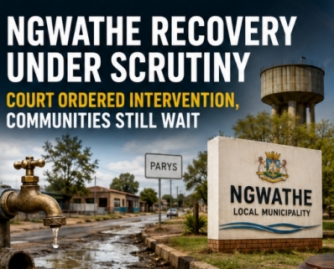
PARYS – Ngwathe Local Municipality’s recovery remains under close scrutiny as questions continue over whether the Free State government’s intervention complies with a High Court order aimed at restoring one of the province’s most financially distressed municipalities.
Although the intervention has resulted in the dissolution of the municipal council and the appointment of a provincial administrator, concerns have been raised that procedural shortcomings could delay efforts to rebuild the municipality’s finances and improve service delivery for residents.
Municipality in crisis
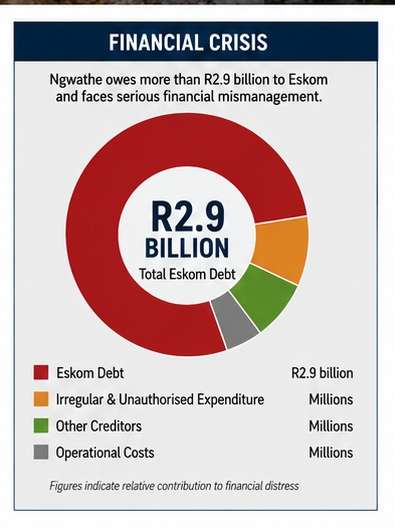
Ngwathe, which includes Parys, Heilbron, Vredefort, Edenville and Koppies, has struggled for years with mounting debt, deteriorating infrastructure and the collapse of basic municipal services. The municipality reportedly owes more than R2.9 billion to Eskom and has been plagued by irregular, unauthorised and wasteful expenditure, poor financial management, ageing infrastructure, recurring water shortages and sanitation failures. It is also among 69 municipalities whose equitable share allocations have been withheld by National Treasury because of financial non-compliance.
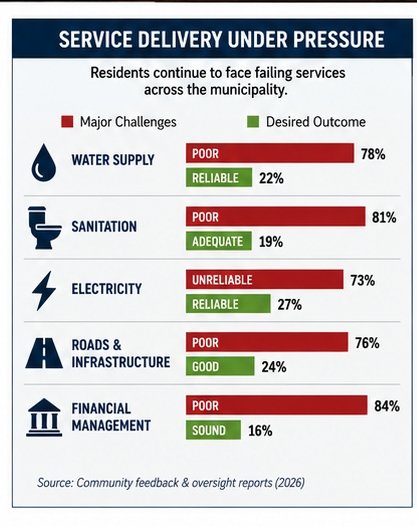
Residents have long complained about unreliable water supplies, sewage spills, electricity interruptions and deteriorating roads, while businesses have warned that the municipality’s ongoing failures continue to undermine economic activity and investment.
Court orders provincial intervention
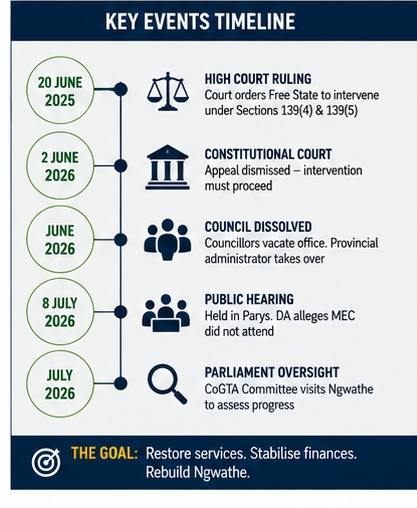
The crisis culminated in legal action by civil society organisation AfriForum, which argued that Ngwathe had failed to fulfil its constitutional obligations. On 20 June 2025, the Free State High Court ruled that the municipality had breached its constitutional, legislative and regulatory duties and ordered the Free State Provincial Executive to intervene under Sections 139(4) and 139(5) of the Constitution. The court directed the province to implement a mandatory financial recovery plan aimed at restoring the municipality’s financial stability and its ability to deliver essential services.
Ngwathe’s attempt to appeal the judgment was dismissed by the Constitutional Court on 2 June, paving the way for the intervention. The municipal council was subsequently dissolved, councillors vacated office and a provincial administrator, supported by administrative teams, assumed responsibility for municipal operations.
Dispute over implementation
However, the intervention has become the subject of political and legal debate. The Democratic Alliance (DA) alleges that Free State MEC for Cooperative Governance and Traditional Affairs (CoGTA), Saki Mokoena, incorrectly gazetted the dissolution of the municipality under Section 139(1)(c) of the Constitution instead of implementing the court-ordered financial recovery intervention required under Section 139(5).
According to the DA, this resulted in Parliament initiating constitutional processes relating to the dissolution, including a public participation hearing held in Parys on 8 July. The party further alleges that the MEC did not attend the hearing and says it will submit recommendations to Parliament’s National Council of Provinces (NCOP) Select Committee calling for full compliance with the High Court order. The Free State Department of CoGTA has not publicly responded to these allegations.
Parliament monitoring recovery
Meanwhile, Parliament’s Select Committee on Cooperative Governance and Public Administration conducted oversight visits to Ngwathe in July to assess the progress of the provincial intervention. The committee examined efforts to stabilise municipal finances, restore electricity and water services, repair infrastructure and improve governance, while encouraging greater cooperation between the provincial administration, municipal officials and local communities.
For residents, however, the legal debate is secondary to the need for tangible improvements. Communities continue to face unreliable water supplies, failing sanitation systems and deteriorating infrastructure. The success of the intervention will ultimately be measured not by legal processes alone, but by whether it restores sound financial management, reliable service delivery and public confidence in the municipality.


You must be logged in to post a comment.