
As South Africa (SA) marks National Down Syndrome Day on 20 October, activist organisations are calling for more opportunities for people with Down syndrome within broader society.
Down Syndrome South Africa (DSSA) is calling for more than awareness, urging communities, schools, employers and government to include people with Down syndrome in everyday life.
Under this year’s National Down Syndrome theme, “Include Us – Every Day. Everywhere. Every Time”, the organisation is highlighting the gap between the rights people with Down syndrome are entitled to and the barriers they continue to face.
People with Down syndrome continuously voice their hopes for inclusive education, employment, healthcare, independence, relationships and meaningful participation in their communities, according to DSSA.
The organisation says that people with Down syndrome continue to encounter inaccessible services, stigma, low expectations and exclusion. Moreover, their voices are oftern overlooked in decisions affecting their lives.
“Inclusion is not a privilege. It is not a favour. It is not charity. It is a human right,” says DSSA in a statement this month.
ALSO READ: Paarl Rotary visited the Club 21 School for Down syndrome
When people are shut out of schools, workplaces, friendships and community activities, their opportunities to build relationships and experience a sense of belonging are reduced.
Therefore, this year’s theme highlights the connection between exclusion and loneliness.
DSSA argues that inclusion must extend beyond annual awareness campaigns and become part of everyday life.
Striking comparisons
The Commission for Employment Equity’s 2026 report found that employees with disabilities accounted for just 1,3% of the workforce covered by its 2025 reporting cycle.
However, this includes people with disabilities generally, not specificially people with Down syndrome.
Meanwhile, a scoping review published by the National Library of Medicine in 2025 reported a recent employment rate of 53% in the studies it examined.
However, the review included only nine studies. Therefore, this figure should not be treated as a South African employment rate or a universal global estimate.
It also found that employment was often concentrated in a limited range of sectors.
While research shows attempts of representation, inclusion goes far beyond simply hiring someone with a disability.
Moreover, children with Down syndrome should have meaningful opportunities to learn in inclusive classrooms. And the classrooms should have appropriate support for their individual needs.
Within the employment sector, DSSA specifically advocates for supported employment, which helps people with Down syndrome obtain paid jobs in the open labour market.
Its guidance emphasises individualised support, the right to choose work and the right to be remunerated.
And while most provinces in the country often battle with providing adequate resources for people with Down syndrome, the Western Cape is often better equiped in comparison.
Support across the Western Cape
In the Western Cape, the Down Syndrome Association Western Cape (DSAWC) has been working since 1976 to support people with Down syndrome and similar disabilities, as well as their families.
Run by two social workers, its outreach serves approximately 450 families across 28 areas in the province.
DSAWC’s programmes extend beyond family support, addressing the need for education, social interaction and meaningful activities throughout a person’s life.
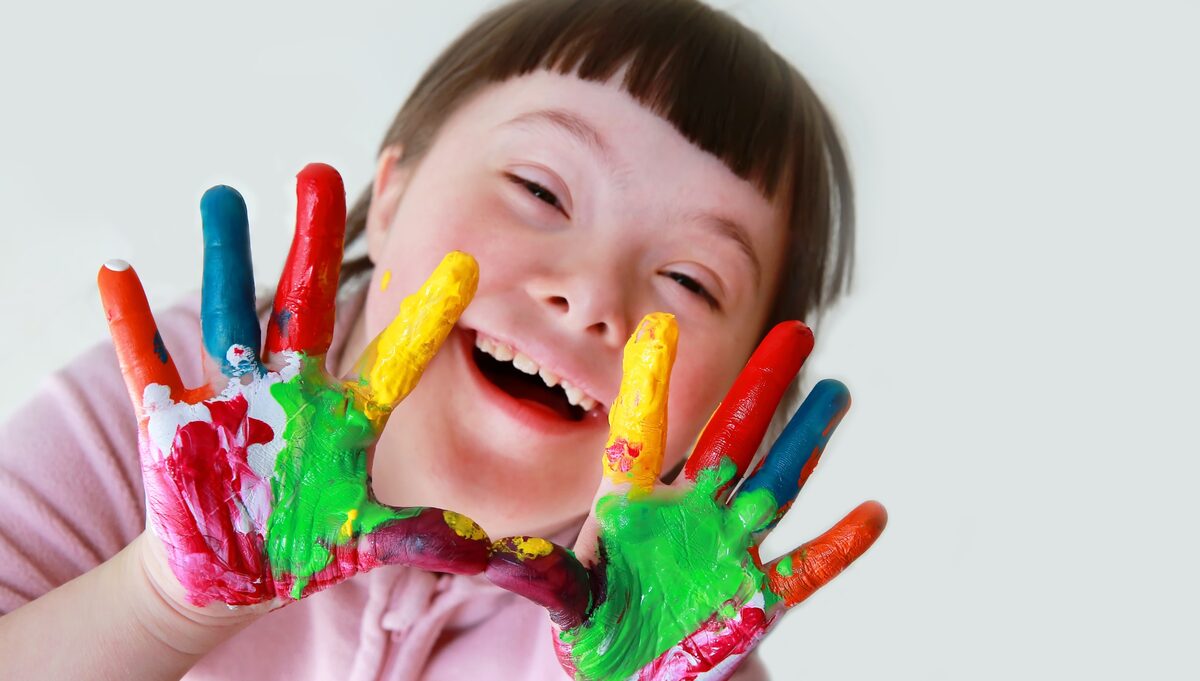
The association’s Leisure Library includes a monthly social club, known as Sokkie, which has operated for more than 30 years and attracts between 20 and 30 young adults to its dances. Its art programme, established in March 2005, accommodates 20 adults per session. Participants paint fabric used to make shopping bags, which are sold at markets to fund the project.
These initiatives provide opportunities for participation and connection, but the wider call for inclusion remains urgent.
Meanwhile, DSSA also lists facts about people with Down syndrome to help families include and understand people with Down syndrome more.
These include:
People with Down syndrome have mild to moderate intellectual disability, not mental damage.
The cause of Down syndrome is not related to age, race, religion or socio-economic situations.
One in 1 000 babies born in developed countries and 1 in 650 babies born in developing countries is affected by down syndrome.
80% of children affected by Down syndrome are born from mothers under the age of 35, although women over the age of 35 are at a higher risk of having a child with Down syndrome.
Although Down syndrome cannot be cured, there is a variety of medical care to treat problems associated with the genetic disorder.
People often think it is an illness and that children are sick, but it is not a disease and cannot be cured.
Children with Down syndrome can be included in normal schools with regular academic procedures.
People with Down syndrome can live up to the age of 65+.
Turning awareness into action
DSSA is urging the public to challenge exclusion, support inclusive education and employment. And, it ensures people with Down syndrome are represented in conversations and decisions affecting their lives.
DSAWC is also raising funds through community initiatives.
It held its “It’s in the Genes” awareness dance in Bellville on 2 October and will host a garage sale at its premises on 30 and 31 October.
DSSA is selling “Beauty in the Genes” stickers for the awareness campaign, encouraging people to wear jeans on 20 October.
While these initiatives help raise awareness and support services, the organisations’ central message is that awareness must lead to tangible change.
For people with Down syndrome, inclusion means having opportunities to learn, work, build relationships, make choices and contribute to their communities – not having to repeatedly ask for the same rights and opportunities afforded to others.
As the campaign’s theme makes clear, meaningful inclusion must happen every day, everywhere and every time.