The South African rugby landscape is on the brink of seismic change. At the end of November, the Mzansi Rugby League will host its inaugural player draft, setting the wheels in motion for a professional rugby union competition that promises to shake up the established order and create pathways for hundreds of players currently on the fringes of the system.
The NFL-style draft will see ten teams select from a pool of contracted players, filling their rosters ahead of the March 2027 kick-off.
From Glenwood to game-changers
Calvin Smith and Phillip Mngadi’s story reads like a rugby fairy tale with a twist. The pair lined up together at Glenwood High School before Smith transferred to Hilton College, eventually earning a professional contract. But an injury curtailed his playing career and, more importantly, opened his eyes to rugby’s uncomfortable truth.
“There are still only about five teams in South Africa that players can go to and make a living. The smaller unions give out short contracts that don’t offer security to players,” Mngadi explained. When the old teammates reconnected, they realised the system hadn’t evolved.
The Mzansi Rugby League was born from that frustration.
Adding to the ecosystem, not destroying it
Smith is quick to dispel any notion that MRL aims to dismantle the existing structure. “If any of the players are contracted from the MRL to go to the big South African franchises, then we see that as a win,” he said. “We want more players to make a living from the sport. There are so many talented players in South Africa and not enough pathways where they can have security whilst playing rugby.”
Also read: Mzansi rugby league forges ahead despite opposition to 2027 bow
It’s a compelling pitch in a country where rugby talent is abundant but opportunities are finite. The traditional route, school rugby, Varsity Cup or provincial rugby, then hopefully a franchise contract, works for the elite few. The rest? They’re often left scrambling for short-term deals with smaller unions or abandoning the sport altogether.
The MRL’s recruitment strategy targets precisely those players: the fringe dwellers, the nearly-men, the talented ruggers who haven’t cracked the SARU system but aren’t ready to hang up their boots. “Players have started to contact us, which just shows me there is a need for something like this in South Africa, and Africa in general,” Smith noted. “We are bringing something new to the continent, giving players a second wind.”
Battle lines drawn
The South African Rugby Union hasn’t welcomed MRL with open arms. SARU has warned that players affiliating with the breakaway league could face significant sanctions a threat, Mngadi meets with steely resolve.
“SARU doesn’t own rugby. We are ready for the battle if it comes. If they want to ban players for life, there are competition laws and labour laws that strengthen our case,” he said.
It’s a high-stakes stand-off. SARU controls access to Springbok selection and holds the keys to the established professional pathway. But Mngadi and Smith are betting that South African law, will protect players’ right to earn a living from their skills.
The legal brinkmanship adds drama to an already compelling narrative, but the MRL CEO and CCO insist they’re not poaching SARU-contracted players. “We don’t contract players that are already in the SARU system, but rather players that are on the fringes of that system,” Smith clarified.
Building an industry
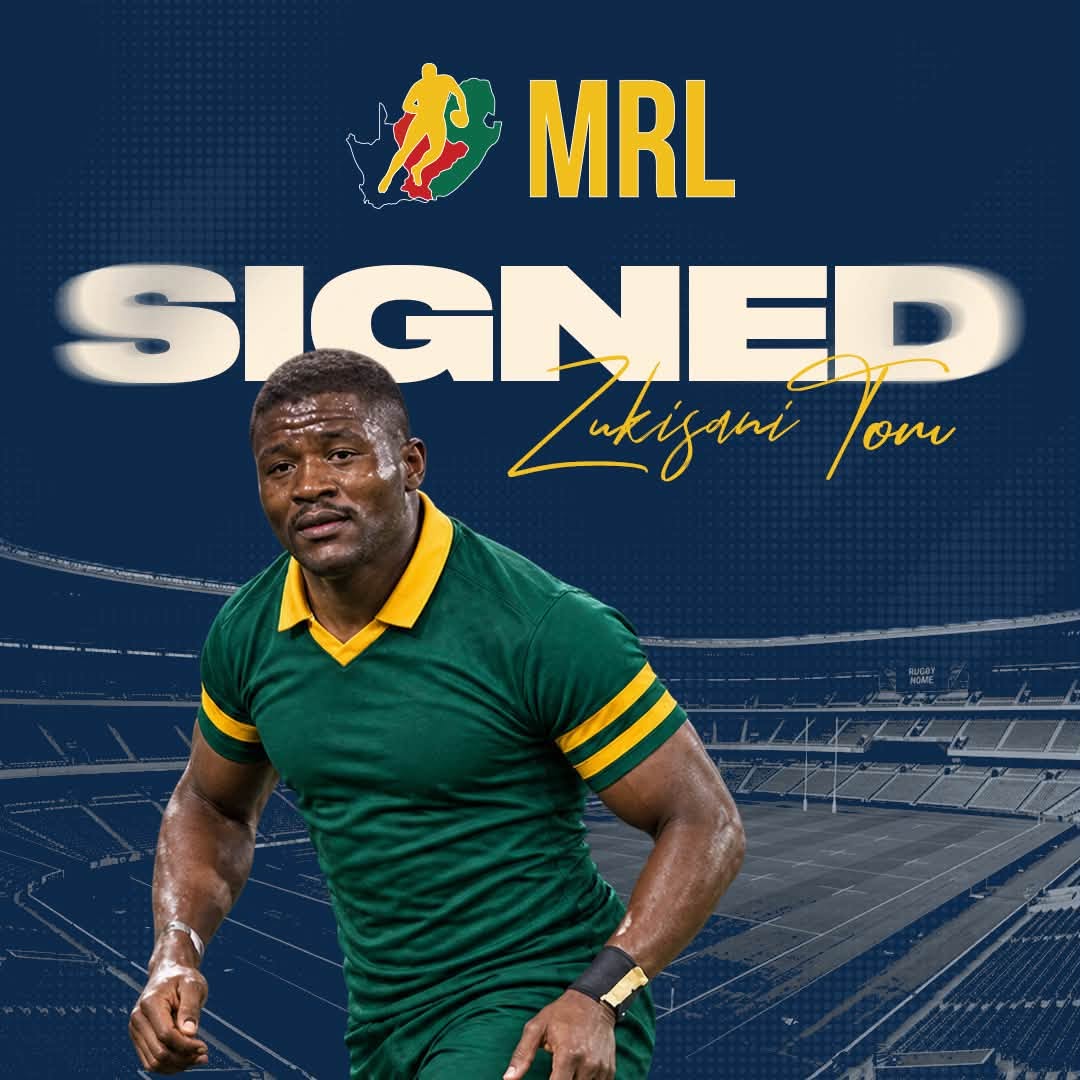
The numbers tell a story of genuine ambition. Fifteen signings have been announced so far, with 150 players targeted for the November draft. But that’s just the beginning. The MRL’s ultimate goal is 300-450 contracted players per season across ten franchises.
Add coaching staff, referees, who will be full-time, contracted professionals, and support personnel, and the league is looking at approximately 1,000 employees. In a country grappling with unemployment, those are livelihoods.
Players will receive medical aid and average contract lengths of three years. “There is a massive chunk of talent that just goes missing in South Africa,” Smith lamented.
The draft and what lies ahead
MRL has been announcing new signings almost daily, building anticipation for the November spectacle. The NFL-style draft format means each franchise will select players in turn, strategically building their squads for the inaugural season. Unlike future drafts, this first edition will be particularly lengthy and dramatic as all ten teams need to fill their entire rosters from scratch.
Foton, the competition’s vehicle sponsor, has been announced alongside, MediHelp and Catapult. “Most of our partners have been locked in and we will announce them in due course,” said Smith. It is a sign that the business community sees potential in the venture.
Whether the MRL can deliver on its promises remains to be seen. The competition faces formidable obstacles: SARU’s institutional power, the challenge of building ten competitive franchises, securing broadcast deals, and winning over supporters.
But for now, optimism reigns. Players who thought their professional dreams had died are getting second chances. Coaches and referees are being offered full-time employment in a sport that has traditionally relied on part-time officials. And two former schoolmates are daring to imagine that South African rugby can be bigger, more inclusive, and more professionally viable than the status quo allows.
The draft at the end of November will be the first tangible proof that this isn’t just talk. Ten teams, 150 players, and a revolution waiting to happen.