

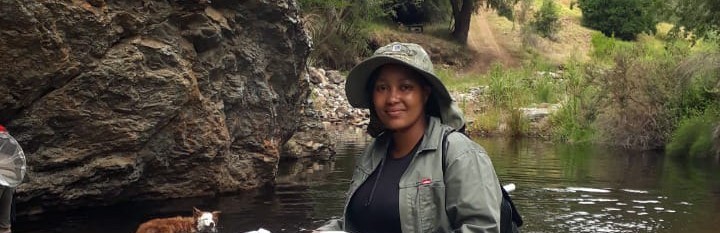
BLOEMFONTEIN. In a remarkable contribution to science and biodiversity, six researchers of the National Museum have described 62 new species over the past five years. This is according to results published in the Five-Year Strategic Plan End Term Report for the period ending March.
According to Sharon Snell, chief executive officer (CEO) of the National Museum, these new species have all been described in leading international scientific journals.
“These discoveries highlight both the richness of our natural heritage and the importance of museum collections,” she said.
“Many of the new species were found during recent fieldwork, but others came to light while curating old museum specimens, some collected many decades ago.”

Taxonomy is the science of classifying and describing new species and is important for Africa’s conservation initiatives. It is difficult to provide protection for species that have not been identified and described. Taxonomic research is often time-consuming and meticulous, with the process from initial discovery to publication often taking several years.
Snell says the National Museum is privileged to have in its employ six qualified and highly skilled taxonomists. The new species described by the National Museum include 31 mites, 11 flies, 10 dung beetles, nine pseudoscorpions and one lizard. The scientists responsible for these discoveries are: Dr Lizel Hugo-Coetzee, Dr Gimo Daniel, Burgert Muller, Jan-Andries Neethling and Jarmaine Magoai of the museum’s terrestrial invertebrates department, and Dr Michael Bates of the animal and plant systematics department.

South Africa’s diverse habitats have proven especially fruitful, with new species originating from the Eastern Cape (Fort Beaufort and Hogsback), Free State (Fauresmith, the Franklin Game Reserve, Golden Gate Highlands National Park and Harrismith), Western Cape (the Cederberg Mountains, Rheenendal and the West Coast National Park) and the Northern Cape.
International collaborations have also expanded the museum’s reach, with new species described from Mozambique, Madagascar, Malawi, Angola, Lesotho, Liberia, Kenya, Togo, Uganda and Ethiopia. A highlight includes the identification of several dung beetle species from Mount Mabu in Mozambique, based on extensive expeditions led by Dr Gimo Daniel.
Another exciting find is a new green-eyed lizard species from Angola, belonging to the genus Cordylus. Identified through a combination of detailed morphological analysis and modern molecular techniques, this discovery illustrates the ongoing value of integrative taxonomy in understanding reptile diversity.

Although the exact number of described animal species in South Africa remains unknown, current estimates suggest it exceeds 65 000. Estimating the number of undescribed species is even more challenging. For insects alone, projections range between 45 000 and 90 000 undiscovered species.
South Africa is also exceptionally rich in plant diversity, with approximately 24 000 known plant species. An additional 1400 to 1575 species are still expected to be discovered.
Much of this biodiversity is represented in the collections of the National Museum. The animal collections, comprising insects, mites, arachnids, reptiles, amphibians, birds, mammals and fossils, include over 500 000 specimens. The plant collection (herbarium) contains more than 28 500 specimens.
Significantly, for invertebrates (for instance: insects, mites, spiders, pseudoscorpions), the museum houses 654 primary type specimens, the original specimens on which new species were formally described. As invertebrates represent the vast majority of earth’s biodiversity, it is expected that most future species discoveries will continue to come from this group.
For many groups of animals and plants, DNA markers (for instance, mitochondrial and nuclear DNA) are used in addition to morphology to evaluate relationships between different species, or populations of what are thought to be the same species. Often, the results from DNA analysis suggest that certain populations are different (perhaps there are even undescribed species), even though this was not apparent based only on external appearance. Once the new species are “identified” using DNA, other museum specimens can be matched or classified based on similarities in such traits as colour pattern, size, and scale counts.
The museum is fortunate to have in its employ Dr Cora Stobie who is a trained geneticist and who works with Bates to evaluate the relationships between different populations of South Africa’s common girdled lizard, of which there may be a few new species. At some museums, even samples from preserved specimens are used to study evolutionary relationships.
These discoveries are not just scientific milestones, they are essential for conservation and for understanding the ecosystems that sustain life.
“The National Museum remains committed to documenting and preserving biodiversity, both locally and across the African continent,” says Snell.



You must be logged in to post a comment.