
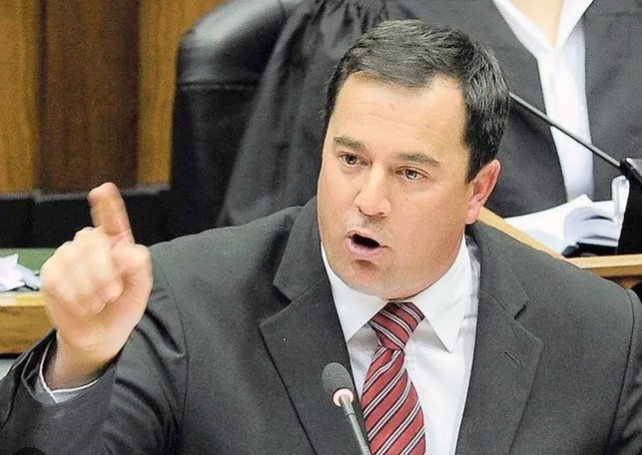
Agriculture Minister John Steenhuisen has announced a comprehensive 10-year plan to tackle South Africa’s devastating foot-and-mouth disease (FMD) outbreak, while confirming he will request Cabinet to declare the crisis a national disaster.
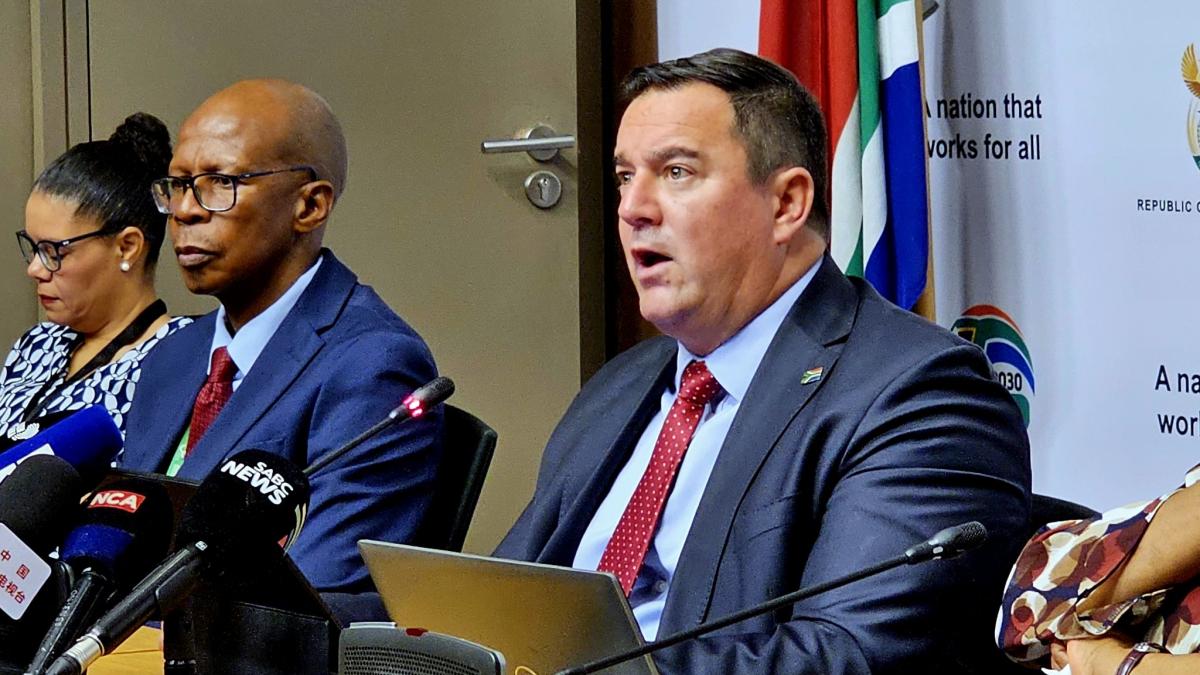
Speaking at a press briefing on Wednesday, Steenhuisen outlined a phased, science-based strategy aimed at stabilising the outbreak, protecting the country’s livestock industry, and eventually achieving disease-free status recognized by the World Organisation for Animal Health (WOAH).
“Our strategy will be phased over ten years, beginning with stabilisation and consolidation, before moving toward the eventual withdrawal of vaccination and final recognition of national freedom through vaccination,” the minister said.
The declaration of a national disaster would enable greater cooperation from the South African Police Service, municipal and provincial traffic departments, and the South African National Defence Force through the NatJOINTS system, particularly for enforcing livestock movement controls.
Immediate vaccination campaign
The plan includes ambitious province-specific vaccination targets, with the hardest-hit provinces – KwaZulu-Natal, Gauteng, Free State, and North West – receiving immediate mass vaccinations. The strategy calls for 100% coverage in feedlots and dairy herds, 90% in commercial livestock, and 80% in communal areas.
Nearly two million animals have already been vaccinated since the outbreak began, with government spending over R72-million on imported vaccines from Botswana.
Steenhuisen announced that South Africa is diversifying its vaccine sources, procuring supplies from the Botswana Vaccine Institute, Biogénesis Bagó in Argentina, and Dollvet in Turkey. Local production through the Agricultural Research Council (ARC) and Onderstepoort Biological Products is also being ramped up.
“All vaccines will undergo antigenic matching at the Pirbright Institute to ensure they are effective against South Africa’s circulating strains,” he said.
Argentina will supply one million doses within the next two weeks, with an additional five million doses expected by March.

Technology and surveillance
The strategy incorporates modern disease control measures, including a Digital Livestock Identification and Traceability System (LITS) and real-time digital heatmaps through the Red Meat Industry Services Operational Centre to track outbreaks.
Laboratory capacity is being strengthened to ensure faster diagnosis and monitoring, while border hotspots and wildlife-adjacent zones will receive biannual vaccination campaigns.
The minister has set an ambitious target of reducing outbreak incidence by more than 70% in high-risk provinces within 12 months, with the ultimate goal of achieving complete FMD freedom by the mid-2030s.
A Ministerial Advisory Task Team composed of veterinary scientists and industry specialists will oversee implementation across provinces.
Political response
The Democratic Alliance welcomed the announcement, with Beyers Smit, DA Member on the Agriculture Portfolio Committee, describing it as “a strong move in the right direction” that indicates “help is on the way for our agricultural community.”
“The DA backs and supports Minister Steenhuisen’s call for a national state of disaster concerning Foot and Mouth Disease, which would immediately unlock more resources to fight the outbreak,” Smit said in a statement released on Tuesday.
The DA particularly welcomed the allocation of additional policing resources from SAPS to help enforce movement controls, and praised the diversification of vaccine suppliers and the implementation of digital tracking systems.
“It is an ambitious but realisable target set by Minister Steenhuisen to reduce outbreak incidence by more than 70% in high-risk provinces, within 12 months,” Smit added.
Industry criticism
However, the family-farmer organisation Saai expressed serious concern and disappointment, stating the announcement “failed to present the necessary solutions for farmers who are currently facing a survival crisis.”
Saai warns that the scale of the crisis appears greater than what the Department of Agriculture understands or has capacity to manage, noting that trust in the department among farmers is “extremely low.”
The organisation set out twelve core requirements for the minister, including a clear plan for financial assistance to affected farmers, emergency regulations to mobilise resources beyond the department, and greater flexibility to expand vaccine production into the private sector.
Saai rejected what it called the minister’s “allegations that agricultural organisations are spreading disinformation or exploiting the crisis for membership recruitment,” and defended the right of organizations to ask critical questions.
The organisation also criticised the minister for comments about the Milk Producers’ Organisation approaching the courts to secure better vaccine access, arguing it was precisely this pressure that forced the department to broaden procurement beyond Botswana after more than a year.
Economic impact
The FMD outbreak has caused widespread livestock losses, halted meat exports, and raised concerns about food security. Rising meat prices have already impacted consumers, with experts warning of further financial shocks if the outbreak is not contained quickly.
Steenhuisen acknowledged the emotional and financial toll on farmers, stating: “The cooperation of every citizen and all sectors of the agricultural industry is critical. By protecting our national herd, we are protecting our future.”
He stated that vaccination alone is not a solution: “I need to emphasise that vaccination is not a silver bullet to eradicate or manage this disease. It is merely one of the tools that can and should be used to combat FMD.”
The success of the plan, he added, depends on timely reporting of outbreaks, strict adherence to movement controls, and rapid vaccination in high-risk areas.
ALSO READ: Foot-and-mouth disease spreads across Africa’s largest beef producer’s major feedlots



You must be logged in to post a comment.