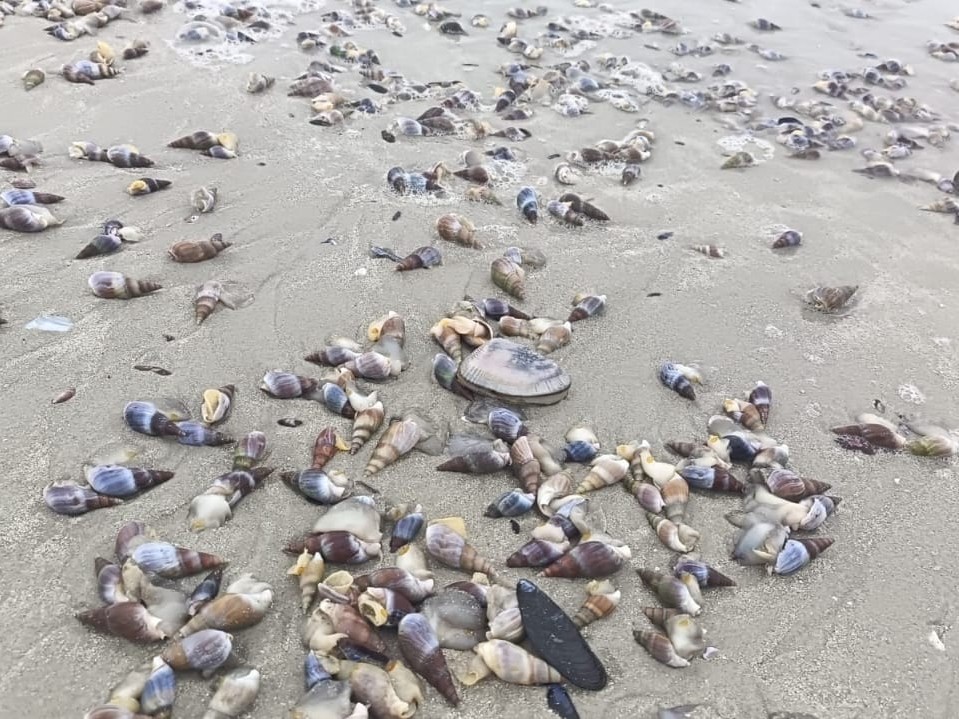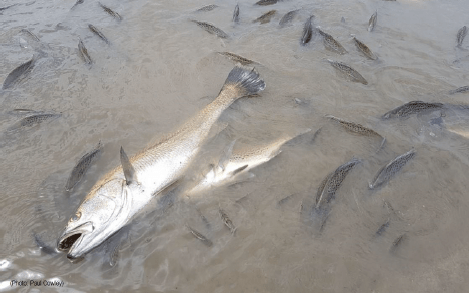
MOSSEL BAY – Thousands of dead fish floating in the Hartenbos Estuary near Mossel Bay initially pointed to one obvious culprit: sewage pollution. But after a thorough investigation, environmental authorities have revealed the real story is far more complicated.
The Hartenbos Estuary became a watery graveyard last week, when massive numbers of fish suddenly died, creating a disturbing scene that alarmed locals and visitors. The sight of dead fish floating on the water’s surface and washing up on shores immediately raised huge concerns as to water quality.
When the mass fish deaths were first discovered, all signs seemed to point toward sewage pollution as the culprit. It’s a common cause of fish deaths in urban coastal areas, where overloaded sewage systems can discharge harmful waste into waterways during heavy rains or system failures.
The Department of Forestry, Fisheries and the Environment (DFFE) initially reported that sewage discharge and resulting pollution had caused the environmental disaster.
However, after working closely with Mossel Bay Municipality to investigate the incident thoroughly, environmental authorities discovered the real story was much more complex. The fish deaths weren’t caused by a single sewage spill but rather by a perfect storm of environmental factors working together.
It has been determined that this particular incident can be attributed to a combination of interacting factors.
“Through engagements with the Mossel Bay Municipality, it has been determined that this particular incident can be attributed to a combination of interacting factors,” the DFFE stated.
The investigation revealed three main factors that combined to create lethal conditions for fish in the estuary:
Too many nutrients: Various sources around the area have been adding excess nutrients to the water over time. These nutrients act like fertilizer, causing explosive growth of algae and other water plants.
Reduced water flow: Dams and water extraction in the area have significantly reduced the amount of fresh water flowing into the estuary. This means the water moves much more slowly, allowing problems to build up instead of being flushed away naturally.
Algae explosion: The combination of extra nutrients and slow-moving water created perfect conditions for harmful algae to bloom massively, using up oxygen and producing toxic ammonia that killed the fish.
The Hartenbos incident isn’t unique. According to the National Biodiversity Assessment and other studies, this type of environmental problem is becoming increasingly common in South African estuaries, especially smaller ones like Hartenbos that can become temporarily cut off from the ocean.
When estuaries can’t flush themselves naturally due to reduced water flow, and when they receive too many nutrients from human activities, they become time bombs waiting for the right conditions to trigger environmental disasters.
The encouraging news is that water quality monitors have confirmed that oxygen levels in the Hartenbos Estuary have returned to normal, and the situation is now under control. The immediate crisis has passed, though authorities continue monitoring the area.
Despite the environmental recovery, authorities maintain their warning against touching or eating any dead fish or marine life from the area. The DFFE stated that “such organisms may pose serious health risks and are not safe for consumption, regardless of the suspected cause of mortality.”
Even though the water quality is improving, the dead fish may still carry harmful bacteria or toxins that could make people seriously ill.
ALSO READ: Red tide alert: 100 km contamination zone declared on West Coast