

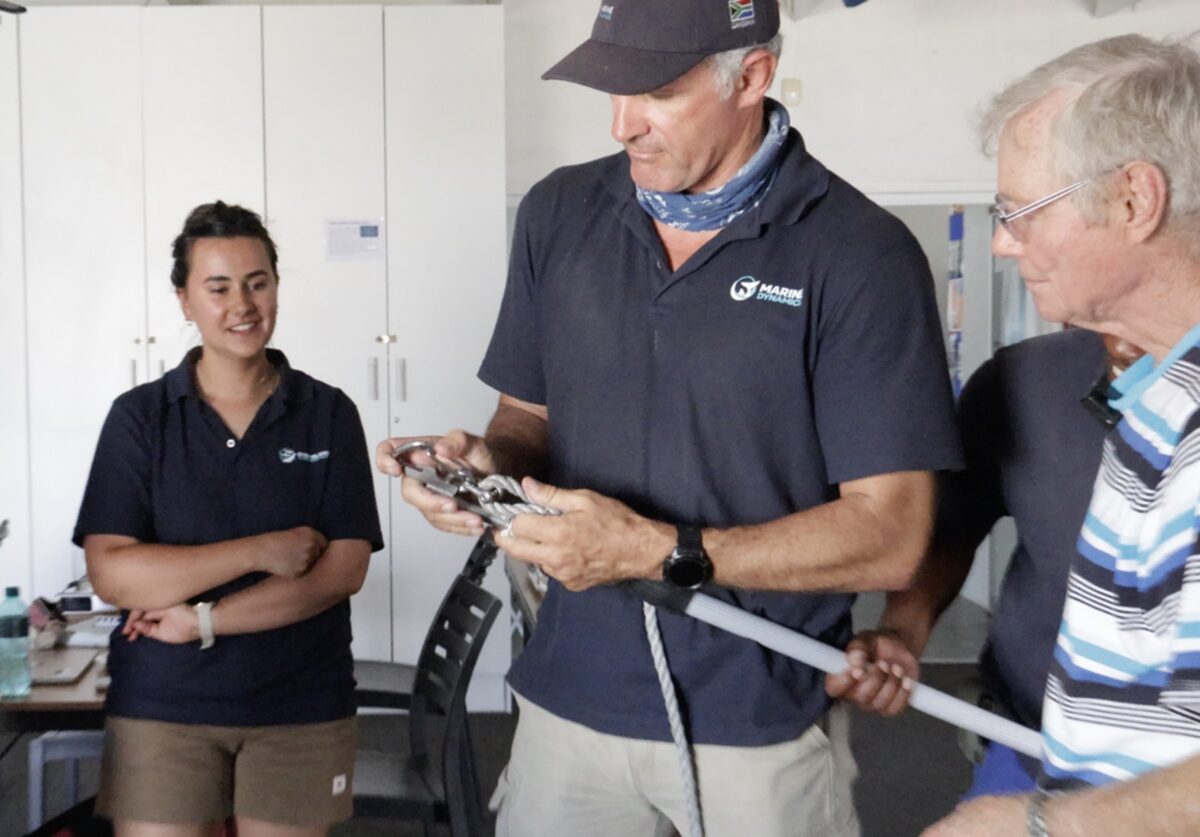
After 25 years of saving entangled whales, Marine Dynamics and Dyer Island Conservation Trust strengthened their rescue capabilities last week with a specialised intensive two-day whale disentanglement training course.
The Marine Dynamics and Dyer Island Conservation Trust has spent the last quarter-century fighting a heartbreaking battle against human-made hazards threatening these ocean giants.
Last week, the Marine Dynamics – Dyer Island Conservation Trust team completed this training, reinforcing their commitment to marine rescue operations that began 25 years ago when CEO Wilfred Chivell and his son, skipper Dickie Chivell, first witnessed the devastating impact of fishing gear on migrating whales.
The training, led by Mike Meyer from the South African Whale Disentanglement Network (SAWDN), comes in response to alarming statistics that paint a sobering picture of whale entanglements along South Africa’s coastline. Worldwide, an estimated 386 000 whales, dolphins and porpoises die annually due to entanglement in fishing gear – a crisis that has intensified along South African shores as recovering whale populations increasingly interact with coastal fisheries.
Research focusing on the Western Cape recorded 82 entanglement incidents involving southern right whales between 1999 and 2019, with studies showing that 68% of whale entanglements are linked to the West Coast rock lobster fishery. Humpback whales account for 64% of entanglement cases, followed by southern right whales at 25%.
Wilfred Chivell, founder of Marine Dynamics and the Dyer Island Conservation Trust, speaks from hard-earned experience about the traumatic reality of whale entanglements. “I have been involved in several of these terrible incidents over the years between Pearly Beach and Hermanus,” Chivell explains. “It is truly devastating to see what we as humans do to these animals. Watching a whale struggling with ropes cutting into its body is something you never forget.”
The consequences for entangled whales are often drawn-out and agonizing. Rather than dying immediately, these marine mammals may drag heavy fishing gear for months, suffer deep rope wounds, lose their ability to feed, or drown if they cannot reach the surface to breathe. Many eventually succumb to infection, starvation, or exhaustion.
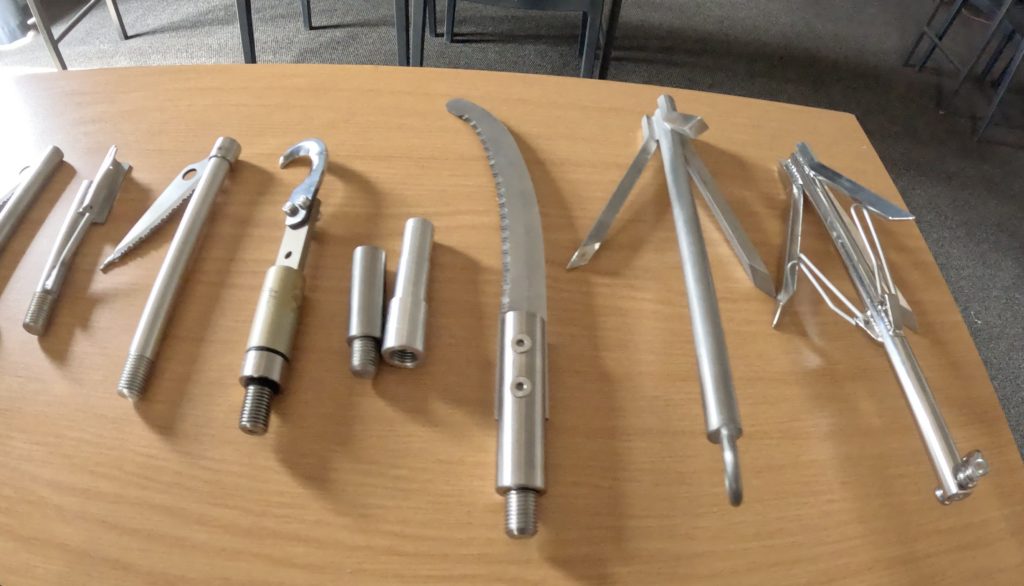
The recent training equipped seven team members – Dr Loraine Shuttleworth, Dickie Chivell, Hendrik Odendaal, Kira Matiwane, Francois Swart, Benz Nomandela, and Wiehann Myburg – with internationally recognised best-practice techniques for marine animal rescue. The rigorous course emphasized the delicate balance required when assisting stressed and entangled whales while ensuring rescuer safety.
“I wanted to make sure that both new and long-standing team members receive proper training, or refresher training, so that we can continue assisting these whales in need,” Chivell stated.
The Marine Dynamics – Dyer Island Conservation Trust team will continue working alongside partners including the National Sea Rescue Institute (NSRI) and the South African Whale Disentanglement Network to respond to emergency situations.
Peak entanglement periods correspond with whale migration patterns – humpback whales are most vulnerable during feeding aggregations from January to March, while southern right whale incidents spike between July and November during calving season. Vertical ropes from traps to surface buoys pose particular dangers, as whales swimming through these areas can become wrapped around their fins, tails, or mouths.
As the organisation looks toward the future, their quarter-century commitment to whale rescue represents more than emergency response—it embodies a broader mission to safeguard the magnificent marine life that calls South Africa’s coastline home.Through continued collaboration, preparedness, and shared expertise, the team hopes to build on their 25-year legacy of marine conservation, ensuring that future generations of whales can navigate South African waters safely on their ancient migratory journeys.The training represents both an end and a beginning – honouring decades of rescue experience while preparing for the challenges ahead in protecting these ocean giants from the unintended consequences of human activity.
Marine Dynamics and the Dyer Island Conservation Trust operate from Gansbaai, focusing on marine research, conservation, and education alongside their whale rescue operations.
ALSO READ: Humpback whale rescued from fishing rope entanglement off Cape Recife



You must be logged in to post a comment.