

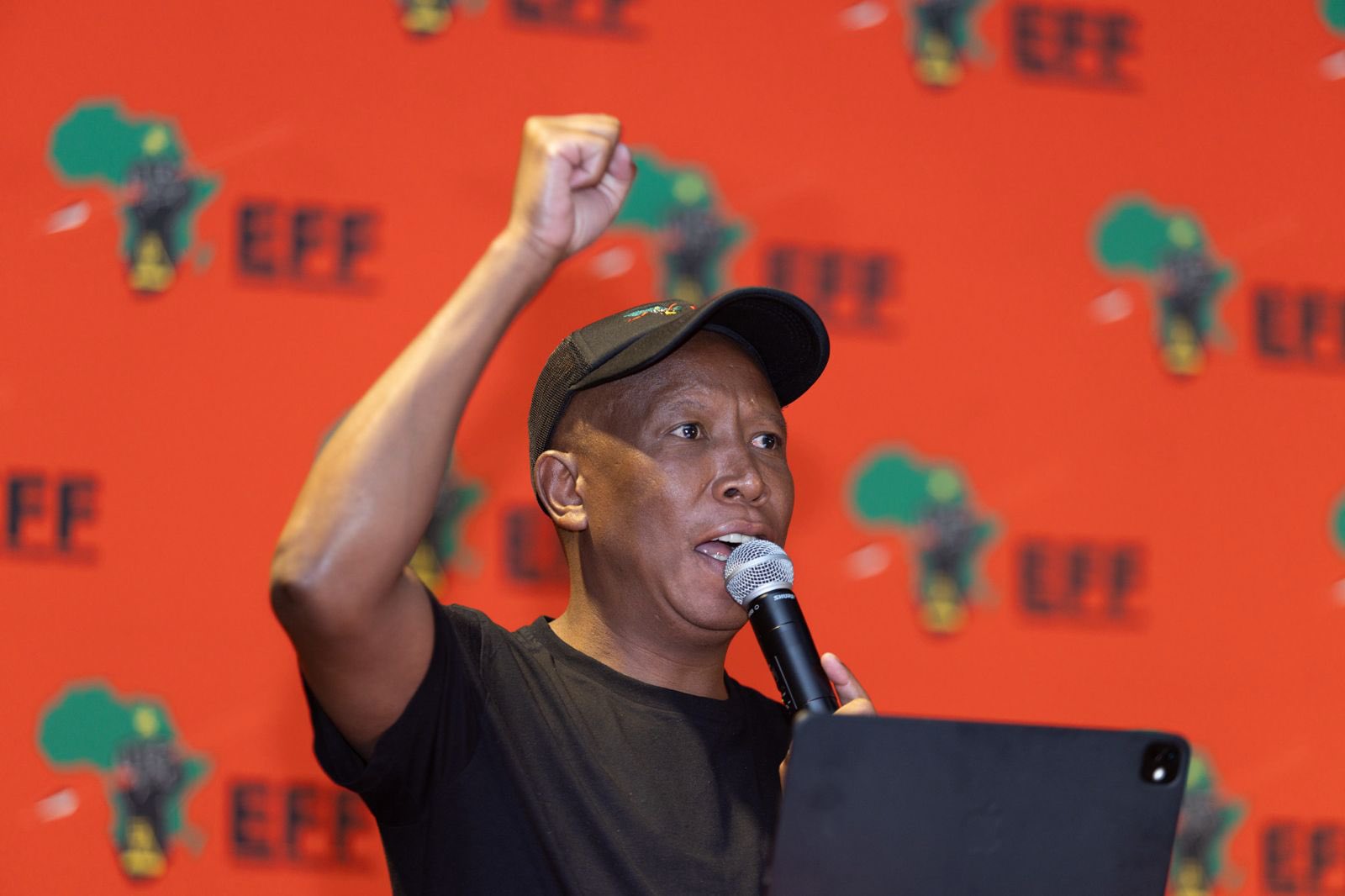
Outspoken EFF leader Julius Malema is facing a legal challenge similar to the one that ousted Dr John Hlophe, the uMkhonto weSizwe (MK) Party’s parliamentary leader, from the Judicial Service Commission (JSC).
This comes after the Helen Suzman Foundation (HSF) filed an application in the Western Cape High Court on 14 May to compel Parliament to determine Malema’s suitability to serving on the JSC. The HSF’s legal action came after the East London Magistrates’ Court handed him a five-year prison term on 16 April following his conviction on 1 October last year.
Malema was found guilty of unlawful possession of a firearm and ammunition, discharging a firearm in a built-up area, and reckless endangerment, stemming from a 2018 political rally. He has since been granted leave to appeal this sentence.
In Hlophe’s case, the Democratic Alliance (DA) and civil society organisations filed an urgent application in the Western Cape High Court, challenging the National Assembly’s decision to place an impeached judge on a body tasked with appointing judges.
Subsequently, the court granted an interim interdict barring Hlophe from participating in JSC interviews. Hlophe officially resigned in October 2024 after Parliament voted to impeach him in February 2024. His impeachment followed a prolonged legal battle in which the JSC found him guilty of gross misconduct for attempting to influence Constitutional Court justices.
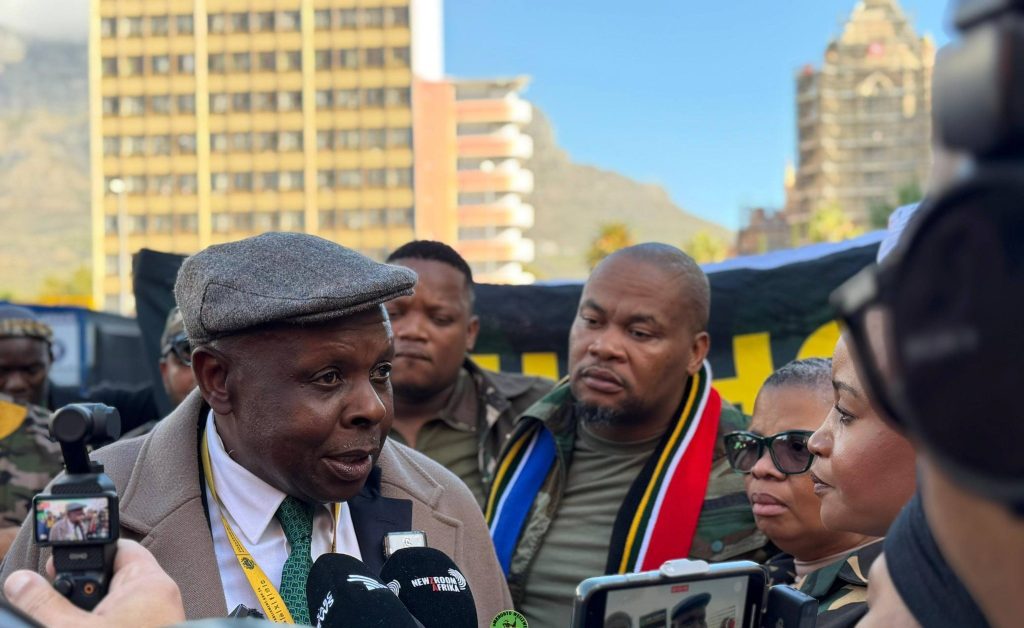
The EFF president’s scenario arose from criminal conviction and sentencing. Malema is one of six political party representatives serving as a designated Member of Parliament on the JSC. His tenure on the body began in 2014. It is a constitutional body established to safeguard judicial independence. Its primary responsibilities include selecting candidates for judicial appointments to the superior courts, advising the national government on judicial matters, and investigating complaints filed against judges.
In its application, the HSF highlighted, among other things, the importance of the JSC in constitutional democracy and the public interest: “The Judiciary has a central role in our democracy, including in identifying and combating unlawful activity in the public and private sectors.”
The HSF is challenging Speaker of the National Assembly Thoko Didiza’s 30 April decision not to review Malema’s suitability, as well as the National Assembly’s failure to assess his role. The Foundation seeks orders declaring invalid and setting aside the Speaker’s refusal to put Malema’s matter before the National Assembly. The HSF also pointed out that at present the JSC has no code of conduct governing its members and their conduct during judicial interviews as well as generally.
In its application, the HSF argues the following:
- Parliament has a constitutional duty to assess whether Malema’s actions and convictions render him unsuitable to continue serving on the JSC.
- Criminal Conviction: The HSF cites Malema’s criminal conviction and sentencing for unlawful possession of a firearm as a major factor raising questions about his fitness to hold a position tasked with selecting judges.
- Repeated Public Attacks on the Judiciary: The HSF highlights Malema’s history of attacking judges and magistrates when rulings go against him or the EFF, which it argues damages public confidence in the courts.
- Conduct and Political Agenda: The HSF asserts that Malema’s aggressive and intimidating style during JSC judge interviews crosses the line from valid democratic oversight into bullying, using the interviews to advance his own political agenda rather than ensuring judicial integrity.
- Relief Sought: The HSF seeks an order directing the National Assembly to consider whether to replace Malema as a designee to the JSC within 20 court days, and to consider all relevant circumstances, including Malema’s conduct.
In a statement issued on Sunday, 17 May, the EFF strongly condemned the HSF’s legal bid to have Malema step aside from the JSC, describing the application as “a dangerous and dishonest attempt” to redefine democratic criticism as constitutional misconduct.
“The implication advanced by the Helen Suzman Foundation is that members of Parliament who hold strong views about the judiciary, particularly views critical of judges or judicial outcomes, should be excluded from constitutional oversight bodies. Such reasoning is fundamentally anti-democratic and seeks to impose an artificial culture of silence around institutions that exercise immense political and constitutional power,” the EFF said.
The party has questioned the HSF’s timing of the court bid against its founding leader. “The Helen Suzman Foundation’s application emerges in a context where sections of the judiciary and prosecutorial institutions have consistently avoided confronting political power when it resides within the establishment represented by President Cyril Ramaphosa. The EFF has been consistent in exposing these contradictions, particularly in relation to the Phala Phala scandal.”
The party added: “The EFF rejects the myth that the judiciary exists above criticism. In any constitutional democracy worthy of the name, criticism of the judiciary is protected under freedom of expression and forms part of necessary democratic accountability. Judges are not beyond scrutiny, particularly in a society where the judiciary has increasingly become a site of political contestation, selective morality, and inconsistency in the application of justice.”


You must be logged in to post a comment.