

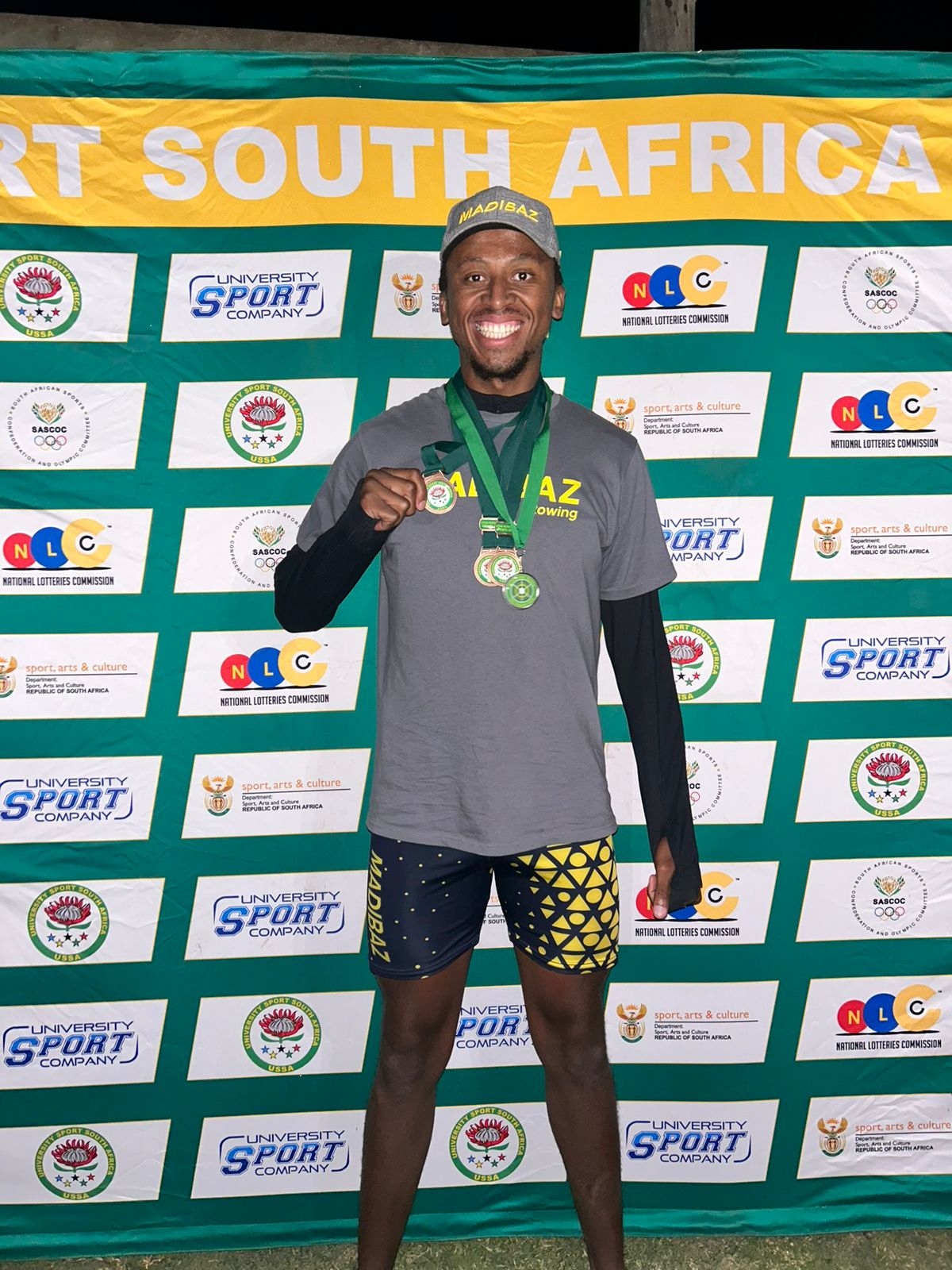
Six months ago, Siyabonga Mhlungu couldn’t swim a stroke. Last month, he stood atop the podium three times at the University Sports South Africa sprints regatta, gold medals draped around his neck, living proof that audacious goals and relentless determination can rewrite the rulebook.
Mhlungu’s meteoric rise from complete novice to champion encapsulates the broader resurgence sweeping through the Madibaz Rowing Club, a programme that has exploded from seven members in 2022 to 50 active rowers, transforming itself into one of South African university rowing’s most compelling comeback stories.
The bold declaration
When Mhlungu walked into the Madibaz Rowing Club last year, he made his intentions crystal clear: he wanted to win gold medals. Minor detail, he couldn’t swim.
Most coaches would have politely suggested athletics or rugby. Instead, Mhlungu’s determination became the catalyst for a journey that would define not just his season, but symbolise the club’s entire ethos.
His first port of call wasn’t the boathouse or the ergometer, it was the Nelson Mandela Metropolitan University’s Learn-to-Swim programme. Water confidence established, Mhlungu then left no stroke unturned preparing for his audacious quest.
Triple triumph at Misverstand
In April, Mhlungu and his teammates descended on Misverstand Dam in the Western Cape with ambitions matching the mountain backdrop. What followed exceeded even the most optimistic predictions.
Competing in the novice section, Mhlungu swept to three gold medals across the scull, coxed four, and mixed eight disciplines. Club chairman Adam Stead provided the tactical nous from the cox seat in the latter, steering the crew to victory.
Not content with his golden haul, Mhlungu also claimed silver in the highly technical double scull event, a discipline demanding the synchronisation and finesse that typically takes years to master.
From non-swimmer to quadruple medallist in half a year. It’s the sort of trajectory that makes Hollywood scriptwriters jealous.
Depth driving success
Mhlungu’s individual brilliance formed part of a broader team triumph that showcased the Madibaz’s remarkable transformation. The squad descended on the Western Cape 25-strong, comprising 16 men and nine women.
The most telling statistic? Eleven rowers carried “novice” classification, having taken up the sport less than 12 months before competition. The victory in the eight event particularly highlighted the club’s investment in developing new talent.
Despite fielding what amounts to a development squad, the Madibaz delivered punchy performances in a fiercely competitive field. The men finished fifth overall, the women eighth, results that gain further significance when considering the points system rewards squad depth as much as individual brilliance.
Breaking through to the A finals
The standout crew performance came from the men’s eight, whose fifth-place finish in the A final represented their best result since 2007. The women’s coxed four also battled their way to fifth, underlining that the resurgence spans both programmes.
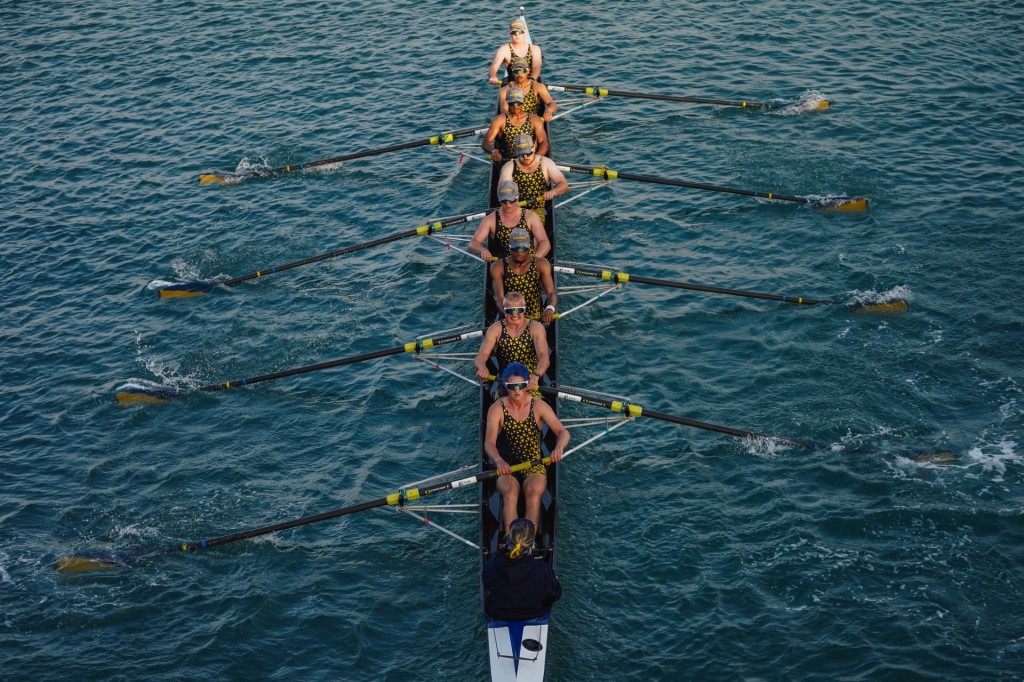
Reaching A finals has historically been a rarity for Madibaz Rowing. The club enjoyed golden periods during the 2012/13 and 2016/17 seasons, but sustaining that excellence proved elusive. Now, the trajectory suggests those glory days might be returning, and staying.
The contrast with recent history is stark. In 2024, only four rowers, all men, represented NMMU at the Ussas. Twelve months later, that number had swelled to 25, with novices making up nearly half the squad.
The resurgence formula
Club chairman Adam Stead credits the transformation to a confluence of factors, starting with the leadership provided by coaches Alasdair MacPhail and Cameron Wilke. Their technical expertise and ability to fast-track novice development has proven instrumental in converting raw enthusiasm into competitive performance.
The student committee has also established clear, ambitious objectives, chief among them positioning the Madibaz as one of South Africa’s most respected university rowing programmes. Setting the bar high has created a culture where newcomers like Mhlungu feel empowered to declare championship ambitions on day one.
Improved equipment access has levelled the playing field, enabling more athletes to train effectively rather than watching from the sidelines. Support from within the rowing fraternity has facilitated these upgrades, creating a virtuous cycle where success attracts resources, which in turn enables further success.
A relentless recruitment drive has cast the net wide, whilst a steady pipeline of talent from Grey High School has provided a foundation of rowers arriving with established technique and competitive experience.
The result? Increased competition for boat seats that’s raising standards across the board. When novices like Mhlungu are winning multiple golds within months, the veterans can’t afford complacency.
Eyes on September
With the Ussa sprints now consigned to the trophy cabinet, attention shifts to the next challenge: the Ussa RMB Boatrace in September. It’s the marquee event on the university rowing calendar, where the heaviest competition and deepest fields separate contenders from pretenders.
The Madibaz will arrive with momentum, confidence, and a squad that’s tasted success. More importantly, they’ll bring depth, the luxury of rotating crews, managing fatigue, and entering multiple boats across events without diluting quality.
Mhlungu’s journey from poolside learner to podium regular will serve as inspiration, but also expectation. He’s set the template: arrive with ambition, embrace the discomfort of learning, trust the process, and leave no stroke unturned.



You must be logged in to post a comment.