
The oars are finally turning in Nelson Mandela Metropolitan University’s favour. After years of toiling in relative obscurity, the Madibaz Rowing Club announced their arrival on South Africa’s competitive rowing scene with a medal bonanza at the prestigious Buffalo Regatta in East London from 31 January to 8 February.
Seventeen Madibaz rowers, including one alumnus, descended on one of the nation’s oldest sporting spectacles and emerged with an 11-medal haul that has sent ripples through the rowing community. Five golds, five silvers and a bronze against the crème de la crème of South African rowing is no mean feat, especially for a programme where most athletes first touch an oar only after arriving at university.
Renison’s grit steals the show
Coach Adam Stead didn’t hesitate when identifying the performance of the regatta. Troy Renison’s fifth-place finish in the single sculls B division required the kind of mental fortitude that separates good rowers from great ones.
“Troy had to survive three heats just to qualify for the final,” Stead explained. “That’s a gruelling day on the water, both physically and mentally.”
Single sculls demands complete technical proficiency and raw power, there’s nowhere to hide when you’re alone in the boat. Renison’s ability to maintain composure and competitive pace through multiple races showcased the calibre of athlete now emerging from the Gqeberha-based programme.
Depth on display
The men’s coxed quad sculls crew delivered perhaps the most telling result of the day by claiming both gold and silver in the C division. When your squad occupies the top two podium positions, you’re not just competing, you’re dominating.
“This highlights the depth and growing cohesion within the squad,” Stead noted, and rightly so. Depth is the hallmark of any successful rowing programme, and the Madibaz are building it stroke by stroke.
The double sculls rowers in the C section also punched well above their weight class, posting competitive times despite most having less than six months of water time. That’s barely enough to master the catch and the release, let alone race against seasoned opposition.
Venter and Murison shine
Santé Venter confirmed her status as one of the club’s brightest prospects by powering to victory in the women’s single sculls B competition. The solo discipline requires a unique blend of technical precision, cardiovascular endurance and mental resilience, qualities Venter possesses in abundance.
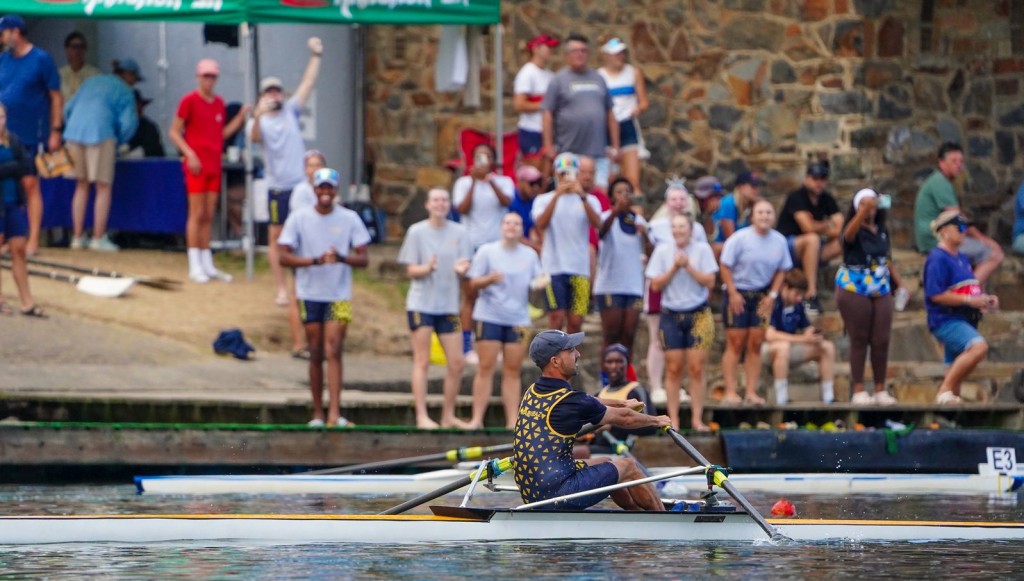
Wade Murison, the sole alumnus in the contingent, proved that the Madibaz rowing education endures beyond graduation. He claimed gold in the C division single sculls before backing up to secure silver in the masters category. His performances serve as both inspiration and validation for current squad members.
From 12 to 60: A club transformed
The numbers tell a remarkable story. In 2024, the Madibaz Rowing Club counted just 12 active members. Today, that figure stands at approximately 60. Such exponential growth doesn’t happen by accident, it’s the product of effective structures, passionate coaching and a solution-driven culture.
Under manager Melinda Goosen’s stewardship, the programme has adopted a philosophy of “maximising what is rather than obsessing over what is not”. It’s a pragmatic approach born of necessity, given the club’s major stumbling block: the distance to their training venue on the Swartkops River.
Transport logistics can strangle a rowing programme before it ever gets into racing shape, but the Madibaz have refused to let geography dictate their destiny.
Last year marked another milestone when the club fielded a third crew for the first time in over a decade. That boat, coxed by Rika van Dyk and crewed entirely by novices, represented more than just numbers, it symbolised sustainable growth and succession planning.
Benchmarking for bigger battles
The Buffalo Regatta serves as more than just a medal opportunity. For Stead and his charges, it’s an early-season benchmark and crucial race simulation ahead of April’s Ussa Sprints, the pinnacle of university rowing in South Africa.
“It offers valuable race experience,” Stead said, and experience is the currency rowers trade in. The more time spent racing under pressure, the more composed and tactically astute athletes become.
Looking further ahead, September’s University Boat Race on the Kowie River at Port Alfred looms large. Last year, the Madibaz finished as the second-ranked Eastern Cape institution behind the formidable University of Fort Hare outfit. Closing that gap is firmly in the crew’s crosshairs.
The future is afloat
What makes NMMU’s rowing renaissance particularly impressive is the composition of their squad. Most members arrive at varsity having never rowed competitively, some have never even sat in a boat. Yet here they are, medalling at one of the country’s most competitive regattas.
It speaks volumes about the coaching quality, the training structures and the athletes’ commitment to a sport that demands discipline, synchronicity and suffering in equal measure.
Stead has earmarked this season as “an important marker for the future”, and the Buffalo Regatta suggests the marker will be set high. The journey from obscurity is far from complete, but the Madibaz are no longer rowing alone at the back of the pack.
They’re making waves, collecting medals and turning heads.


You must be logged in to post a comment.