

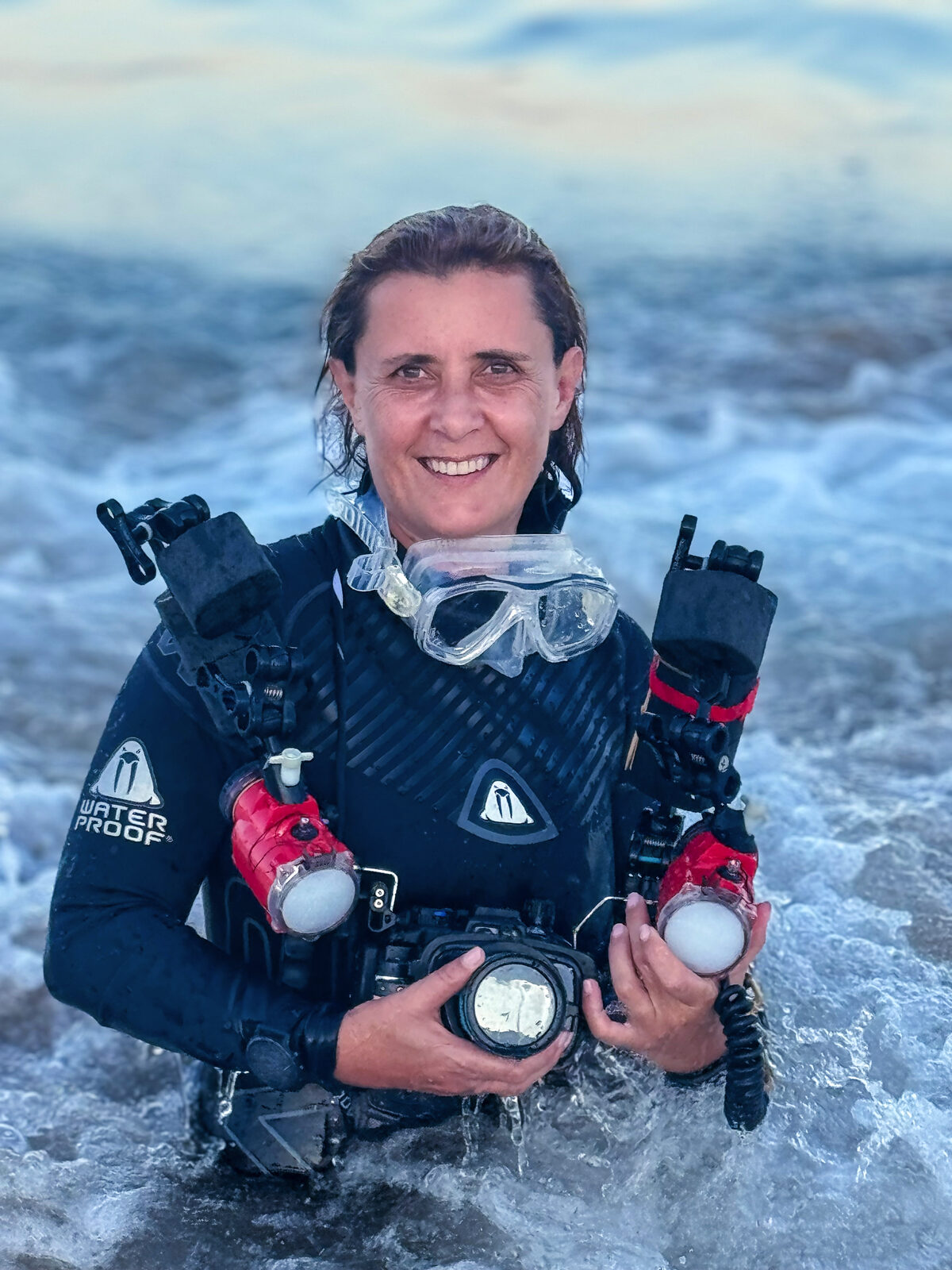
JEFFREYS BAY – The Shell Museum in Jeffreys Bay will transform into an underwater wonderland from 1 to 3 May as renowned marine photographer, Hesma Fivaz, from St Francis Bay unveils her stunning collection of nudibranch images.
Fivaz’s passion for capturing the intricate beauty of marine life has taken her across some of the world’s most breathtaking underwater ecosystems.
With an eye for detail and a deep appreciation for the wonders of the ocean, Fivaz specialises in macro underwater photography, highlighting the colourful and often-overlooked tiny species that inhabit our seas.
Her stunning images not only showcase the beauty of marine life but also raise awareness about the importance of ocean conservation.
As an award-winning photographer, Fivaz’s work has garnered recognition for its artistic excellence and for transporting viewers into the magical world beneath the waves.
Through her lens, she invites people to explore and celebrate the delicate ecosystems that are essential to our planet’s health.
The exhibition forms part of the Kunskoors Art Festival and Fivaz will focus on nudibranchs.
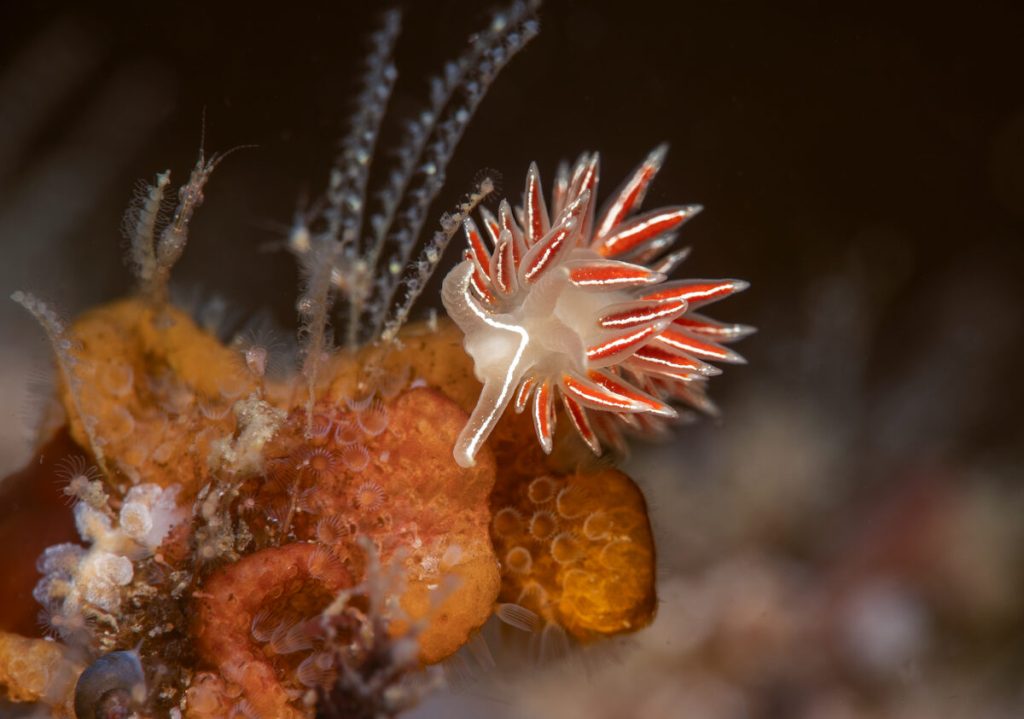
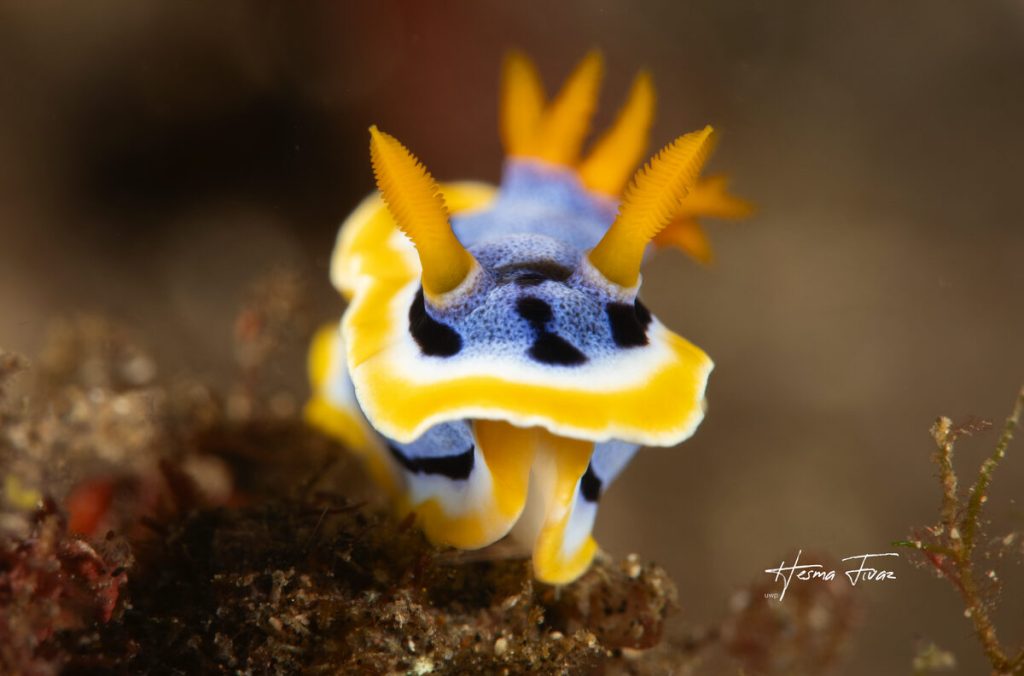
Nudibranchs, often referred to as “sea slugs,” display a dazzling array of colours and patterns, making them a favourite subject for underwater photographers.
“Their unique forms and striking appearances not only capture the imagination but also play a vital role in indicating and maintaining the health of marine ecosystems,” said Fivaz.
Nudibranchs are tiny, shell-less, soft-bodied marine molluscs found in oceans around the world, from icy polar regions to temperate and tropical reefs.
They inhabit a wide range of depths, from the intertidal zone down to approximately 700 metres.
“Their name is derived from the Latin nudus (“naked”) and the ancient Greek brankhia (“gills”), referring to the exposed, feather-like gills that adorn the backs of many species,” said Fivaz.
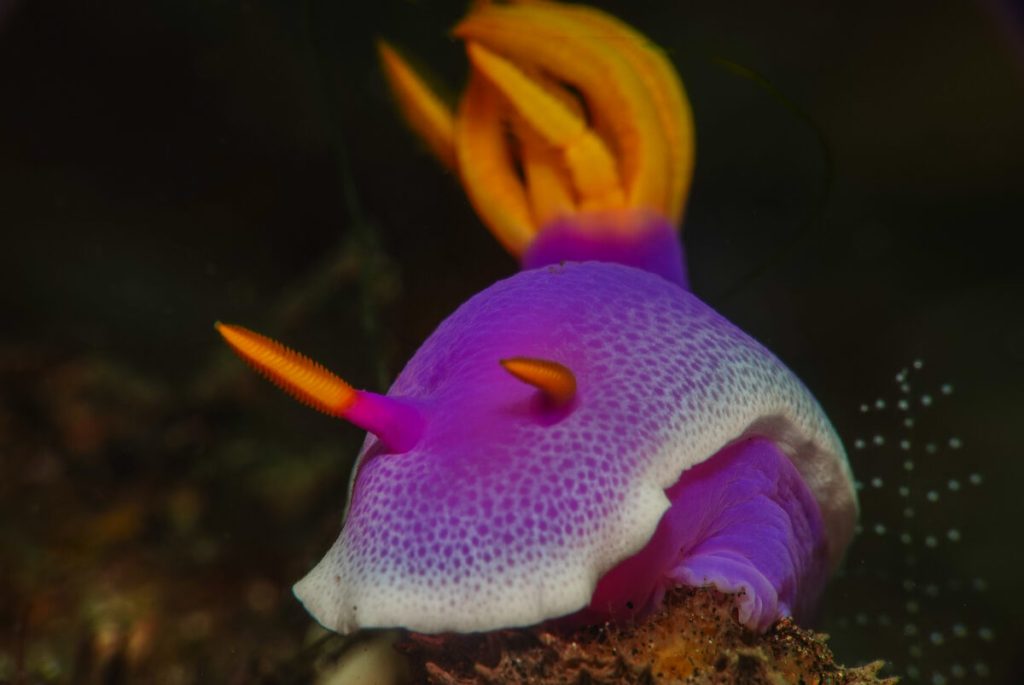
“Known for their extravagant, bright, and vivid colours and patterns, nudibranchs range from soft pastel pinks to electric blues and neon oranges, often displayed in bold combinations of stripes, spots, swirls, and even lace- or pearl-like designs.”
These striking colours can serve as a warning to predators, while in other cases, helping them blend seamlessly into their surroundings, making them true masters of disguise.
Despite lacking protective shells, nudibranchs have evolved remarkable survival strategies.
Aeolid nudibranchs, which feed on hydrozoans, possess a particularly fascinating defence mechanism.
They can store the stinging cells of their prey within their cerata, the brightly coloured, finger-like projections on their bodies and reuse them for their own protection.
These stolen toxins pass through their digestive system without causing harm.
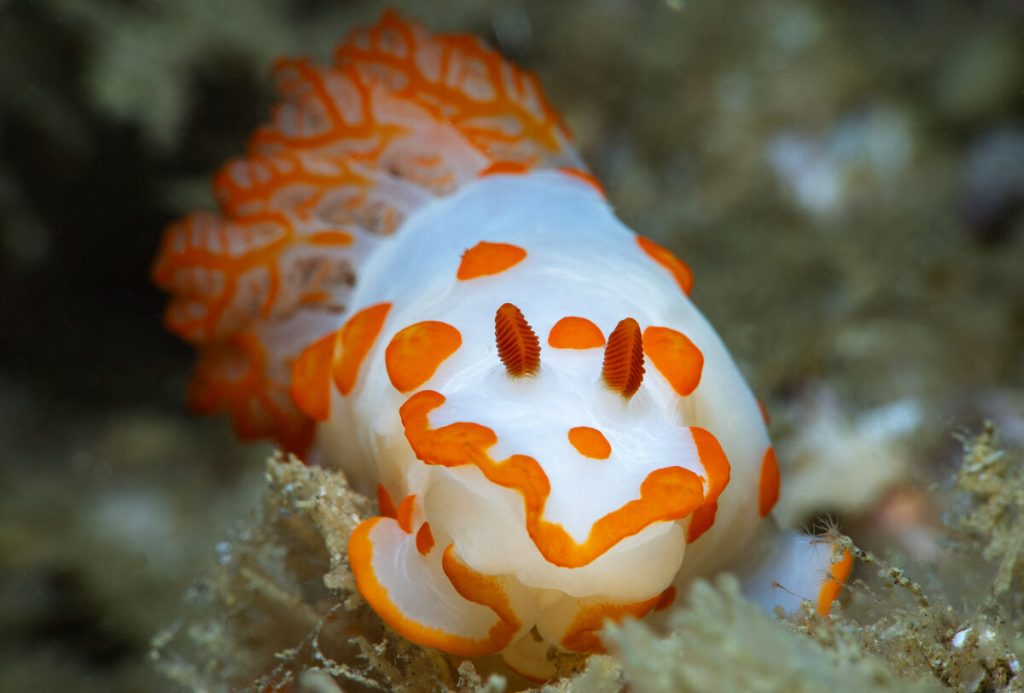
“All nudibranchs are carnivorous, feeding on sponges, hydroids, bryozoans, and anemones,” said Fivaz.
“Some species even consume other nudibranchs, their eggs, or occasionally prey on members of their own kind.”
In addition to their chemical defences, many nudibranchs use colour and texture to mimic their environment so effectively that they become almost invisible among the corals and sponges they inhabit.
Nudibranchs have very limited vision, able only to distinguish between light and dark.
However, they possess a highly developed sense of smell, which they rely on to navigate their environment and locate food.
They use a pair of head-mounted, often retractable, club-like tentacles called rhinophores that function like a nose or ear, detecting water currents, food, and potential mates.
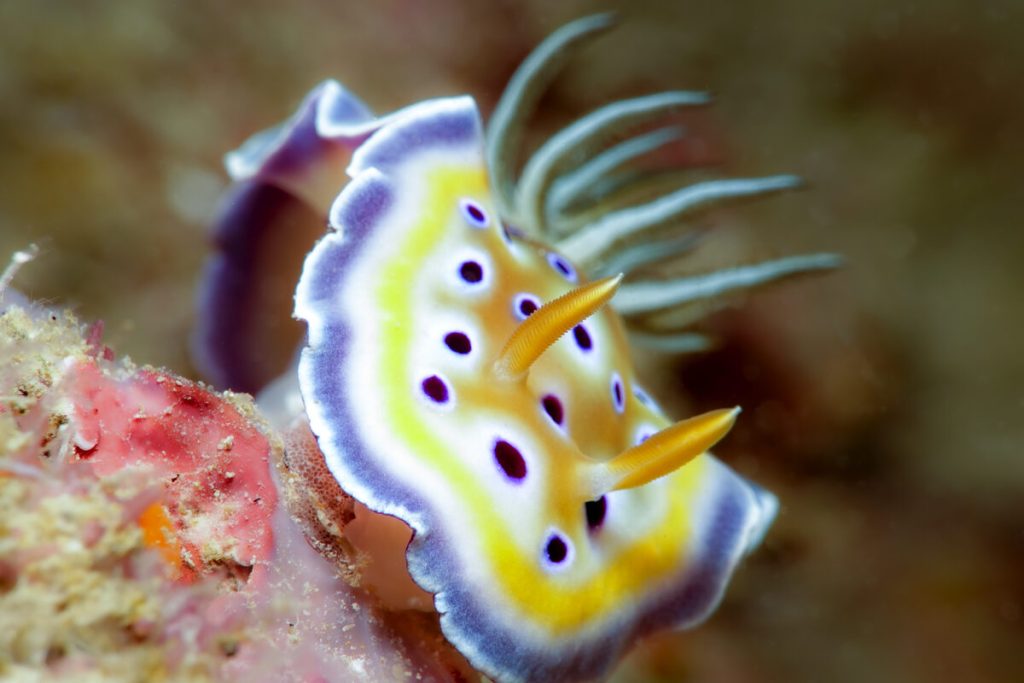
Join this one-of-a-kind exhibition and immerse yourself in a dazzling collection of underwater photography, showcasing the rich diversity of nudibranch species found in Jeffreys Bay and its surrounding waters.
Each image reveals a glimpse into the vibrant life beneath the surface, telling stories of resilience, beauty, and ecological importance.
This exhibition not only celebrates the intricate wonders of marine life but also highlights the importance of conservation and the delicate balance that sustains our ocean ecosystems.
For more information about the exhibition, contact Zuanda Badenhorst at 083 677 2053.


You must be logged in to post a comment.