
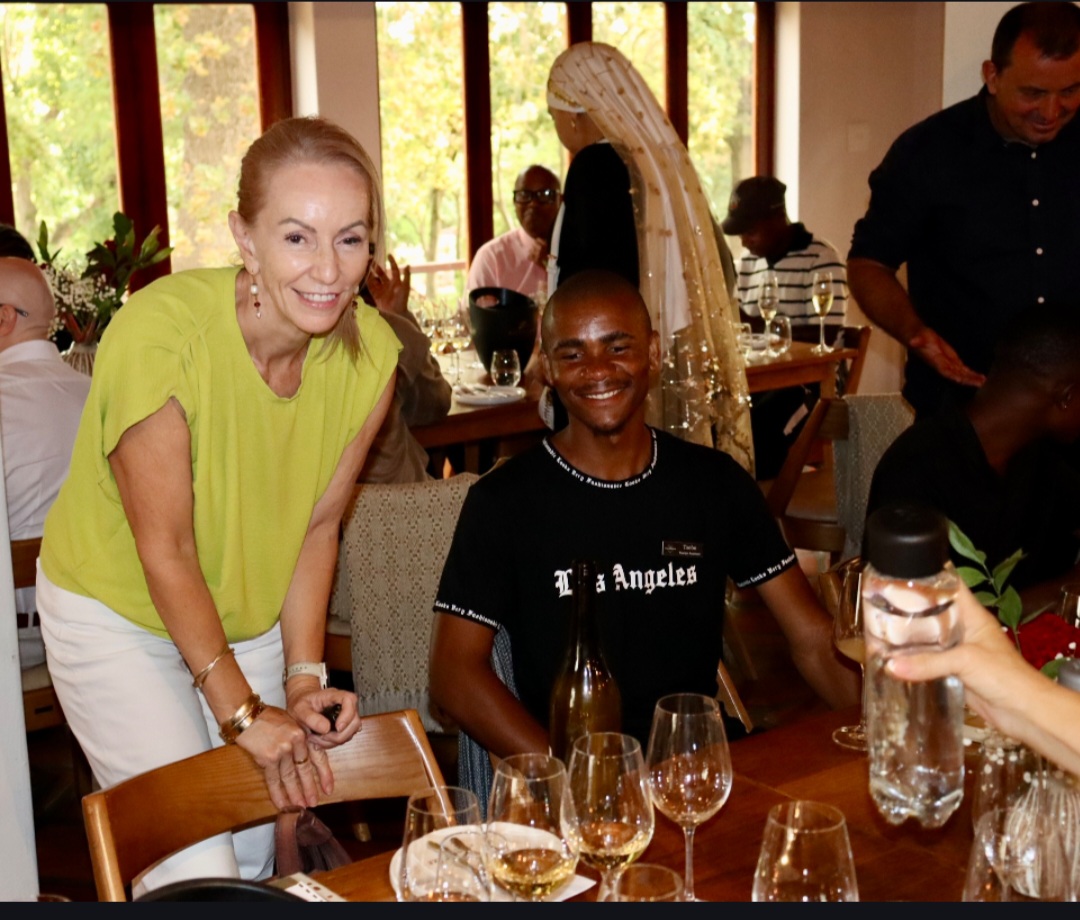
STELLENBOSCH – A public-private partnership aims to address a shortage of professional tourist guides in Stellenbosch while creating employment opportunities in one of the town’s fastest-growing economic sectors.
The DEDAT Stellenbosch Tourist Guide Training Project, sponsored in part by Stellenbosch winery Kleine Zalze, began training 17 learners in January through a programme designed to prioritise real-world skills and integration into the local tourism economy.
The initiative was launched after Visit Stellenbosch identified a lack of competent, job-ready tourist guides as a constraint on the town’s expanding visitor experience sector.
“Stellenbosch’s tourism offering is growing, but professionally trained guides are essential if that growth is to be sustainable,” said Raino Bolz, experience director at Visit Stellenbosch. “It became clear that the issue was not only a shortage of guides, but that many existing guides were not immediately employable.”
The concern was raised at board level and led to Cause Development Agency, Visit Stellenbosch’s regenerative tourism service provider, being tasked with designing a solution.
Nicolette Booyens, managing director of Cause Development Agency, said the programme was custom-built to overcome common challenges in tourist guide training, including low completion rates and limited practical exposure.

“This is not about ticking boxes,” Booyens said. “The focus is on producing competent, confident guides who are work-ready on graduation.”
The programme incorporates Work Integrated Learning placements with Visit Stellenbosch member organisations, comprehensive learner support, academic and wellness assistance, and daily stipends to remove financial barriers to participation.
The project is enabled and funded by the Western Cape Department of Economic Development and Tourism and co-funded by Kleine Zalze Wines, which made a donation towards the initiative at the end of 2024.
Kleine Zalze Wines general manager Carina Gous said the project reflects a collaborative approach to skills development.
“Together with the local wine industry, tourism is the lifeblood of Stellenbosch and there is a continued drive to ensure Stellenbosch provides the ultimate tourist experience,” she said.
“The DEDAT Stellenbosch Tourist Guide Training Project will ensure a new generation of skilled guides able to offer local and international visitors an immersive experience into Stellenbosch’s cultural and adventure offerings.”
The programme attracted 407 applications during an open recruitment drive. After a two-stage, sector-led selection process, 17 learners were chosen: seven culture tourist guides and 10 adventure tourist guides.
Training began on 12 January and includes formal NQF Level 4 qualifications, first aid certification, practical training and up to 20 days of work placement, depending on specialisation. Graduation is scheduled for 27 February 2026.
Most learners are already linked to prospective employers, with remaining graduates expected to be absorbed into the Visit Stellenbosch experience sector on a freelance basis shortly after qualification.
Local partners involved in the project include Visit Stellenbosch, Cause Development Agency, Bergzicht Training and Development, Livingston Academy and SA Outdoor Academy. Work Integrated Learning partners include Adventure Shop, Cape Adventure Brands, Stellenbosch on Foot, Bites and Sites, Scoot Tours, Boschendal Wine Farm, Pniel Cultural and Adventure Hiking Tours, Casa Cerveza, Bonne Esperance Boutique Guest House and Winelands Guide.
ALSO READ: Cape Town launches sweeping global campaign to boost visitor economy
Naretha Ricome, vice-president of French wine company Advini, which owns Kleine Zalze along with Stellenbosch wineries L’Avenir, Ken Forrester Wines, Stellenbosch Vineyards and Le Bonheur, said the initiative underscores Stellenbosch’s leading role in wine tourism.
“Since the advent of the Stellenbosch Wine Routes in 1971, this region has shown itself to be a pioneer of wine tourism – not only in South Africa, but also from a global point of view,” Ricome said. “This new initiative to train and implement the services of specialist tourist guides not only expands the level of services available to tourists, but also accentuates the vital role wine tourism plays in socio-economic development.”
Visit Stellenbosch CEO Annemie Liebenberg said the organisation looks forward to introducing a new generation of skilled tourism guides into the Stellenbosch region.
“They are not only unleashing their own potential in terms of their professional growth, but will also provide visitors to Stellenbosch with an immersive and engaging experience that is truly world-class,” Liebenberg said.





You must be logged in to post a comment.