
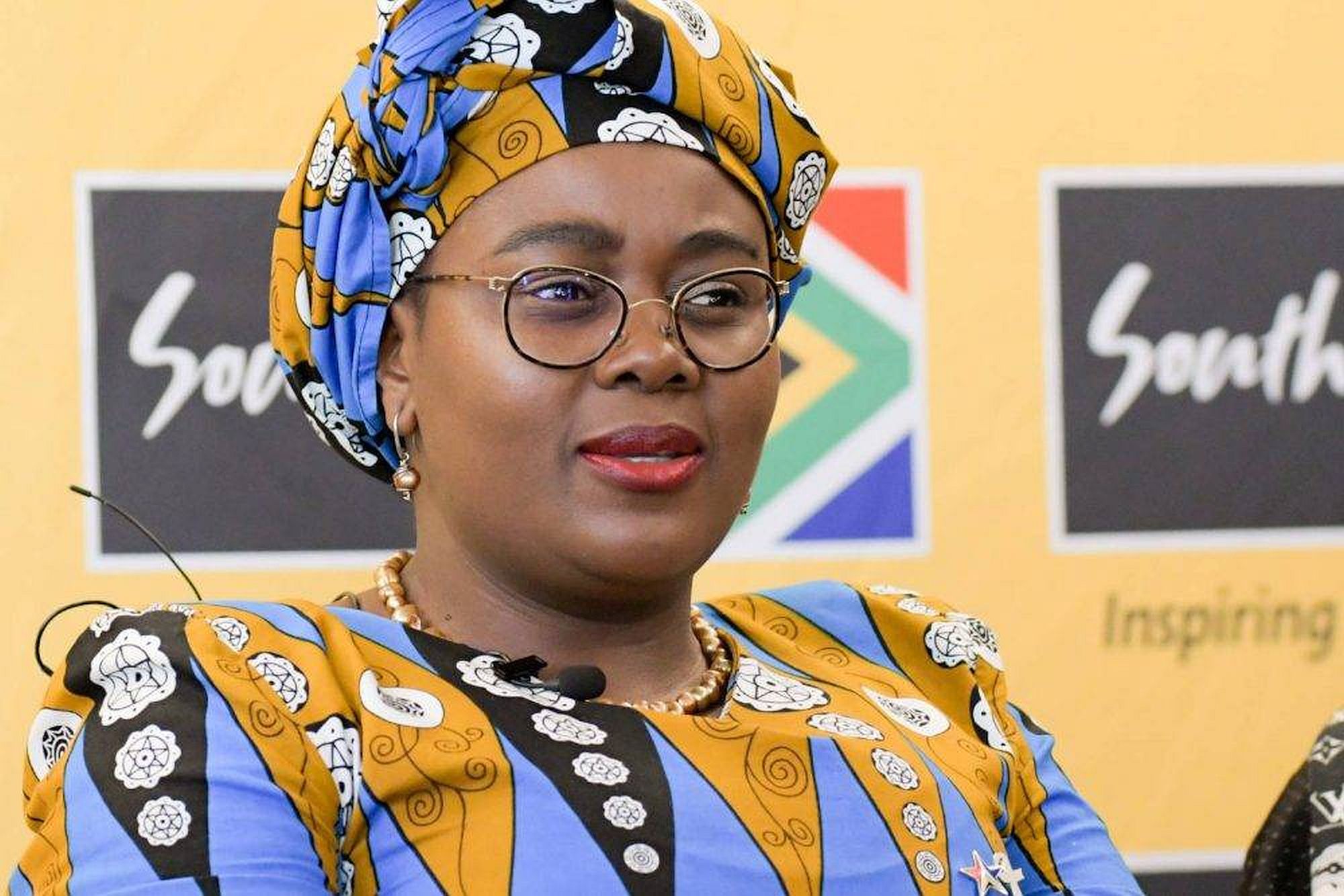
President Cyril Ramaphosa has appointed Justice and Constitutional Development Minister Mmamoloko Kubayi to chair the panel responsible for selecting South Africa’s next National Director of Public Prosecutions (NDPP), following the same process used for current NDPP Adv Shamila Batohi’s 2018 appointment.
The panel will oversee what the Presidency describes as “an open and transparent process” to identify a successor to Batohi, whose term concludes in January 2026. President Ramaphosa has emphasized the critical importance of the NDPP’s role in upholding the rule of law and ensuring the independence and integrity of the National Prosecuting Authority (NPA).
The appointed panel comprises:
• Chairperson: Justice Minister Mmamoloko Kubayi
• Chairperson of the SA Human Rights Commission
• Chairperson of the Commission for Gender Equality
• Auditor-General of South Africa
• Chairperson of the Public Service Commission
• A representative from the Black Lawyers Association
• A representative from the National Association of Democratic Lawyers
The panel has been allocated three months to complete its mandate, which includes calling for public nominations, shortlisting and interviewing candidates, and submitting three suitable nominees to the President along with a comprehensive report.
“The NDPP must ensure that the NPA exercises its functions without fear, favour or prejudice and should not be beholden to any vested interests, whether in politics, in business or elsewhere,” Ramaphosa said in a statement, stressing the need for independence and impartiality.
However, the panel’s composition has drawn sharp criticism from various political parties, most notably the Democratic Alliance (DA), which has questioned both the timing and expertise of the appointments.
How can a panel devoid of any prosecutorial expertise nominate candidates for the most important prosecutorial position in South Africa?
DA Spokesperson on Justice and Constitutional Development, Adv. Glynnis Breytenbach, in a scathing statement, described the selection panel as “shocking” and “proves that President Ramaphosa has no intention of saving the National Prosecuting Authority.”
Breytenbach was previously an acclaimed prosecutor for the National Prosecuting Authority.
She said that despite the DA’s urgent call on 17 July, to begin the NDPP appointment process, the President waited two months before taking action.
Breytenbach highlighted that the panel is “completely devoid of criminal justice legal experts,” with no members from the judiciary or criminal prosecution background included.
“How can a panel devoid of any prosecutorial expertise nominate candidates for the most important prosecutorial position in South Africa?” Breytenbach questioned. The DA argues that the panel members’ areas of focus – human rights, gender equality, governance, and legal transformation – have limited relevance to rebuilding a prosecution authority that has “all but collapsed.”
She further said that organisations like the Black Lawyers Association focus primarily on legal profession transformation, while the National Association of Democratic Lawyers concentrates on human rights matters rather than prosecutorial expertise.
This appointment comes against the backdrop of serious concerns about the NPA’s integrity. Earlier this year, current NDPP Batohi disclosed that “renegade prosecutors” may be undermining the NPA from within, allegedly working with criminal elements to compromise prosecutions.
These revelations align with claims by KZN Police Commissioner Lt-Gen. Nhlanhla Mkhwanazi, who alleged that organised crime syndicates have infiltrated the country’s criminal justice system, including the NPA, leading to the establishment of the Madlanga Commission.
Breytenbach argues that “nearly eight years have passed since the President assumed office, and the NPA remains gutted by state capture.”
ALSO READ: Ramaphosa suspends top prosecutor as government shake-up continues

