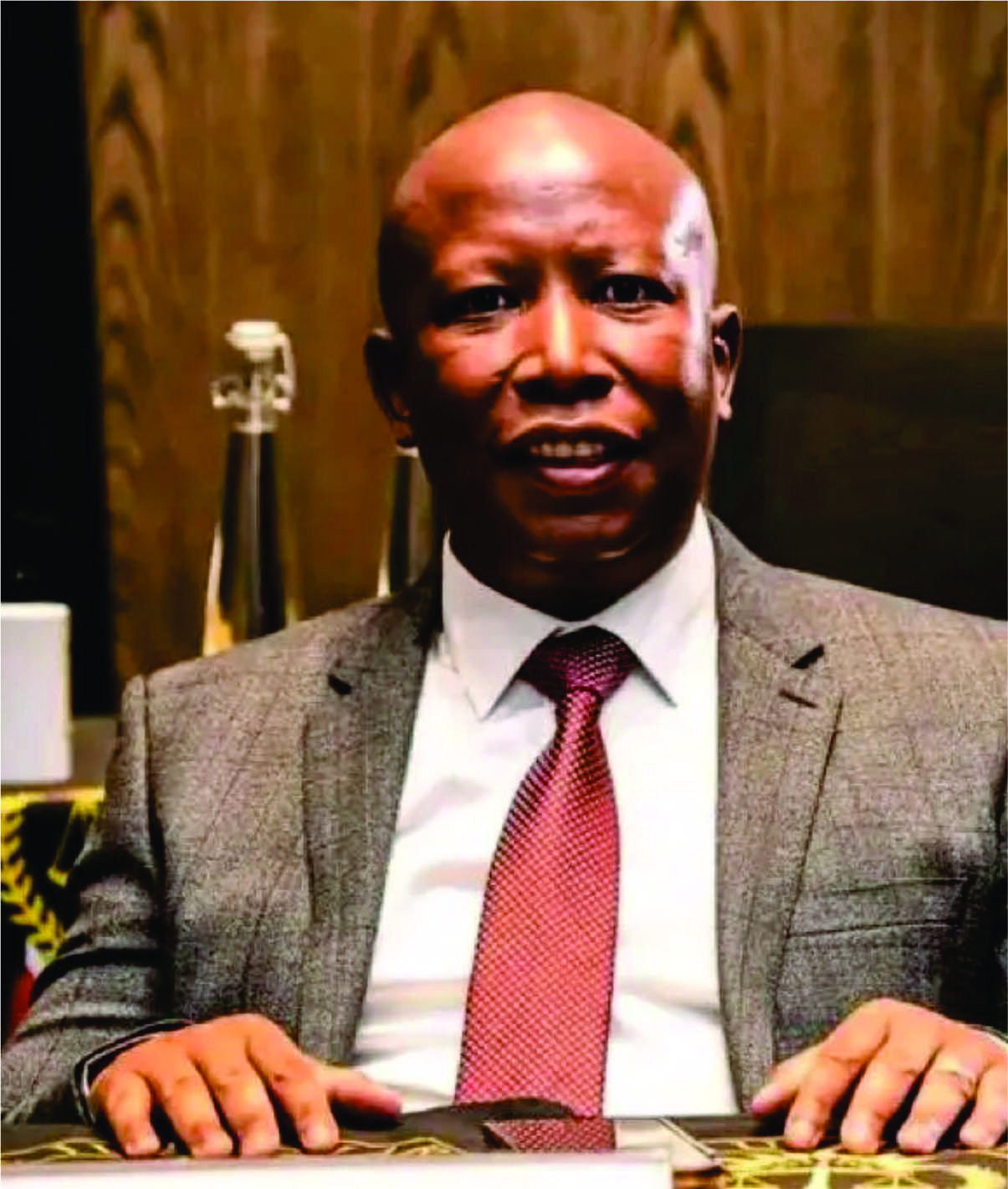
The Western Cape Equality Court has found Economic Freedom Fighters (EFF) leader Julius Malema guilty of hate speech, marking a significant legal victory in the ongoing battle against divisive political rhetoric in South Africa.
The ruling comes after the South African Human Rights Commission (SAHRC) pursued the case against Malema, stemming from controversial statements he made in 2022 that included calls for killing as part of a revolutionary agenda. The SAHRC had concluded that Malema’s remarks constituted hate speech and direct incitement to violence under South African law.
The controversy centers on Malema’s repeated chanting of inflammatory slogans such as “Kill the Boer, kill the farmer” and statements suggesting that a revolution may require killing. During a 2022 court proceeding, Malema notably refused to pledge that he would never call for the slaughtering of white people in South Africa, testifying that he might do so in the future.
The case gained international attention when video footage of Malema chanting these slogans was reportedly aired during a White House meeting between US President Donald Trump and South African President Cyril Ramaphosa, highlighting how South Africa’s internal racial tensions have reached the global stage.
Expert witnesses testified that a reasonable listener would interpret Malema’s comments as deliberate incitement to violence. The SAHRC had given Malema and the EFF ten days to retract their statements and issue an apology, but when they refused to comply, legal proceedings moved forward.
DA response and political implications
The Democratic Alliance (DA) has welcomed the court’s finding, describing it as “a victory for the rule of law, for the Constitution, and for all South Africans who cherish the values of a free, fair, and non-racial society.”
In a statement, the DA argued that Malema’s hate speech has not only damaged South African society locally but has also had international repercussions, putting the country’s global reputation at risk. The party indicated it would explore further action to enforce serious consequences against Malema’s divisive rhetoric.
The ruling comes at a politically significant time, as the DA recently joined South Africa’s Government of National Unity (GNU) following the 2024 elections that saw the ANC lose its majority for the first time in 30 years. The EFF was notably excluded from the GNU, with the DA stating that keeping “destructive and hateful political parties like the EFF out of our nation’s government” was part of their motivation for joining the coalition.
Constitutional considerations
While South Africa’s Constitution protects freedom of expression, it explicitly draws the line where speech incites hatred, discrimination, or violence. Legal experts note that the court’s judgment affirms that no one, regardless of political position, is above the law.
The ruling comes at a time when South Africa faces significant challenges including high unemployment, persistent inequality, and ongoing debates over land reform – issues that have provided fertile ground for populist and divisive political messaging.
The DA said that political leaders have a responsibility to foster nation-building and social cohesion rather than division. They hope the ruling will serve as a warning to all South African leaders to conduct themselves in ways that strengthen rather than fracture society.