Dr Memuna Williams
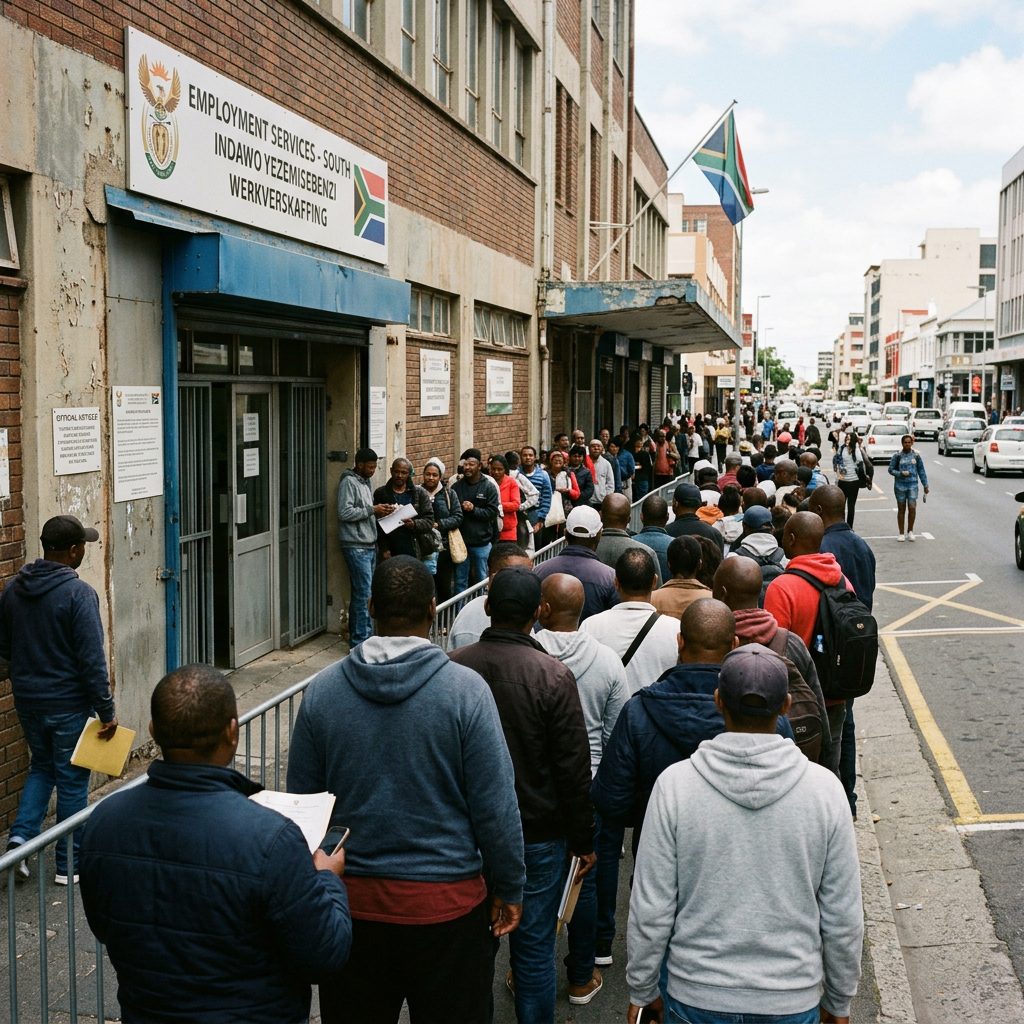
The more than 900 000 young South Africans who just received their matric results represent the continent’s most educated and most connected generational cohort. Yet, 40% of them will join the ranks of youth who are not in employment, education, or training within months. This is a South African tragedy that is repeating across the continent.
Recall that the SAPS recruitment for the Basic Police Development Learning Programme (BPDLP) surpassed the 1 million mark before the submission deadline on 18 July last year.
Statistics South Africa (Stats SA) confirms what every matriculant knows: The path forward is blocked. Over 100 000 qualified candidates could not access public universities in recent years due to space constraints. Immediate employment prospects remain scarce despite South Africa being home to Africa’s largest companies and having one of the continent’s fastest-growing entrepreneurial intention rates.
This scenario compels us to answer the question: Can our system convert our youth’s potential into economic strength?
The global context makes our inaction more urgent. At September’s United Nations (UN) General Assembly, the Global African Business Initiative centred discussions on energy transition, digital transformation, creative industries and sports. These are the sectors that require exactly the talent we are sidelining.
The gap between continental need and youth readiness represents an underutilised competitive advantage for South Africa. Our matriculants hold credentials that position them among Africa’s best educated. They are digitally native in a continent undergoing rapid technological transformation. They are multilingual and culturally fluent across contexts that multinational corporations struggle to navigate.
But credentials without pathways become sources of frustration, not engines of growth.
The following needs to change immediately.
For employers and corporates:
■ Convert contributions made on global platforms into structured internship pipelines.
■ Create apprenticeship models in sectors where you are already discussing possibilities.
■ Recognise that “work experience required” is a barrier, not a quality filter – design entry points for talented matriculants to demonstrate capability.
For education stakeholders and funders:
■ Increase visibility of existing opportunities – scholarships remain unknown to most matriculants.
■ Go beyond business plan competitions and fund pathway programmes that translate entrepreneurial intention into venture creation.
■ Support credential recognition frameworks so youth educated abroad can return home without bureaucratic penalties.
For policymakers:
■ Audit how many current government and parastatal roles could absorb matriculant apprentices in 12-month rotational programmes.
■ Incentivise companies creating first-job pathways for non-university-bound youth.
■ Commission research on what post-apartheid winners did in their twenties and what conditions enabled it, then replicate that.
In reality, we are asking youth to have self-efficacy in systems that tend to erode it. We celebrate entrepreneurial intention, but maintain regulatory barriers that prevent youth from testing business ideas without capital. We discuss “future skills”, but defund Technical and Vocational Education and Training (TVET) colleges.
The question for South Africa’s private sector, funders, and policymakers: What are you transforming right now that will create the same momentum for this generation of matriculants?
This critical question is prompted because the continent’s needs will not wait for our systems to catch up.
■ DrMemuna Williams is the founder and chief executive officer (CEO) of Empowering Sustainable Change.