

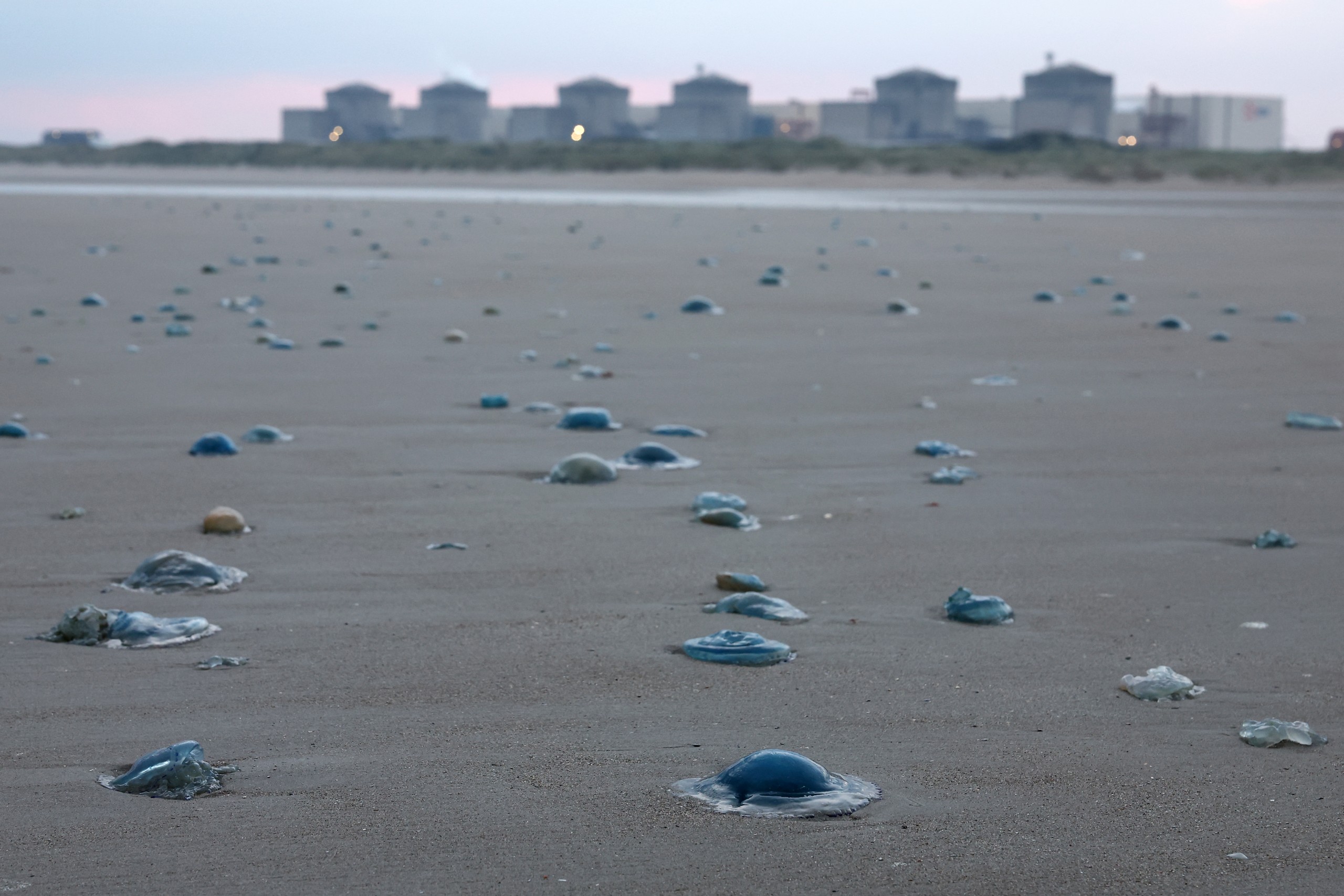
LILLE, France – A swarm of jellyfish forced the shutdown of three reactors at France’s largest nuclear power plant on Monday after the marine creatures clogged pumps used to cool the units.
Energy group EDF confirmed that three reactors at the Gravelines nuclear power plant near Dunkirk were taken offline, while output at a fourth reactor was reduced by half. Only one reactor continues operating at full capacity, with a sixth already offline for scheduled maintenance.
The energy company stressed that the incident posed no risk to the facilities, personnel or the environment.
The disruption adds to mounting challenges for France’s nuclear sector, which has faced repeated shutdowns this year due to heatwaves and droughts. EDF shut down several reactors in June and July because of extreme heat.
On Sunday, before the latest closures, France recorded a 15.6 per cent shortfall in nuclear power production, according to AFP calculations based on EDF data published since 2015.
Gravelines, situated in northern France near the Belgian border, houses six 900-megawatt reactors, making it the largest nuclear facility in Western Europe.
This is not the first time jellyfish have disrupted operations at Gravelines. The plant experienced a similar shutdown a year ago when the creatures clogged seawater pumping stations.
Nuclear facilities worldwide have grappled with jellyfish invasions. Sweden experienced a three-day closure in 2013, whilst a 1999 incident in Japan caused a significant drop in output.
Marine experts attribute the surge in jellyfish populations to overfishing, plastic pollution and warming ocean temperatures caused by climate change, which create favourable conditions for the creatures to thrive and reproduce.
ALSO READ: Jellyfish invasion forces shutdown of France’s largest nuclear power station


