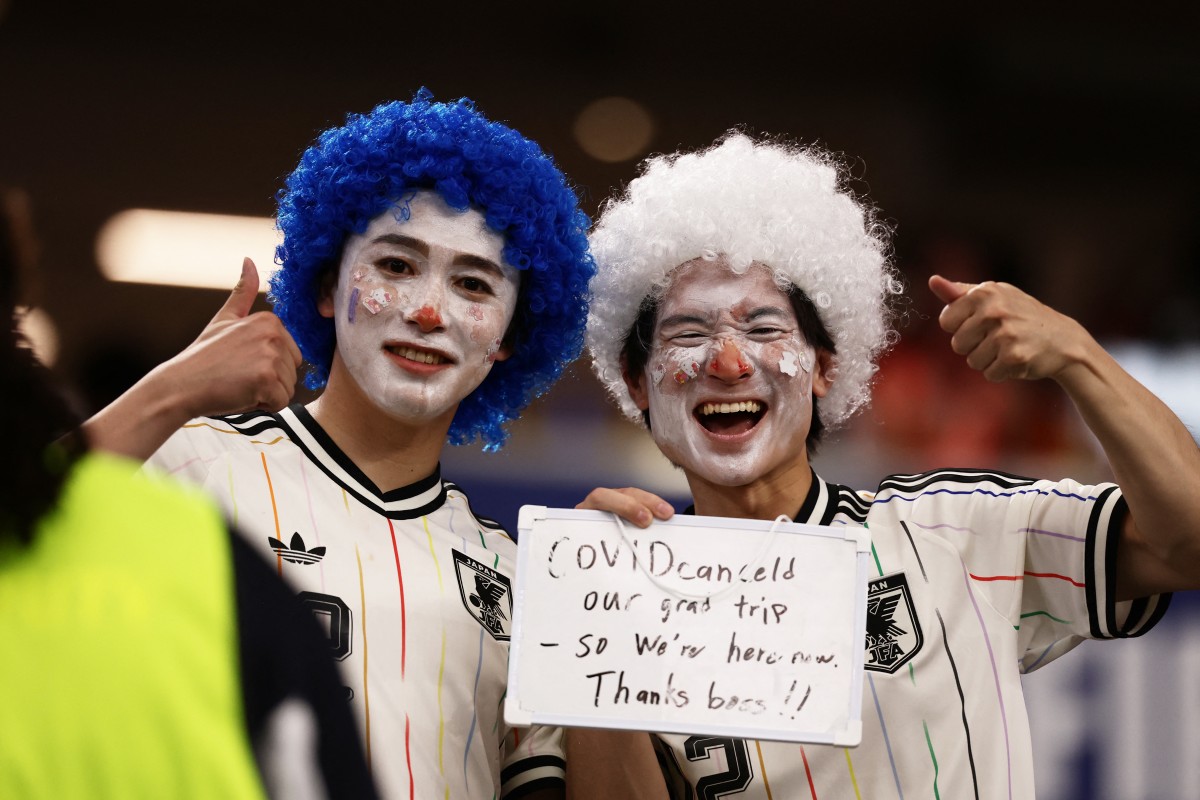
The final whistle had blown, the 2-2 draw with the Netherlands was in the books, and whilst most supporters were streaming towards the exits of the Texas stadium, Japan’s travelling faithful were just getting started on their second task of the evening.
Armed with blue plastic bags and an unshakeable sense of collective responsibility, the Samurai Blue supporters stayed behind to meticulously transform the stands they had occupied into the spotless state they found them. It was not a publicity stunt or an organised campaign, it was simply “Japanese culture” in action on the grandest stage of them all.
“Japanese people think that when we use a certain place, we were told that you have to make that place look tidier when you leave than it was when you arrived,” explained 20-year-old Eita Tanaka, clutching a beer and a couple of cups whilst sporting Japan’s iconic blue shirt. “For example, at school in our classrooms we tidy it up after ourselves without our teacher telling us.”
A habit forged in the classroom
The phenomenon is no flash in the pan. Japan are appearing at their eighth consecutive World Cup, and with each tournament, their fans’ post-match clean-up operation has become as much their international calling card as their team’s technical prowess and tactical discipline.
The cultural habit is deeply rooted in Japan’s education system, where cleaning chores form an integral part of the daily curriculum from primary school onwards. Children scrub floors, wipe down tables and take responsibility for their shared spaces, no caretakers required, no teachers barking orders. It is a lesson in communal responsibility that stays with them long after they leave the classroom.
The impact of this cultural practice was not lost on the locals either. NFL quarterback Jameis Winston was spotted joining the clean-up brigade after Sunday’s Group Stage clash, donning a Japan shirt with his name emblazoned across the back as he helped collect discarded cups and wrappers.
Leading by example
The cultural practice extends far beyond football stadiums. Public waste bins are remarkably scarce throughout Japan, with citizens expected to carry their rubbish home. Household waste disposal resembles a labyrinthine puzzle requiring meticulous separation into numerous categories, a system that would test the patience of most nations but functions seamlessly in Japan.
Japan’s supporters will continue their post-match clean-up operations for as long as their World Cup journey continues. Their next fixture pits them against Tunisia in Mexico on Saturday, and Hagiwara is more than happy to keep setting the standard.
“We usually don’t tell children they should do it,” he said, encapsulating the essence of cultural transmission through action rather than instruction. “We just show our actions and behaviour, and other people follow.”
In a tournament where passion often spills over into chaos, where tribalism can turn toxic and where the beautiful game occasionally reveals humanity’s uglier impulses, Japan’s travelling support offer a refreshing reminder that football fandom can elevate as well as entertain.
They may have shared the points with the Netherlands on the pitch, but in the stands, Japan’s supporters claimed a victory all their own, one rubbish bag at a time.