


GQEBERHA – “I knew it, you are my child,” his mother said when Luyanda Mboniswa finally told her the truth in 2013.
It had taken him twelve years to look his mother in the eye and confess: he had murdered Marike de Klerk, the former First Lady of South Africa.
This revelation came during a one-on-one interview with eNCA journalist Annika Larsen recently. Mboniswa, who now lives in Gqeberha, had been granted parole in August 2023, 20 years after having been sent to prison.
For over ten years, Mboniswa had maintained his innocence. He implicated innocent people, including de Klerk’s dance instructor and even her own son. But a prison rehabilitation program eventually helped him come to terms with the truth and his role in Marike’s murder.
Mboniswa was 22 years old when the crime occurred. He worked as a security guard at the Cape Town complex where Marike de Klerk lived.
“I was supposed to protect her,” Mboniswa says now. “She trusted me, and I was the one who took her life.”
According to the Department of Correctional Services, what began as a botched burglary ended in tragedy.
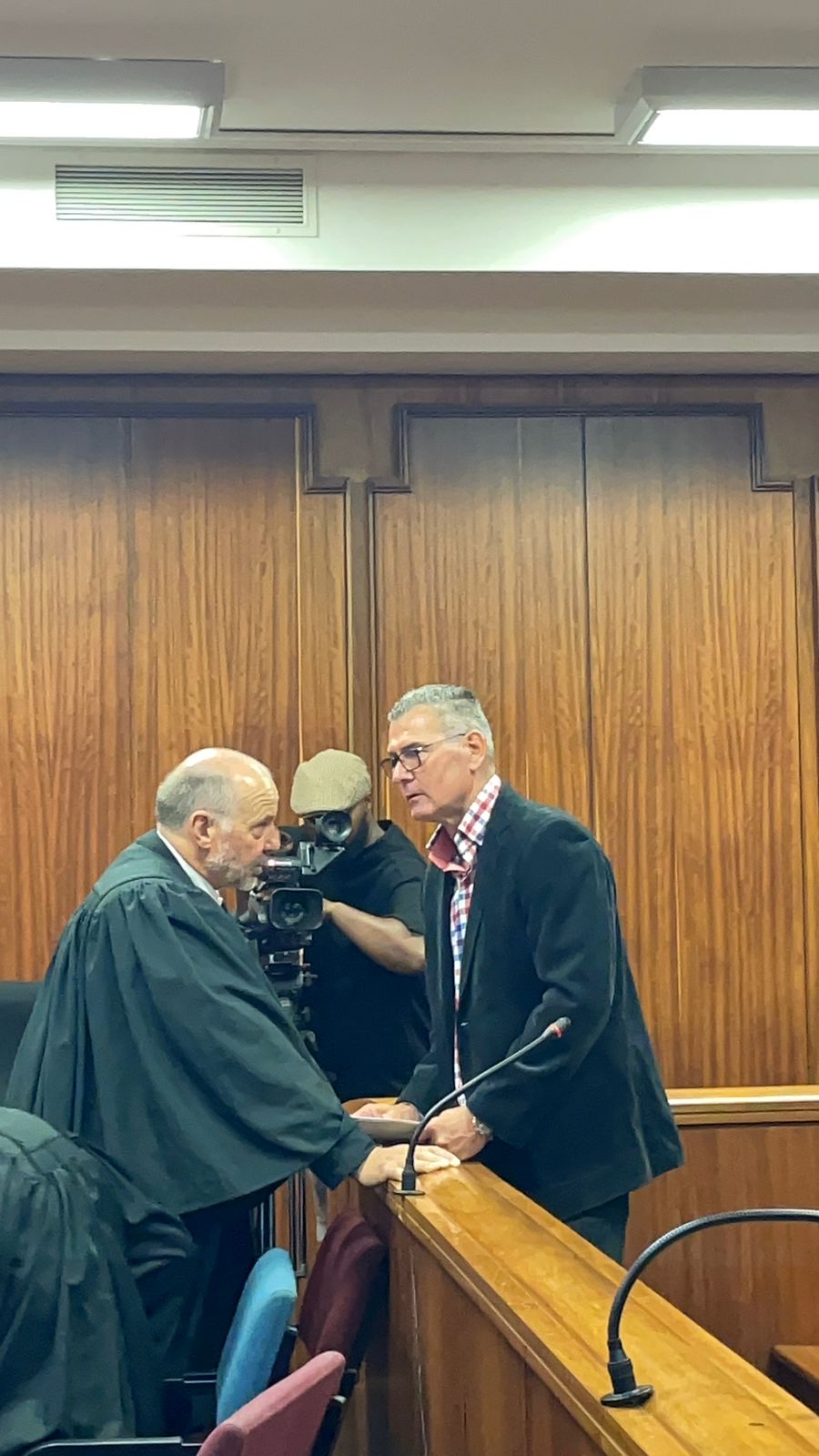
Mboniswa told eNCA that his home in Khayelitsha had been burgled. He saw an opportunity to replace his stolen items by breaking into De Klerk’s apartment.
“Every month-end and beginning of every month, she is not at home,” he recalled. But on that December day in 2001, his plan went terribly wrong.
Mboniswa entered her Blaauwberg Strand townhouse through a window. However, De Klerk discovered him, and in a moment of panic, everything changed.
“I stabbed her,” he says. “She tried to run away, and I stabbed her on her shoulder. She tripped and fell. I sat on her and strangled her.”
“She fought. She fought for her life. I became more physical with her as she was fighting. She cried ‘Help me’ during the attack.”
Initially, Mboniswa confessed to being involved in the murder but tried to shift blame to others. He pleaded not guilty in court, claiming he was acting on behalf of De Klerk’s dance teacher. He spun a story that entangled innocent people in a web of accusations.
“The lie I started involved a lot of innocent people,” he admits. “I did not care, and that is why it was easy for me to shift the blame onto people who were innocent. I was in denial, and that is why I was able to shift the blame.”
Even during court proceedings, Mboniswa appeared detached from the gravity of his actions. “I was smiling during court proceedings,” he confirms. “It was selfishness. I knew I had committed murder.”
On 15 May 2003, Mboniswa was sentenced to two life terms for murder, robbery with aggravating circumstances, and housebreaking. A sexual assault charge was also brought, though Mboniswa maintains his innocence on that count: “There was no way I could have done that. I never raped her.”
Behind bars, Mboniswa initially continued his pattern of denial. He joined a gang called the “28s,” further distancing himself from accountability.
But in 2004, everything began to change when he joined a rehabilitation program called “Group of Hope.”
“I could no longer be a gangster,” he realised when he joined the group. It took four years in the program before he could finally face the truth about his actions.
“The admission itself, looking in the mirror, was not easy because I was defensive,” he explains. “When asked about my case, I would get angry. I had been lying to myself and to the people around me.”
In 2013—twelve years after the murder and eight years after beginning his rehabilitation journey—Mboniswa found the courage to tell his mother the truth.
“I knew it, you are my child,” she responded, as he recounted to eNCA’s Larsen. “It took 12 years for me to be honest with my mother,” he reflects.
Mboniswa’s thoughts return repeatedly to the De Klerk family. “I think about that family, I took away their mom,” he says.
When asked if he has ever tried to reach out to them, he explains that any contact would have to be facilitated through correctional services. “I am sorry for what I have done,” he offers.
Mboniswa rejects any suggestion that race played a role in the crime. Despite the charged racial dynamics of post-apartheid South Africa, he maintains that his relationship with De Klerk was built on mutual respect and trust.
“She was fond of me and she would trust me,” he says. “There was no bad blood. That theory about racial motivation was false.”
According to Department of Correctional Services spokesperson Singabakho Nxumalo, Mboniswa must comply with strict parole conditions for the rest of his life. These include geographical restrictions and prohibition from contacting the victim’s family.
Twenty-three years after Marike de Klerk’s brutal murder, her killer has finally found the courage to tell the complete truth.
“I accepted that I was wrong,” Mboniswa says in closing. “I have to live with being a murderer, but I also have to live with the truth.”



You must be logged in to post a comment.