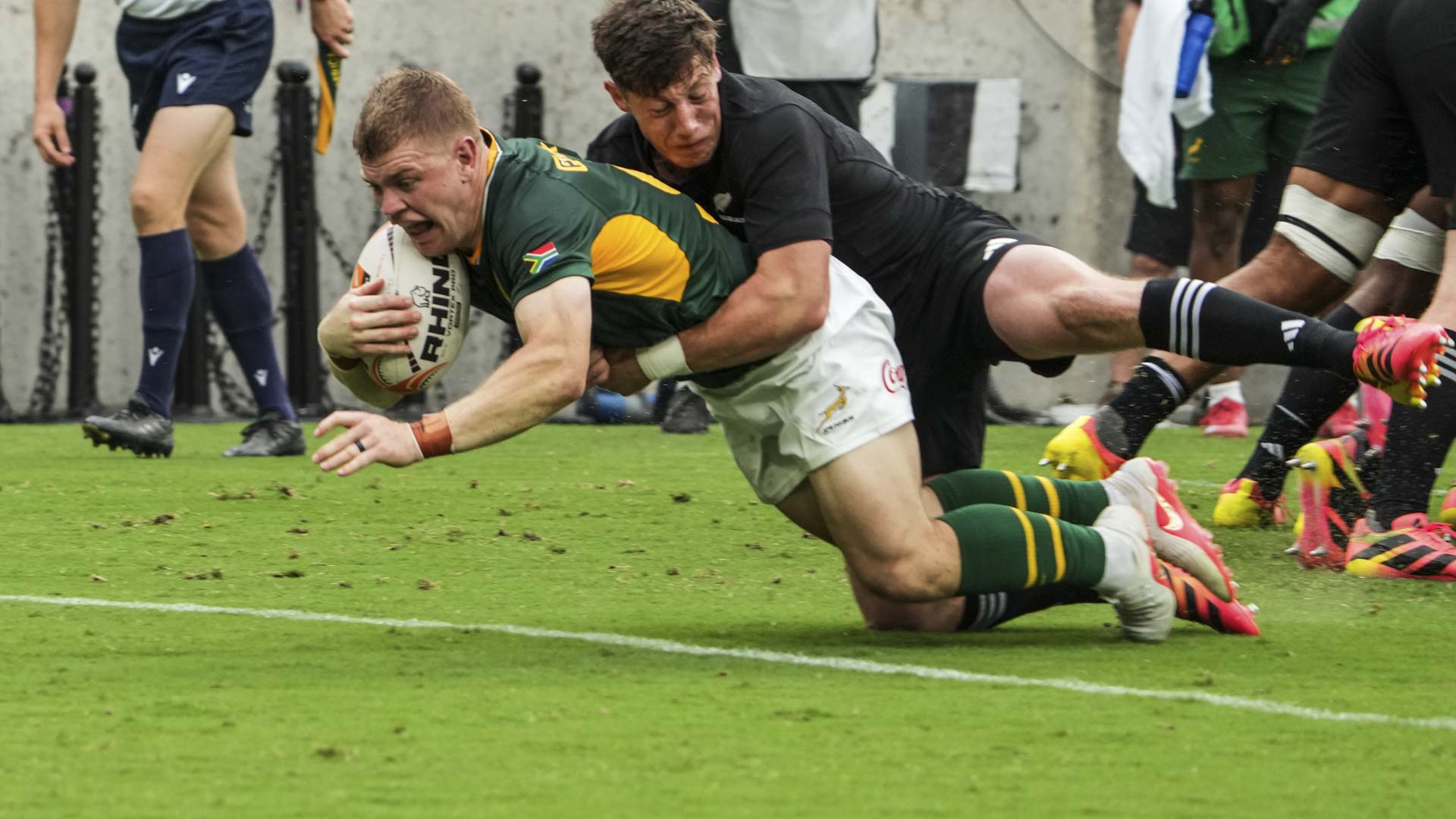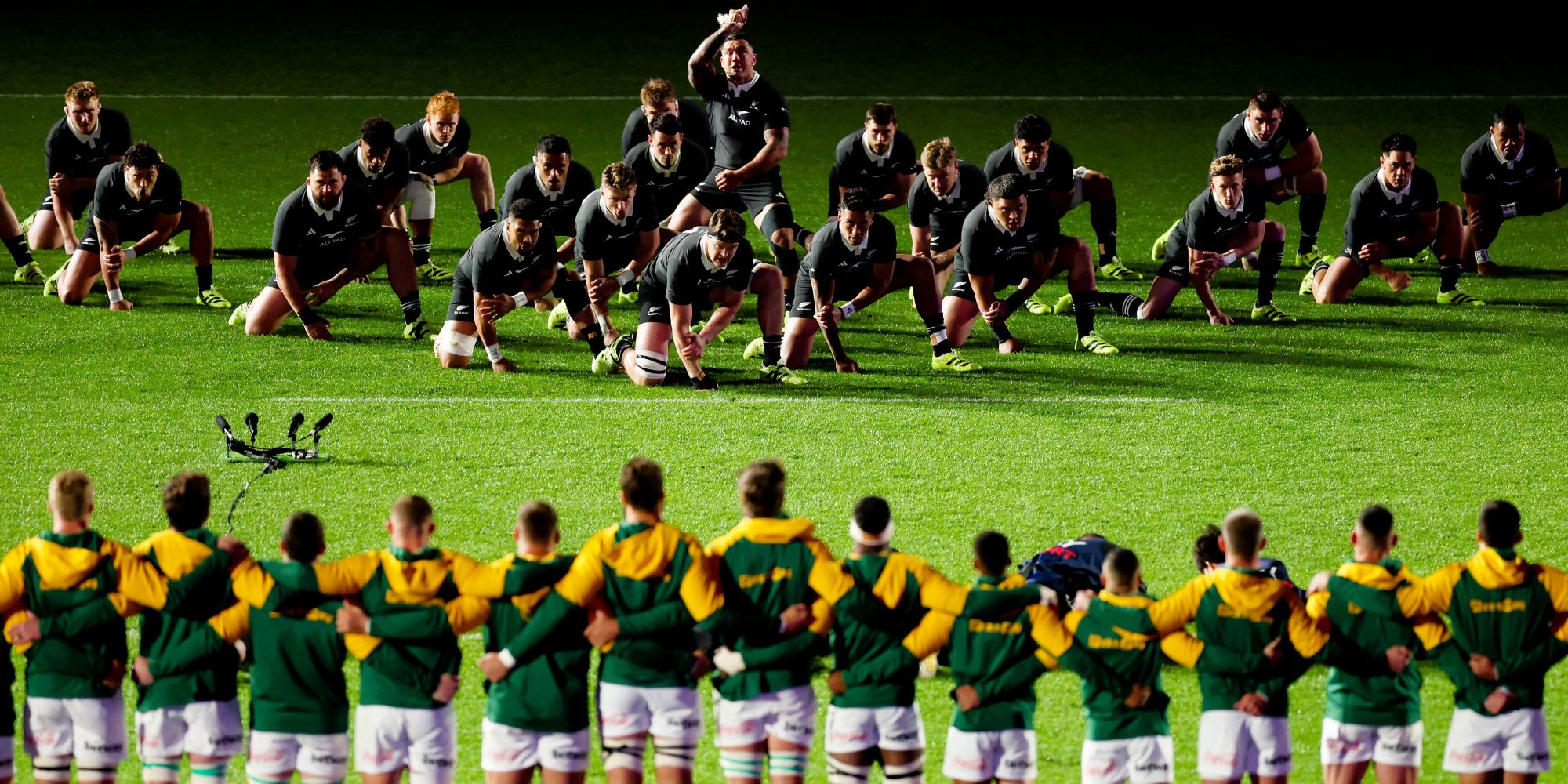
The Springboks beat the All Blacks 43-28 in Baltimore on Saturday. But if you read the American newspapers, you might think the score was irrelevant.
When South Africa and New Zealand played their final test match at M&T Bank Stadium on 12 September, the US media framed it as something else entirely – a market-testing exercise for a sport most Americans still don’t understand.
The Baltimore Sun, the city’s main newspaper, led with numbers that had nothing to do with tries or penalties. Ticket sales surpassed 62 300 before kick-off. The final attendance of 68 173 smashed the previous North American record set when Ireland beat New Zealand in Chicago in 2016. A Ravens executive was quoted saying the match put “Baltimore to the headlines and to the forefront of the sports ecosystem.”
The rugby itself came second.
Explaining the game to newcomers
Because the paper assumed readers didn’t know rugby, Springbok players were given space to explain the basics. Centre Damian de Allende told American audiences to simply come and watch the quality when the two best teams in the world play. Lock Eben Etzebeth, on his first visit to the US, framed the game as a showcase for rugby at its highest level with the 2031 World Cup in mind.
The players weren’t selling the match. They were selling the sport.
Green and gold drowns out black
After the final whistle, the Baltimore Sun’s match report centred less on how the Springboks sealed a 3-1 series win and more on the spectacle in the stands. Green-and-gold jerseys overwhelmed pockets of black. Fans had travelled from across states, countries and oceans. Captain Siya Kolisi said he was struck by how one-sided the crowd was in South Africa’s favour.
The attendance figure became the story. Coverage repeatedly tied the number back to 2031 – Baltimore is an applicant city for the World Cup, and the match offered a glimpse of what the city hopes could return in five years.
ALSO READ: Boys on Tour: Baltimore buzzing as Boks hunt series glory over All Blacks
Can rugby crack America?
Across US outlets, the story was told as “can rugby crack America” rather than as a rivalry between two rugby giants. World Rugby chief executive Alan Gilpin was widely quoted on the strategy of bringing world-class matches to key US cities as part of growing the market ahead of the 2031 men’s World Cup and the 2033 women’s tournament.
One piece observed that the sport itself was somewhat overshadowed by the novelty of the venue and the record crowd.
For a country still “learning the difference between a ruck and a maul,” as the coverage put it, the American press treated the match less as a sporting contest and more as a business proposition.
In the end, it was validated by turnout rather than by the rugby played. The 68 173 fans who showed up weren’t just watching a match. They were part of the pitch.
- SOURCE: Baltimore Sun