
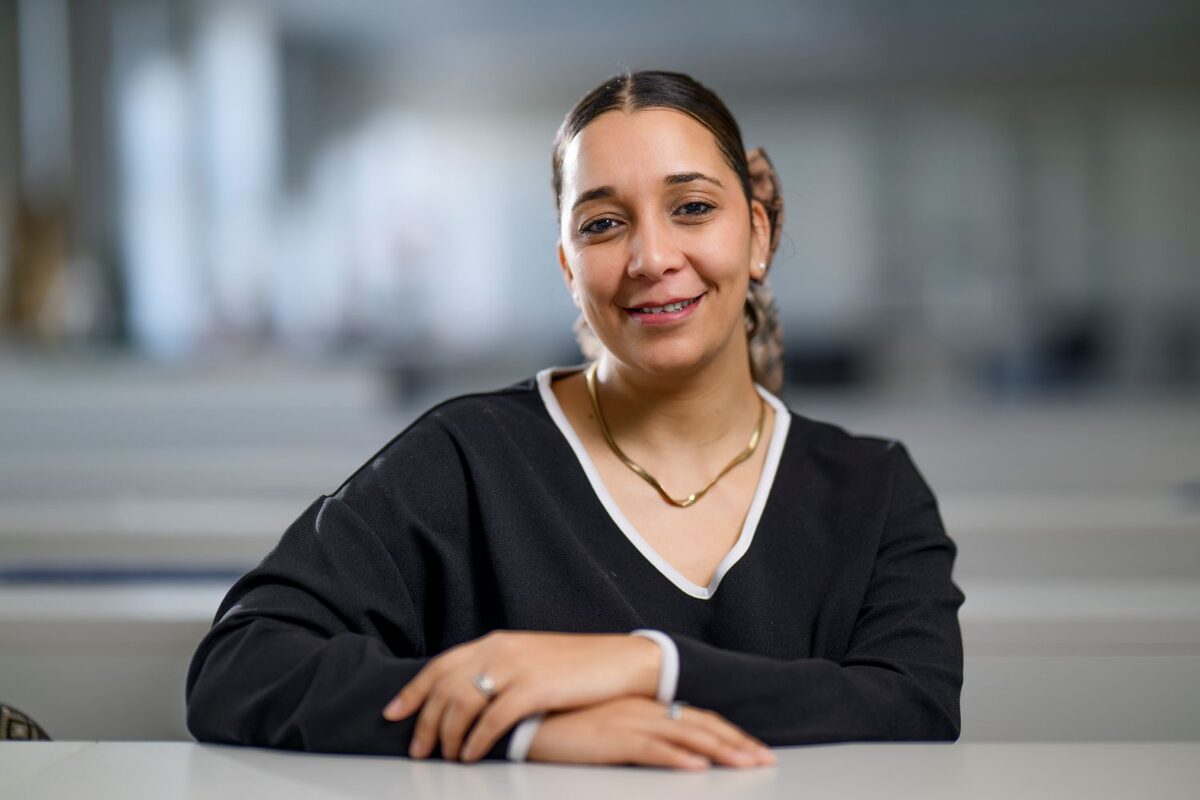
South African academic, Delecia Davids has made history as the first scholar from the country selected for the prestigious Einstein Fellowship, which will take her to Germany for an ambitious project exploring memory, identity and belonging.
The fully funded fellowship, offered by the Einstein Forum in collaboration with the Wittenstein Foundation, supports exceptional young intellectuals pursuing interdisciplinary work beyond their previous specialisation. An example set by Albert Einstein.
For Davids, a Stellenbosch University (SU) lecturer and academic, the opportunity is both an extraordinary professional achievement and a deeply personal journey.
She will live and work in the garden cottage of Einstein’s summer house in Caputh, Germany, where she will develop her fellowship project, titled “Reparative storytelling, memory, and identity”. The project will examine the stories of people who identify as coloured in South Africa and place them in conversation with Germany’s practices of public remembrance.
Davids, an early-career researcher, lecturer and teacher educator in SU’s Department of Curriculum Studies, said the significance of the fellowship had not yet fully sunk in.
“It has not fully sunk in yet,” she said, describing the fellowship as a “once in a lifetime” opportunity.
Heart of her research
At the heart of her research is a much more intimate story. Davids’ father died in 2023, just as she began her PhD. His death left her confronting questions about his life, history and the things she had never thought to ask while he was alive.
“I realised there was so much I didn’t know about him and his history and where he came from,” she said. “You don’t really ask until it’s too late.”
Those unanswered questions became part of a much larger inquiry into memory, heritage and identity.
Davids, who grew up in Delft, Cape Town, plans to begin her project with 10 families where she will start with students from her own generation and tracing their stories through families and communities. She hopes to document not only difficult experiences, but also what she describes as the “joyful heritage” within these histories.
Her interest in reparative work has also been shaped by her experiences as a Mandela Rhodes Scholar, her involvement in reconciliation initiatives at Stellenbosch University and her work with the Khampepe Commission.
Alongside her historical research, Davids has built a reputation for exploring how technology can reshape education.
She founded Stellenbosch University’s Digital Agency Studio, where students, academics and young people examine how technology influences learning and society.
Her work also includes innovative teaching methods, including digital “escape rooms”, while her PhD explores how future teachers understand and use technology.
Yet as she prepares to take her research to Germany, Davids remains focused on people.
For her, the fellowship is not simply about studying the past, but about understanding how stories shape belonging – and how confronting those stories might help create a different future.
“I don’t know where the research is going to go,” she said. “But it feels like something important for me, and also for a larger narrative that we’ve not really dealt with.”