

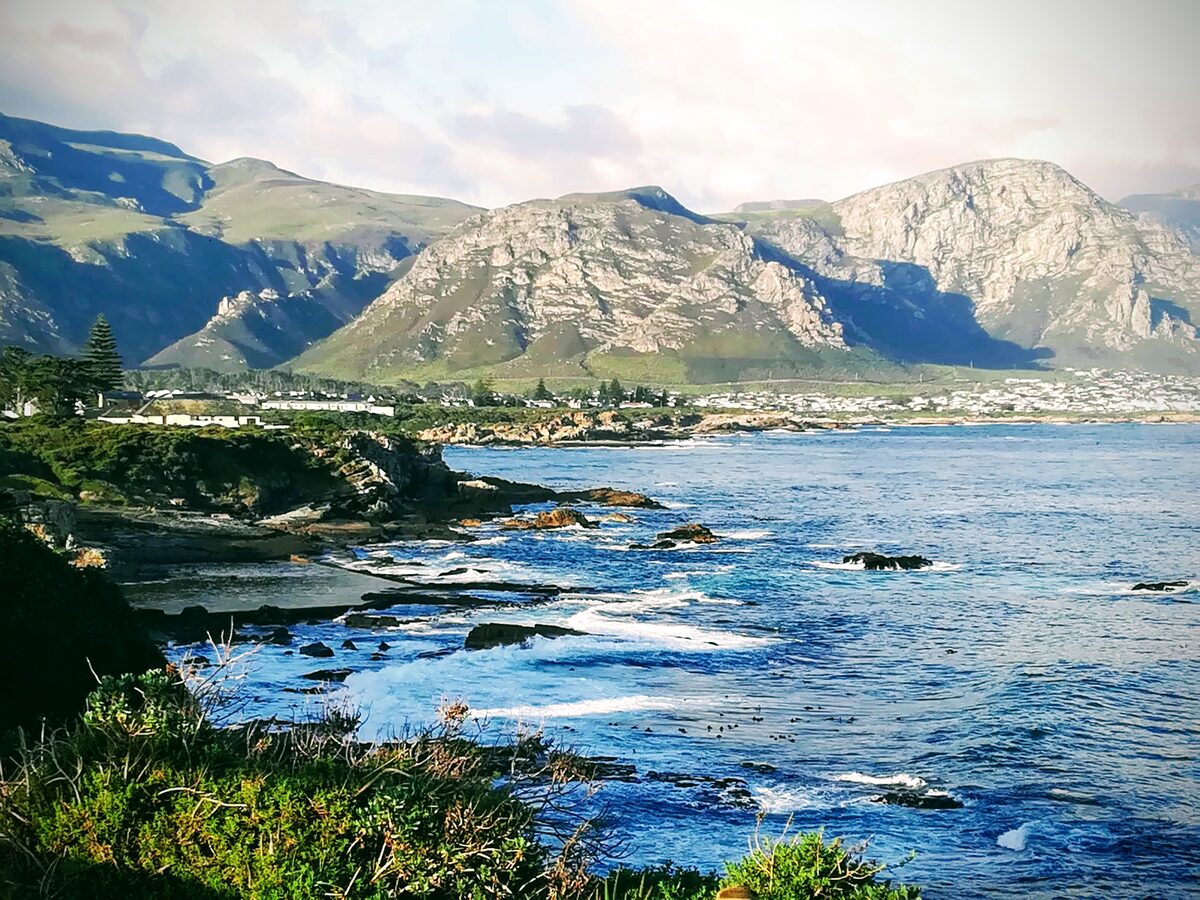
Despite growing international tourism in the Western Cape visitor numbers at participating attractions in the Overberg declined by 6,24% in the first half of 2026.
A new report by Wesgro recorded 140 972 visitors at 16 participating attractions between January and June. This was down from the same period in 2025.
The Cape Overberg Tourism Visitor Trends: January to June 2026 report records a combined 144 859 visitors through participating attractions and regional visitor-tracking surveys.
However, the figures do not represent the entire region’s tourism activity.
This decline comes as the Western Cape recorded 1,5 million international tourists in 2025, an 11,1% increase year-on-year. These visitors spent almost R26 billion in the province, according to figures released by the provincial government in April.
Domestic tourists remained the largest visitor market in the Overberg, accounting for 76,07% of survey respondents, while international visitors made up 23,93%.
Of domestic visitors 86,54% came from the Western Cape. This highlights the significant role of the local market in sustaining tourism activity in the region.
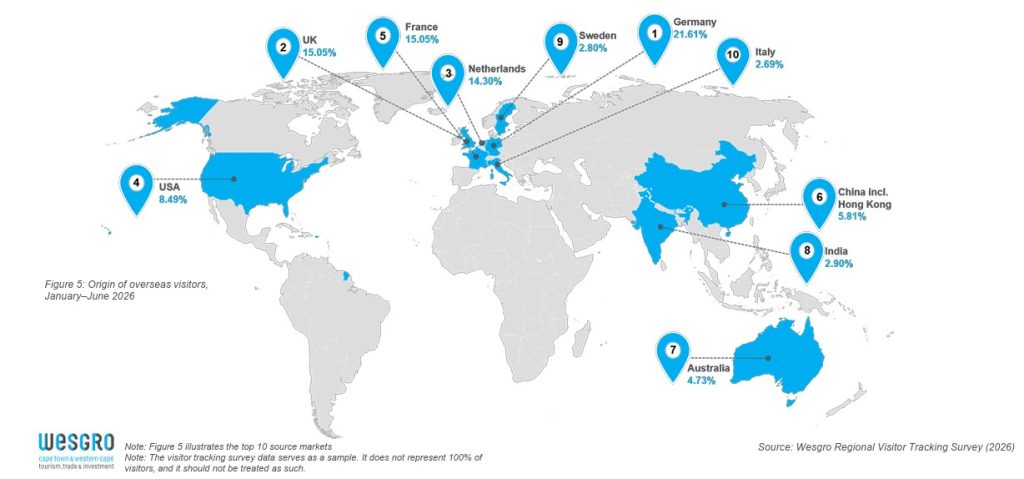
Germany, the United Kingdom and the Netherlands were the leading international source markets. In contrast, international visitors represented a smaller, yet still significant, share of the visitor sample, accounting for 23,93% of visitors during the reporting period.
Therefore, this indicates that while the domestic market remains the primary source of visitors the overseas markets contribute meaningfully to the region’s tourism industry.
According to Wesgro “the largest share of international visitors to the Cape Overberg region between January and June 2026 originated from the Germany, accounting for 21.61% of the international visitor sample.”
Additionally, “the United Kingdom (UK) represented the second largest source market, accounting for 15.05% of visitors and the Netherlands ranked as the third largest source market, accounting for 14.30% of the international visitors sampled during the reporting period.”
Visitor trends
The report also highlighted the region’s dependence on seasonal tourism, with 82,85% of visitors recorded between January and April. Only 17,15% visited during May and June, as the winter season began.
Stony Point was the most visited participating attraction, recording 37 235 visitors, followed by Arniston Hotel & Spa with 19 264 and Walker Bay Nature Reserve with 18 106.
ALSO READ: Stony Point in Betty’s Bay protection of penguins questioned
Cape Agulhas Resorts and Cape Agulhas Lighthouse rounded out the top five.
Leisure was the main reason for visiting the region, accounting for 70,31% of respondents.
Meanwhile, 41,11% were day visitors, while 19,40% stayed for seven nights or longer.
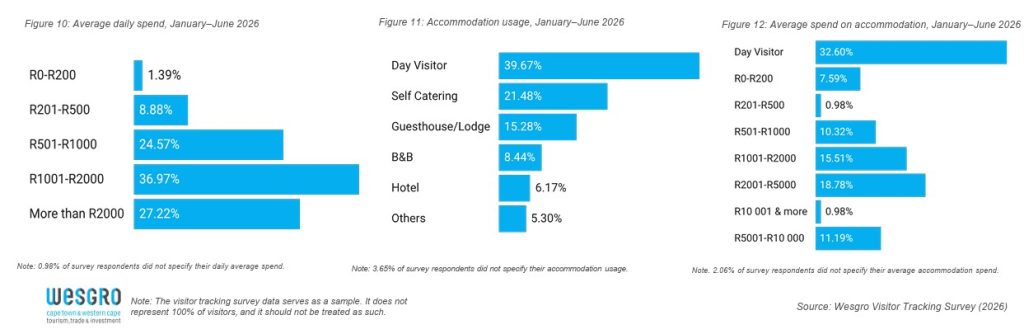
About 37% reported average daily spending of between R1 001 and R2 000, while a further 27,22% spent more than R2 000 a day.
Accommodation preferences
Accommodation preferences also play a large role in visitor trends.
According to the Wesgro report, self-catering options emerging as the most preferred option, selected by 21,48% of visitors.
“Guesthouses and lodges were the second most popular accommodation type, preferred by 15,28% of visitors, while bed and breakfast establishments accounted for 8,44% of accommodation choices,” the report states.
Demographics of visitors in the Overberg
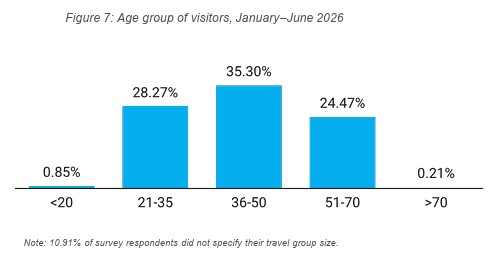
Wesgro reports that the age profile of visitors was concentrated in various categories.
These include age categories of 21 to 35 years old, 36 to 50 and 51 to 70. It indicates the region attracts a broad yet relatively mature visitor market.
“The largest proportion of visitors (44,48%) travelled in pairs, while 31,80% visited the region alone,” Wesgro reports. “In addition, 12,32% of visitors reported travelling in groups of three. These findings suggest that the region is particularly appealing to couples and solo travellers, reflecting a possible demand for tourism experiences that accommodate both shared and individual travel preferences.”
Furthermore, 41,11% of visitors were classified as day visitors, highlighting a strong preference for shorter-duration trips. This pattern was especially evident among domestic tourists. In addition, 19,40% of visitors stayed seven or more nights in the region.
Impact on businesses
Businesses identified extending the tourism season and promoting year-round experiences as priorities, alongside concerns about water supply, electricity, road conditions and tourism signage.
The figures suggest that attracting visitors beyond peak season and encouraging longer stays could be important to spreading tourism’s economic benefits across the region.
However, further data would be needed to determine whether the decline at participating attractions reflects a wider downturn in Overberg tourism.

You must be logged in to post a comment.