
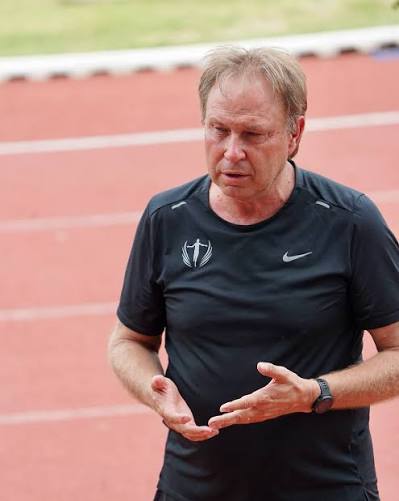
When Athletics South Africa needed a steady hand to pull them back from the brink, they turned to the man who’s already turned Potchefstroom into a global athletics training destination. Jean Verster‘s appointment as ASA Acting President on 2 November entrusts the federation’s immediate future to arguably the most credible figure in South African athletics administration.
The North-West University stalwart inherits a smoking crater. The previous ASA leadership were suspended due to financial mismanagement, whilst Verster races against time to stabilise operations before the ASA Council convenes on 28 November to chart a permanent path forward.
If anyone possesses the credentials to navigate this minefield, it’s Verster. This isn’t some politically-appointed figurehead parachuted in to warm a seat, this is a former elite international runner turned world-class coach and administrator who’s spent decades building genuine excellence from the ground up at the NWU Potchefstroom Campus.
The resume that matters
Verster manages the world-renowned NWU High Performance Institute of Sport, transforming Potchefstroom into a legendary international training hub that attracts elite talent from across the globe. His coaching stable reads like a South African athletics hall of fame: Hezekiel Sepeng, Caster Semenya, Elroy Gelant and countless others who’ve stood on podiums representing the green and gold.
That coaching pedigree translates directly into administrative credibility. Verster served as official Team Manager for South Africa’s athletics contingent at both the Tokyo 2020 and Paris 2024 Olympic Games, gaining first-hand insight into the logistical, political and financial complexities of managing elite sport at the highest level.
Before guiding others to greatness, Verster was an exceptional middle- and long-distance runner himself, competing internationally for South Africa. That athlete’s perspective, understanding what competitors need, recognising where systems fail them and refusing to accept mediocrity, informs every decision he makes as administrator and coach.
Crisis demands credibility
Financial mismanagement doesn’t fix itself with good intentions. It requires forensic attention to detail, ruthless prioritisation and the sort of institutional credibility that prevents further haemorrhaging of stakeholder confidence. Verster brings all three.
His Potchefstroom operation proves he understands sustainable high-performance infrastructure. Those same principles will determine whether ASA emerges from this crisis functional or fractured.
South African athletics has endured enough governance failures. This time, they’ve appointed someone whose track record suggests he might actually steady the ship.