As the Western Cape prepared for a potentially hotter, drier summer driven by developing El Niño conditions parts of the Overberg were already recording below-normal rainfall and signs of increasing environmental drying.
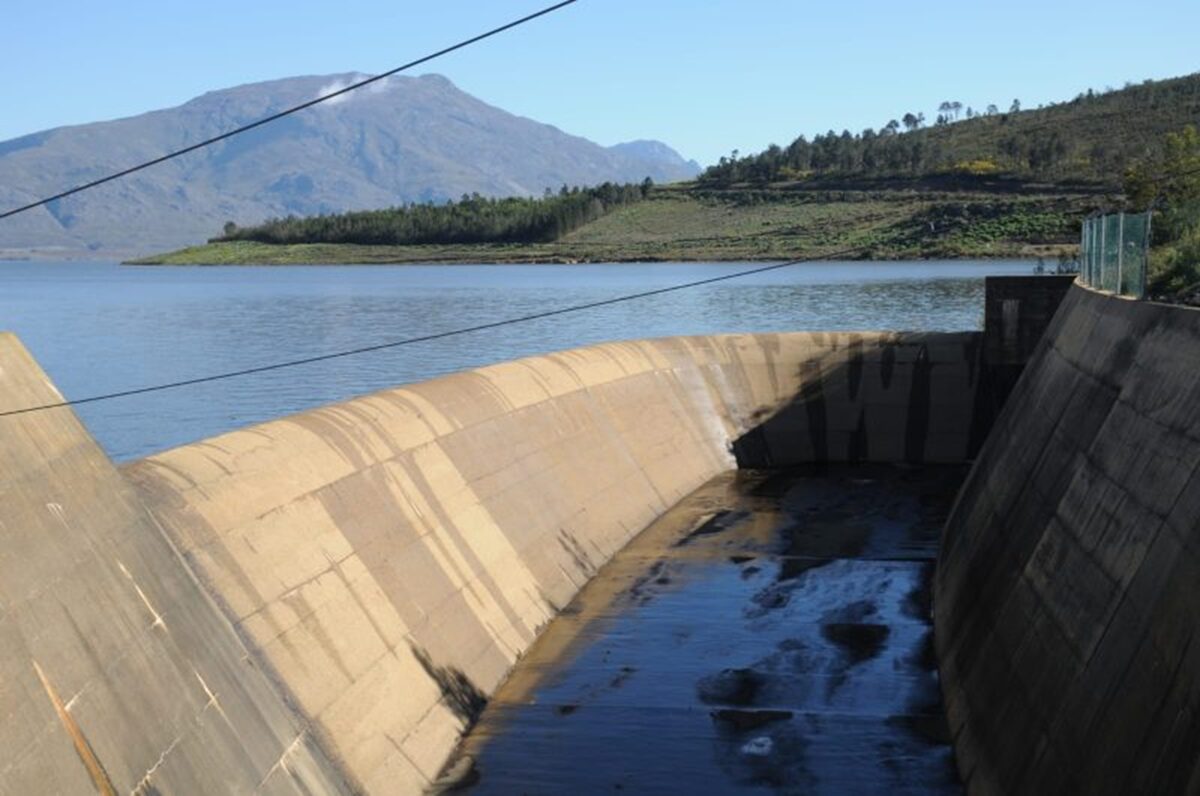
However, Overstrand Municipality (OM) said water supplies remained secure for now, with dams near capacity and no water restrictions in place.
The October 2026 Overstrand Climate Intelligence Brief, published by FutureClimate IQ on 15 October, identifies rainfall deficits, exceptional temperatures and declining soil moisture as warning signs ahead of the summer months.
The OM says it was monitoring water levels, strengthening its preparedness plans and continuing infrastructure projects to improve long-term water security.
Rainfall deficits across the Overberg
September rainfall was below normal at all three monitoring sites highlighted in the report.
Gansbaai recorded rainfall 29% below its monthly average, while Hermanus experienced a 39% deficit and Kleinmond 28%. Rainfall remained limited during the first 10 days of October.
By 08:00 on 11 October, Gansbaai had recorded 6 mm, Hermanus 14 mm and Kleinmond 8 mm. These totals represented 14%, 32% and 12% of the locations’ respective average October rainfall.
The report also identifies a more established meteorological drought signal around Kleinmond, highlighting differences in conditions across the region.
However, the brief warns of increasing environmental drying.
Exceptionally high temperatures and atmospheric drying demand were recorded over recent periods compared with historical data from 1991 to 2020.
Satellite observations also indicated low vegetation-moisture levels across much of the Overberg interior, while soil-moisture forecasts pointed to a slight decline compared with September.
El Niño is forecast to peak around November and December 2026.
Seasonal outlooks generally favour above-normal temperatures and an increased probability of below-normal rainfall towards mid-summer.
However, the report notes that the coastal area lies near the edge of the broader dry signal, meaning confidence in below-normal rainfall is lower than further inland.
Dam levels remain high, but conservation urged
Despite the rainfall deficits, OM reported that De Bos Dam stood at 98,7% capacity during the week of 12 to 18 October. This was down from 99% on 18 October 2025.
OM recorded 14 mm of rainfall during the week, while average daily water consumption fell from 15,498 megalitres to 14,3 megalitres. It’s October bulletin stated that all dams were close to full and being monitored continuously.
The municipality confirmed that there are currently no water restrictions, although restrictions could be introduced at short notice if water levels become concerning.
Residents are encouraged to use water wisely, repair leaking taps and pipes, take shorter showers, turn off taps when not in use, run full washing-machine loads and water gardens for shorter periods outside the hottest part of the day.
Under the municipality’s Water Services By-law, irrigation is prohibited between 09:00 and 17:00 to reduce water loss through evaporation.
Residents using well points or boreholes must register them with their area manager and display the required signs where they are visible from a public thoroughfare.
Demand and water losses pose challenges
The municipality said bulk water demand increased by 27% between 2022 and 2026, reinforcing the need to improve infrastructure and diversify water sources.
Since 2022 it has completed 25 water infrastructure projects at a reported cost of R165 million. Its work includes replacing ageing water pipes and expanding groundwater supplies.
OM reported that 17,4 km of water pipes had been replaced from the 2022-’23 period, with R48,653 million spent on pipe replacement.
It also said more than R96 million had been spent on its pipe-replacement programme over the past eight years, during which almost 40 km of pipeline had been replaced.
Groundwater augmentation projects are continuing in Hermanus and Pearly Beach. In the Hemel-en-Aarde Valley, two new production boreholes have been drilled, equipped and commissioned to increase the available yield from local well fields.
Planning for a seawater desalination plant in Hermanus has also begun.
While the municipality achieved a 99,99% Blue Drop score in the Department of Water and Sanitation’s latest assessment, with all eight water schemes receiving Blue Drop status, water losses remain a concern.
Reported losses rose from 24,5% in 2022 to 31,1% in the 2025-’26 financial year.
Longer fire season expected
The municipality is also preparing for potentially heightened fire danger as warmer temperatures, dry conditions and unpredictable rainfall affect the region.
ALSO READ: Record El Niño? Depends who’s counting
It warned that the fire season could last up to eight months, compared with the usual four to five months. Fire and Rescue Services and Disaster Management are working with the Garden Route to potentially combat the fires.