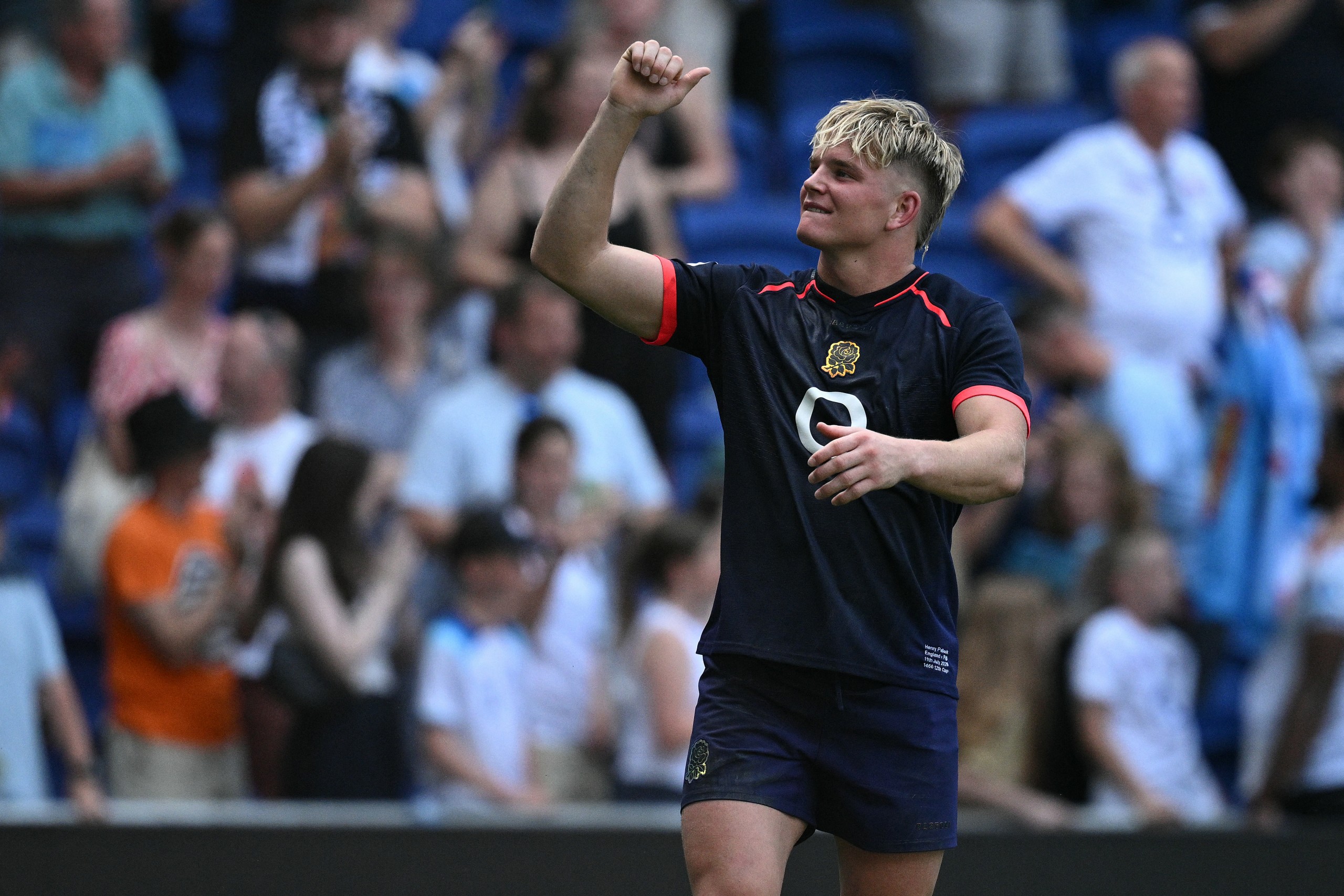
Henry Pollock has just lobbed a grenade into English rugby’s salary structure debate. The England backrower, valued at over £1 million by boxing promoter Eddie Hearn, has revealed he’s considering playing abroad or even changing sports altogether if his Northampton contract negotiations don’t meet his expectations.
The bombshell came during a candid media session where Pollock laid bare his thinking that will either terrify Northampton’s board or galvanise them into action, possibly both.
“I definitely want to go and live in different countries, explore new sports, explore new avenues,” Pollock told reporters, the words landing like a stun grenade in Saints’ boardroom. “Eddie and the Matchroom team are constantly messaging me, calling me about different avenues and they’ve been great with that kind of stuff. I’m not going to say no to any opportunity.”
The Eddie Hearn factor
When Pollock signed with Matchroom Talent Agency earlier this year, rugby’s traditional power brokers shuffled uncomfortably in their leather chairs. Eddie Hearn, the man who turned Anthony Joshua into a global brand and revolutionised boxing promotion, doesn’t do things quietly. He doesn’t accept “that’s just how it’s always been done” as an answer. And he certainly doesn’t let his clients undersell themselves.
Hearn’s public valuation of Pollock as a “seven-figure player” sent shockwaves through English rugby. One hundred and fifty thousand pounds a year? That’s barely a tenth of what football players of equivalent stature earn. Hearn looked at rugby’s salary structure and saw a market ripe for disruption.
Pollock, refreshingly, isn’t intimidated by the attention or the numbers being bandied about.
“I don’t see it as pressure. I see it as him doing his job. He’s the best sports promoter in the world. The reason he’s the best is because he gets his client what he deserves,” Pollock explained. “The sport of rugby needs to change and hopefully this is a change.”
Money vs the Red Rose
Pollock’s openness to playing abroad introduces the most significant complication to Northampton’s retention efforts. A move to France or Japan would potentially offer substantially more lucrative terms than any Premiership club can match under the salary cap.
Top-tier French clubs routinely pay their marquee players €500,000-€800,000 annually, whilst Japan’s League One can offer even more eye-watering packages. For a player Hearn values in seven figures, those markets represent the only realistic way to achieve that valuation whilst still playing rugby.
But there’s a catch, a massive, red-rose-wearing catch. Moving overseas would cost Pollock his England career. The RFU’s selection policy is crystal clear: play your club rugby abroad, and you’re ineligible for Test selection, barring exceptional circumstances reserved for veterans with enormous cap tallies.
At 21 with just 13 caps, Pollock doesn’t qualify for those exceptions. Moving to France or Japan means sacrificing international rugby just as his England career is blossoming. It means missing Rugby World Cups, Six Nations championships, and the prestige that comes with representing your country.
The commercial implications are equally significant. England players benefit enormously from the exposure international rugby provides. Sponsorship deals, media opportunities, and long-term brand building all flow from wearing the red rose. Lose that platform, and you lose those revenue streams, potentially offsetting much of the salary increase gained by moving abroad.
Pollock understands the dilemma but isn’t ruling anything out.
“At the minute rugby is my main priority so I’m focusing on that in the near future, but as I said, you never know what’s happening around the corner,” he said, leaving the door conspicuously ajar.
The Northampton love affair, but love doesn’t pay the mortgage
Listen to Pollock discuss Northampton, and you hear genuine affection for the club that developed him from academy prospect to England international.
“Northampton’s been so great to me, I’ve been here my whole career and they’ve made me who I am. For me to stay here would be so special,” Pollock said.
But then comes the reality check.
“Obviously, I know it’s not as easy as that and I know there’s lots of moving parts that come into play. I’m very open to new opportunities and I’m very open to exploring that. I’m so young so I think it’s only right that I assess those options and find the best decision for myself.”
Northampton faces a brutal dilemma. They operate under Premiership salary cap constraints that limit total squad spend. Paying Pollock what Hearn believes he’s worth means less money available for other positions.
Dowson’s confidence: is it justified?
Northampton director of rugby Phil Dowson is publicly projecting confidence that a deal can be reached, though his words suggest he understands the complexity involved.
“As you can imagine, it’s complex,” Dowson admitted. “There’s a few moving parts that we need to put together, but I’m hopeful. As I said before, he wants to stay and we want to keep him.”
The “moving parts” Dowson references likely include creative contract structuring, image rights deals, commercial opportunities facilitated by the club, and possibly even outside investment that doesn’t count against the salary cap. Premiership clubs have become increasingly inventive in how they compensate star players within (or occasionally, let’s be honest, around) the cap restrictions.
But there’s only so much financial engineering you can do before the fundamental question reasserts itself: what is Henry Pollock actually worth, and can Northampton afford to pay it?
The nuclear option
The most intriguing element of Pollock’s comments is his openness to “exploring new sports” altogether. This isn’t idle speculation, Hearn represents athletes across multiple disciplines and has the connections to facilitate transitions into boxing, MMA, or other combat sports where Pollock’s physicality and athleticism could translate.
Would Pollock genuinely walk away from rugby at 21? Probably not immediately. But the fact he’s even discussing it publicly demonstrates a mindset shift that should concern rugby’s powerbrokers. The next generation of players aren’t captive to the sport. If the money, lifestyle, or opportunities are better elsewhere, they’ll explore those options without the guilt that might have restrained previous generations.
Rugby has already lost athletes to NFL pathways, boxing, and other sports. Pollock wouldn’t be the first, and if rugby’s salary structures don’t evolve, he won’t be the last.
The 18-month countdown
Pollock’s current contract expires at the end of the 2026/27 season. That’s the window Northampton has to get this done before the situation becomes critical.
In that timeframe, Pollock will continue developing as a player, likely add to his England cap tally, and potentially increase his market value even further. Every outstanding performance strengthens his negotiating position. Every injury to a rival club’s back-row makes him more attractive to overseas suitors.
Dowson’s confidence notwithstanding, this negotiation will test Northampton’s resolve, creativity, and ability to convince a 21-year-old that staying loyal to the club that developed him is worth sacrificing the significantly larger paycheques available elsewhere.