Padel’s meteoric rise in South Africa is about to reach a watershed moment. This October, the country’s top players will battle for the sport’s first-ever official national titles at The Growthpoint SA Nationals Padel Championships 2026, with R125,000 in prize money transforming what was once a recreational pastime into a legitimate competitive sporting discipline.
For the first time in South African padel history, players will be able to call themselves national champions. What began as a niche sport played by enthusiasts at a handful of clubs has exploded into a nationwide phenomenon demanding the infrastructure, competition pathways, and recognition that major sports enjoy.
The two-weekend championship, hosted by Padel 365 across its Century City and Richmond Park clubs in Cape Town, represents the sport’s coming of age moment. Weekend one (9-11 October) will crown champions across age group divisions, whilst weekend two (16-18 October) delivers the open division showdown where South Africa’s absolute elite will go head-to-head for ultimate bragging rights and the lion’s share of that R125,000 prize pool.
From recreational craze to competitive discipline
Paul Atkinson, co-owner of Padel 365, has watched the sport’s transformation from the inside and understands precisely what this championship means for padel’s future in South Africa.
“Padel has exploded in South Africa over the past four years. We already have a well-established national tour, overseen by the South African Padel Association, with major tournaments taking place across the country and increasing support from corporate South Africa,” Atkinson explained.
The numbers support his assessment. Four years ago, padel courts were rarities. Now they’re sprouting up across the country, from urban centres to smaller towns, each one filled with players drawn to the sport’s unique combination of accessibility and competitive intensity.
But infrastructure alone doesn’t make a sport legitimate in the public consciousness. Championships do. Titles do. The ability to point at someone and say “that’s the South African national champion” carries weight that recreational popularity simply cannot match.
“For me, one of the important steps in giving any sport real credibility is having an official National Championship,” Atkinson continued. “It gives players across every age group the opportunity to proudly call themselves a South African National Champion, and for our elite players in particular, that title can carry real significance as they look to turn professional, attract sponsorship and compete internationally.”
What makes padel so compelling?
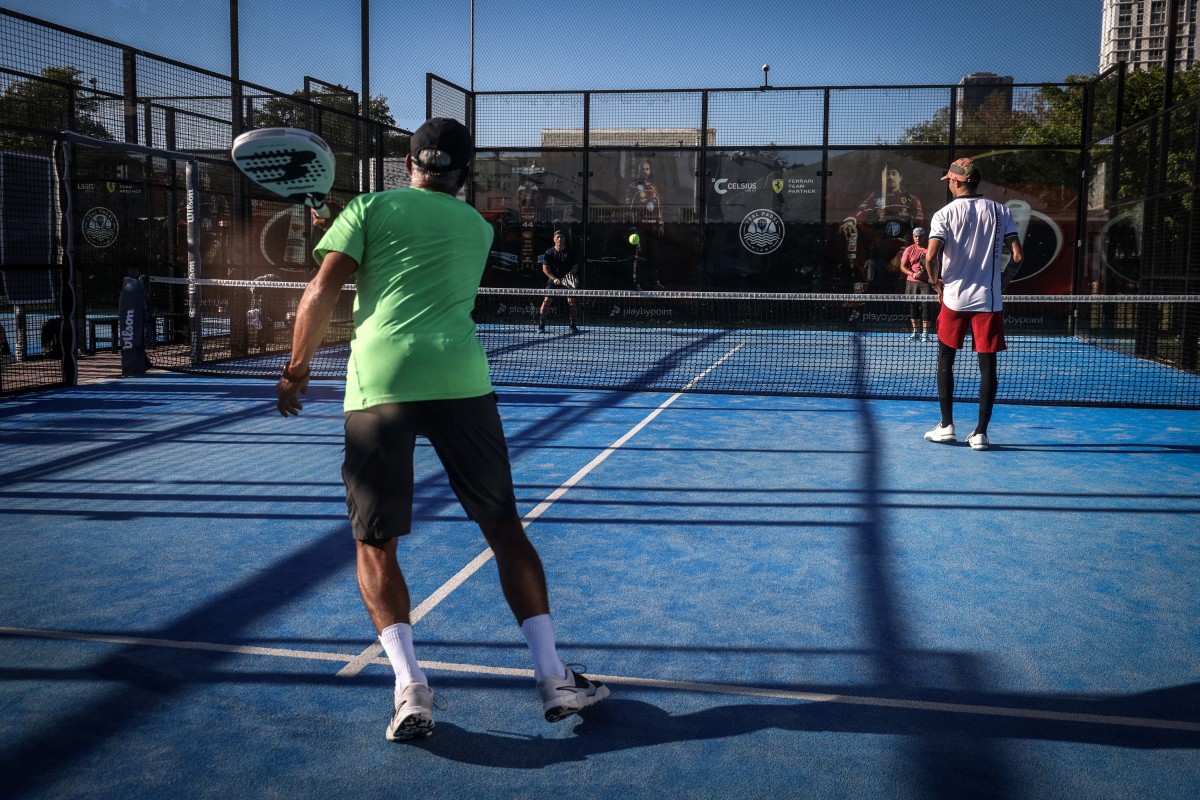
For the uninitiated, padel sits somewhere between tennis and squash, played on an enclosed court roughly a third the size of a tennis court, surrounded by glass walls that are integral to play. Partners work in pairs, using solid paddles rather than stringed racquets, keeping a depressurised tennis ball in play with a combination of volleys, groundstrokes, and rebounds off the walls.
The result is a fast-paced, highly tactical sport that’s easier to pick up than tennis (the smaller court and underarm serve reduce the technical barrier to entry) but offers immense strategic depth for advanced players. Rallies tend to be longer than tennis, creating dramatic exchanges that keep spectators engaged. The enclosed court means fewer balls flying into neighbouring courts, making it supremely spectator-friendly.
Crucially, padel is inherently social. The doubles format encourages communication and teamwork, whilst the smaller court keeps all four players involved in every rally. You can’t hide in padel, everyone touches the ball, everyone contributes, and the social dynamic makes it as much about enjoyment as competition.
The sport has critical mass domestically, infrastructure is expanding rapidly, and now the competitive structures are being formalised through events like the SA Nationals.
Putting your money where your mouth is
Prize money matters. It signals that organisers, sponsors, and the sport’s governing body take competition seriously. R125,000 split across multiple divisions transforms padel from a hobby into a pursuit where elite performance is financially rewarded.
Follow the money, and you understand a sport’s trajectory. The sponsor list for the SA Nationals reads like a who’s-who of South African corporate heavy-hitters: Growthpoint Properties (title sponsor), Standard Bank, CIB, Blu Label Unlimited, FlySafair, Rabie Properties, Repower Africa, Thorp Motor Group, HEAD Padel, and the South African Padel Association.
These aren’t speculative gambles on an unknown entity. These are established brands investing in a sport they believe has genuine growth potential and audience reach.
“The support of Growthpoint Properties and our other blue-chip sponsors shows just how far the sport has already come,” Atkinson noted, acknowledging that corporate backing validates everything padel stakeholders have built over the past four years.
For players, this sponsorship ecosystem creates opportunities beyond prize money. Brands investing in padel are potential individual sponsors for top athletes. Exposure during the SA Nationals could lead to endorsement deals, equipment sponsorships, or corporate partnerships that fund professional careers.
Cape Town is the perfect host city
Hosting both weekends at Padel 365’s Century City and Richmond Park facilities in Cape Town makes strategic and practical sense. Cape Town boasts world-class sporting infrastructure, a temperate October climate perfect for outdoor competition, and the kind of lifestyle appeal that makes hosting a national championship an attractive proposition for players travelling from across the country.
Century City and Richmond Park represent some of South Africa’s premier padel facilities, ensuring that when national champions are crowned, they’re competing on courts that meet the highest standards. First impressions matter, and hosting the inaugural SA Nationals at top-tier venues sends a message about the sport’s ambitions and standards.
Regional qualifying and national pathways
Atkinson revealed that from 2027, the SA Nationals will introduce regional qualifying events around the country, creating a clear pathway to the finals whilst reducing travel burdens on players.
“From next year, our intention is to introduce regional qualifying events around the country, reducing the amount of travel required for players while creating a clear pathway towards qualification for the SA Nationals finals, which will once again be hosted in Cape Town,” he explained.
It democratises access, players from Durban, Johannesburg, Port Elizabeth, and smaller centres can compete regionally rather than travelling to Cape Town just to participate.
It also builds anticipation. Regional qualifiers create storylines, identify dark horses, and ensure that by the time players reach the Cape Town finals, they’ve earned their place through competitive success rather than simply entering and hoping for the best.
October’s crowning moment
This October, somewhere on a glass-walled court in Cape Town, South Africa’s first official national padel champions will be crowned. They’ll hoist trophies, collect prize money, and earn the right to call themselves the best in the country at a sport that’s capturing imaginations across demographics, geographies, and skill levels.