


Government has released sweeping reforms to strengthen protection for whistleblowers, acknowledging that fear of retaliation, financial ruin and assassination has silenced those who could expose corruption.
Minister of Justice and Constitutional Development Mmamaloko Kubayi on Thursday released the Protected Disclosures Bill for public comment, calling it a critical intervention to safeguard individuals who report wrongdoing.
The proposed legislation stems from findings of the State Capture Commission, known as the Zondo Commission, and recommendations from the National Anti-Corruption Advisory Council.
High price of exposing corruption
Kubayi said existing laws have failed to protect whistleblowers adequately, with many suffering suspension, dismissal and delayed benefit payouts. Some have been killed.
She cited cases including Babita Deokaran, a senior finance official at the Gauteng Department of Health who was shot dead outside her home in Johannesburg in August 2021 after exposing corruption in a personal protective equipment tender worth more than R330 million.
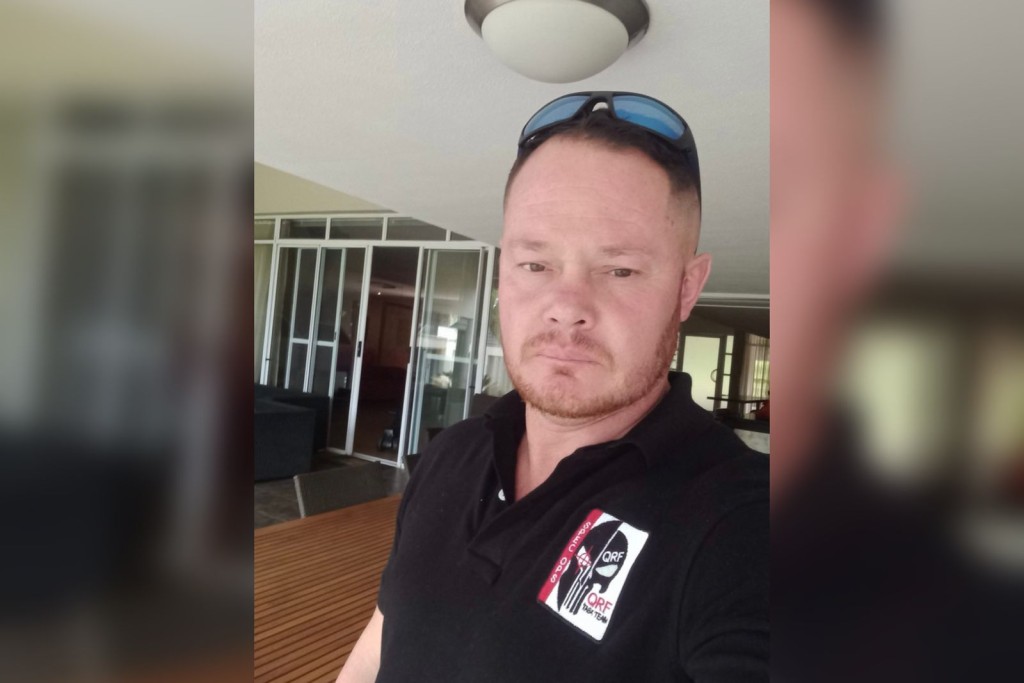
Another case is that of Marius (Vlam) van der Merwe, a Madlanga Commission witness who exposed irregularities among members of the Ekurhuleni Metro Police, SAPS, and private security last year. Shortly after his testimony, he was gunned down in front of his family.
The minister also referenced Martha Ngoye, Athol Williams and Mpho Mafole as examples of individuals who suffered for exposing corruption.
Many whistleblowers navigate complex legal processes without support, often after losing their livelihoods and assets, Kubayi said.
Key reforms
The bill introduces clear definitions of what constitutes a disclosure, detrimental action and occupational detriment.
A disclosure is information revealing improper conduct in the public or private sector. Detrimental action includes unfair discrimination, threats or violations of legal rights, intimidation or harassment causing personal harm, or loss of property or livelihood.
Confidentiality protections in clauses 19 to 23 prohibit disclosure of a whistleblower’s identity without consent, except where necessary for handling the disclosure. Breaching confidentiality provisions is a criminal offence.
The bill extends formal state protection to whistleblowers under the Witness Protection Act of 1998, including relocation, identity protection and security measures.
Legal Aid South Africa must provide legal assistance at state expense where a whistleblower cannot afford representation and substantial injustice would otherwise occur.
A complaints mechanism overseen by a retired judge designated by the President allows whistleblowers to lodge complaints where disclosures are not properly handled, where retaliation occurs, or where confidentiality is threatened.
Serious penalties apply for breaching the legislation, including suppressing or concealing evidence, unlawfully disclosing information or a whistleblower’s identity, and subjecting a whistleblower to occupational or other detriment. Offences attract fines and imprisonment of up to 10 or 15 years, depending on severity.
“Those who deliberately breach this legislation will face consequences and a maximum sentence of 15 years. This speaks to the seriousness of how we want to protect whistleblowers,” Kubayi said.
The bill places a legal burden on employers to prove that any action taken against a whistleblower is not linked to their disclosure.
Reporting channels and timelines
A disclosure is protected if made to an employer in the private or public sector, a legal practitioner, a member of cabinet, an executive council of a province, or a municipal council.
Protected disclosures can also be made to institutions including the Public Protector, the South African Human Rights Commission, the Commission for Gender Equality, the Commission for the Promotion and Protection of the Rights of Cultural, Religious and Linguistic Communities, the Public Service Commission and the Auditor-General.
The proposed law introduces strict timelines. Disclosures must be acknowledged within five days, decisions taken within 10 days, and investigations completed within 12 months.
A central database will track disclosures and ensure accountability, although no personal information of whistleblowers will be stored.
Financial support and incentives
In a significant shift, the bill opens the door for financial support and possible incentives for whistleblowers.
Kubayi confirmed that support mechanisms would be strengthened through expansion of the witness protection system, which currently does not cover whistleblowers.
“We don’t want to reinvent the wheel. We don’t want to change what is already there, but also link it up,” she said.
On incentives, Kubayi said government is cautious about adopting a direct cash reward model but is open to public proposals.
ALSO READ: Demands for swift action following SIU’s R2 billion Tembisa Hospital corruption exposé
She suggested partnerships with the private sector to protect whistleblowers during investigations. “If a whistleblower is dismissed from work while the investigation is happening, the banks do not repossess their cars, the banks do not repossess their houses,” she said.
While minimum financial support is being proposed, broader models including international practices will be considered during public consultation.
Extended protection
Kubayi clarified that the bill proposes extending witness protection to whistleblowers before they testify in formal proceedings, a significant shift from the current system.
ALSO READ: Madlanga witness gunned down in Brakpan identified as Marius van der Merwe
She stressed that the bill is not yet law and remains subject to public input and parliamentary approval.
Public comment invited
The bill has been released for public comment, with submissions open until 14 May 2026.
“We encourage all stakeholders, including civil society, business, labour and members of the public, to participate in this process and provide inputs that will strengthen this important piece of legislation,” Kubayi said.
The legislation is designed to balance protection with accountability, allowing for withdrawal of protection in cases where individuals act in bad faith or are complicit in wrongdoing.
When adopted, the bill is expected to play a key role in South Africa’s anti-corruption strategy by encouraging more individuals to come forward while ensuring their safety and support.
ALSO READ: Whistleblower in court, says she will not be silenced


You must be logged in to post a comment.