BETHLEHEM – Government has reaffirmed its commitment to ensuring that land reform goes beyond the transfer of land ownership to include sustainable and productive use that supports economic growth and rural livelihoods.
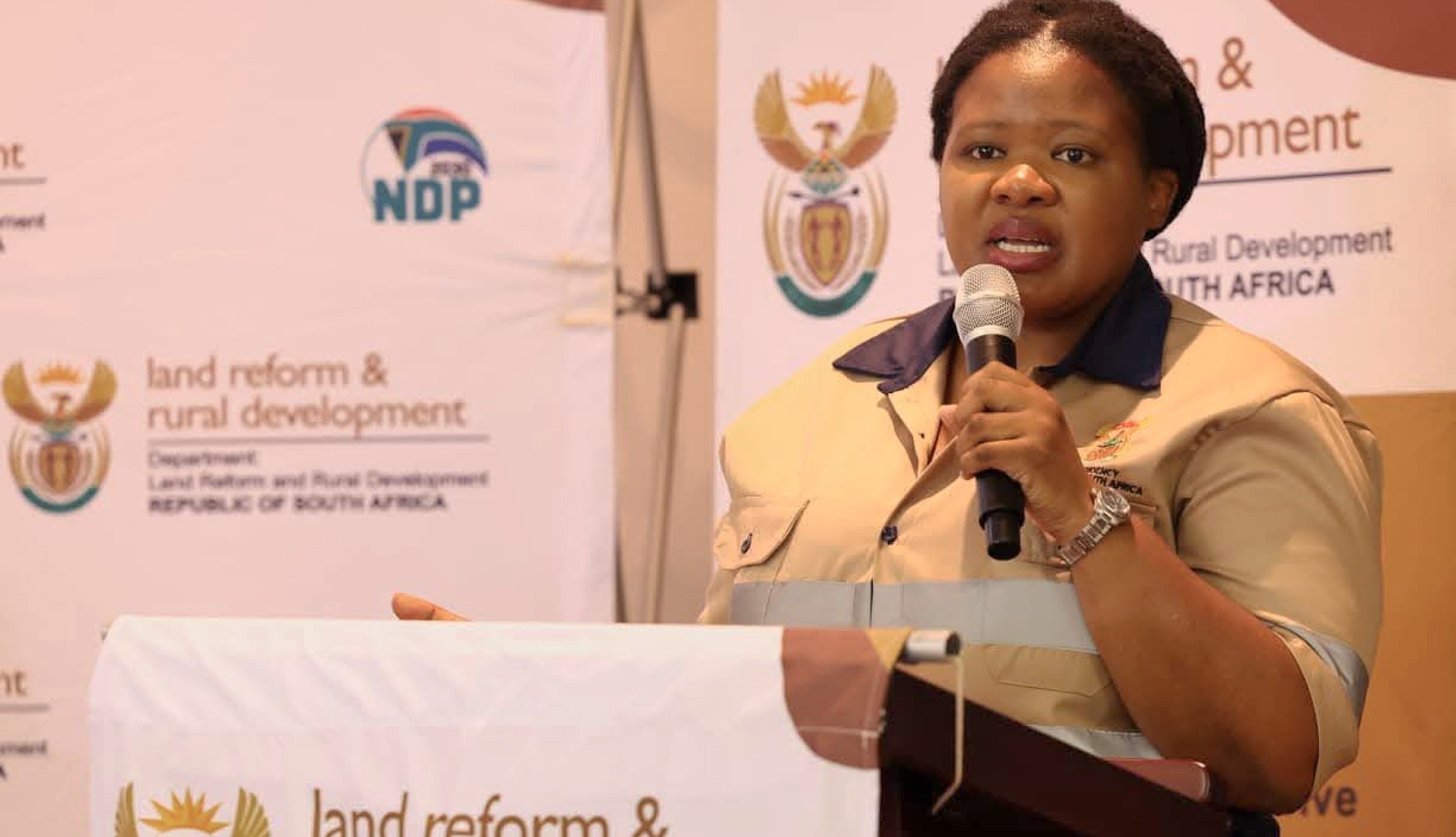
Deputy Minister in The Presidency, Nonceba Mhlauli, said land reform beneficiaries must be empowered to farm, build, invest, and create sustainable livelihoods for their families and communities. She emphasised that land should become a productive asset that contributes to economic growth, food security, and local development.
Mhlauli made these remarks during an engagement with land reform beneficiaries and stakeholders in Bethlehem on Monday 9 February which coincided with a title deeds handover ceremony. The event formed part of a broader government initiative aimed at accelerating land redistribution and strengthening tenure security.
Land reform and tenure security have come under renewed focus this week as senior government leaders engage with beneficiaries and communal property associations (CPAs) across the Free State. These engagements seek to assess progress, address ongoing challenges, and reinforce government’s commitment to restoring land rights and promoting sustainable rural development.
Mhlauli, together with Minister of Land Reform and Rural Development Mzwanele Nyhontso, is leading a series of meetings with land reform beneficiaries as part of efforts to ensure that redistributed land is used productively and sustainably.
According to The Presidency, the engagements form part of ongoing initiatives to strengthen tenure security, support land reform beneficiaries, and ensure inclusive land use. Land reform has been identified as a key pillar in improving rural livelihoods and addressing historical land dispossession.
Monday’s session included the handover of title deeds, marking a significant milestone for beneficiaries who have waited years to obtain formal ownership of their land.
On Tuesday, attention shifted to communal property associations, with an engagement held at Lavender Hill Country Estate in Bethlehem. The meeting provided CPAs with an opportunity to share their experiences, highlight challenges in managing communal land, and explore ways to strengthen governance and long-term sustainability.
The Presidency said the engagements underscore government’s determination to ensure that land reform beneficiaries and communal institutions receive adequate support. Mhlauli reiterated that these interactions reaffirm government’s commitment to meaningful land reform, improved rural livelihoods, and the empowerment and sustainability of land reform beneficiaries and communal institutions.
Government has maintained that continued collaboration and dialogue with stakeholders are essential to unlocking the full potential of land reform and advancing inclusive rural development across the country.
ALSO READ: Oversight visit exposes failed land reform investment in Free State