


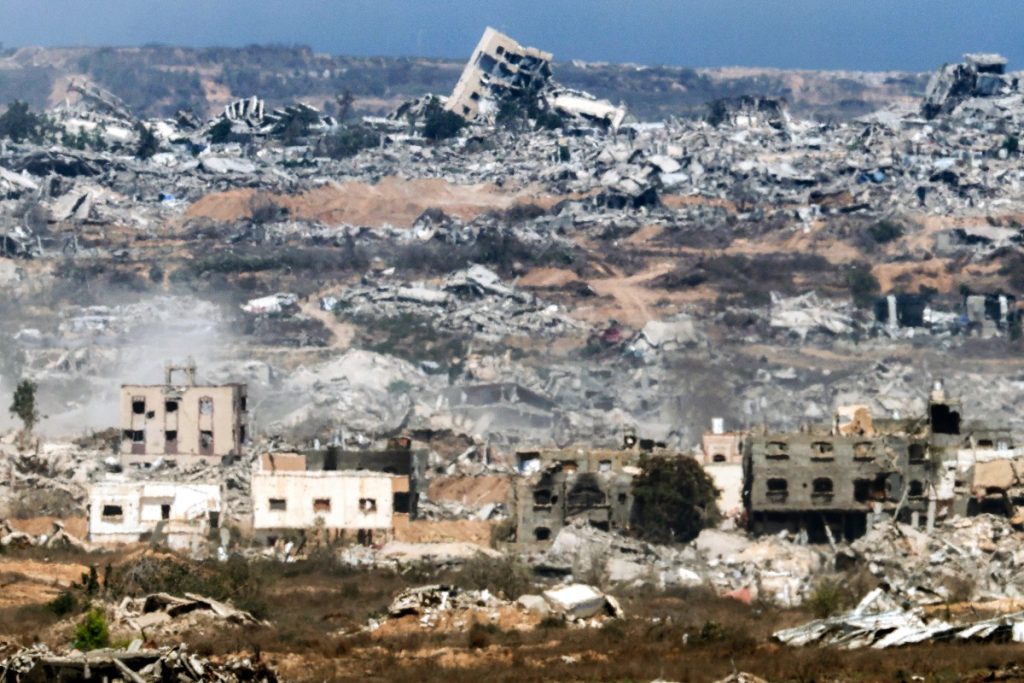
Gaza is slipping into famine, UN-backed experts warned yesterday, as the health ministry in the Hamas-run territory announced that the death toll in the nearly 22-month war has surpassed 60 000.
The health ministry figure excludes deaths from hunger in the Palestinian territory, which remains gripped by dire humanitarian conditions that were exacerbated by Israel’s total blockade of aid from March to May.
This week, Israel launched daily pauses in fighting and opened secure routes to enable UN and non-governmental agencies to distribute food throughout Gaza’s devastated streets. Hundreds of lorry loads of aid have begun to arrive.
However, Israeli strikes continued overnight, killing 30 people in the Nuseirat refugee camp, according to Gaza’s civil defence agency. Experts warn that a humanitarian catastrophe of historic proportions is imminent.
‘Worst-case scenario unfolding’
“The worst-case scenario of famine is now unfolding in the Gaza Strip,” said the Integrated Food Security Phase Classification Initiative (IPC), a coalition of monitors tasked by the UN to warn of impending crises.
The World Food Programme’s emergency director, Ross Smith, likened the situation to some of the worst famines of the past century.
“This is unlike anything we have seen in this century. It reminds us of previous disasters in Ethiopia or Biafra,” Smith said via video-link from Rome. “We need urgent action now.”
Israeli response to criticism
In a statement released ahead of the IPC report, Israeli Prime Minister Benjamin Netanyahu’s office accused Hamas of distorting casualty figures and accused the group of looting food aid destined for Palestinian civilians.
“Whilst the situation in Gaza is difficult and Israel has been working to ensure aid delivery, Hamas benefits from attempting to fuel the perception of a humanitarian crisis,” the statement said.
“We already allow significant amounts of humanitarian aid into Gaza every single day, including food, water and medicine. Unfortunately, Hamas has been stealing aid from the Gaza population, many times by shooting Palestinians.”
As late as Sunday, Netanyahu had been insisting there was “no starvation in Gaza”, but even his close international ally, US President Donald Trump, has now warned the situation appears to be “real starvation”.
Blockade and recent changes
Israel imposed a total blockade on Gaza on 2 March after ceasefire talks broke down. In late May, it began allowing a small trickle of aid to resume, amid warnings of a wave of starvation.
Then on Sunday, faced with a mounting international chorus of alarm, Israel began a series of “tactical pauses” which allowed aid trucks to cross two border crossings into Gaza, and Jordanian and Emirati planes to airdrop aid.
Shipments have increased, but for the IPC this effort will not prove sufficient unless aid agencies are granted “immediate, unimpeded” humanitarian access.
“Failure to act now will result in widespread death in much of the Strip,” it said, warning that 16 children under the age of five had died of hunger since 17 July.
“Mounting evidence shows that widespread starvation, malnutrition, and disease are driving a rise in hunger-related deaths,” it added.
Aid distribution details
According to Netanyahu’s office, the pause in military operations covers “key populated areas” between 10:00 and 20:00 every day. Designated aid convoy routes will be secure from 06:00 to 11:00.
COGAT, an Israeli defence ministry body in charge of civil affairs in the Palestinian territories, said more than 200 lorry loads of aid were distributed by the UN and aid agencies on Monday.
Another 260 trucks were permitted to cross into Gaza to deposit aid at collection points, four UN tankers brought in fuel and 20 pallets of aid were airdropped from Jordanian and Emirati planes, COGAT said.
Strikes continue
Overnight, however, strikes continued.
Gaza’s civil defence agency said yesterday that Israeli air strikes killed at least 30 Palestinians, including women and children, in the central Nuseirat district.
Civil defence spokesman Mahmud Bassal said the strikes were carried out overnight and into the morning and “targeted a number of citizens’ homes” in the Nuseirat refugee camp.
The local Al-Awda hospital said it had received “the bodies of 30 martyrs, including 14 women and 12 children”.



You must be logged in to post a comment.