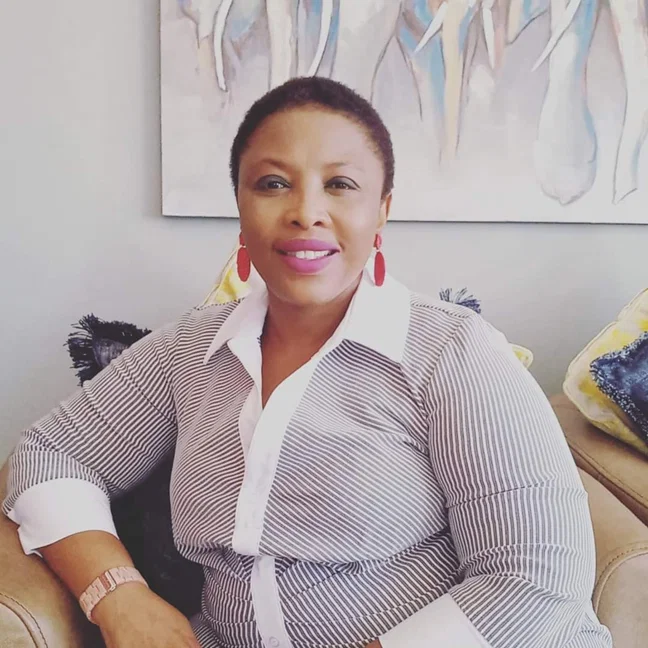

For years, Siphelele Sinawe Oniwe was told she didn’t belong. Despite speaking isiXhosa at home, the 24-year-old from Montevideo, near Montana in Cape Town, and now a Master’s student in African Language Studies, was labelled a “coconut” – a derogatory term used to describe black people perceived to hold “white” values and to be out of touch with their language or culture.
Grade 10
After formally learning the language only in Grade 10, the former Rhenish Girls’ High School pupil remembers how she struggled with reading and writing isiXhosa. Her marks were so poor that her teacher called her parents in for a meeting, encouraging them to speak the language at home to support her learning. “My teacher couldn’t understand why I couldn’t read or write the language, not considering that I had never formally studied isiXhosa at school. After that meeting, I didn’t want anything to do with isiXhosa, but my mom kept pushing and arranged tutors to support me,” said Oniwe.
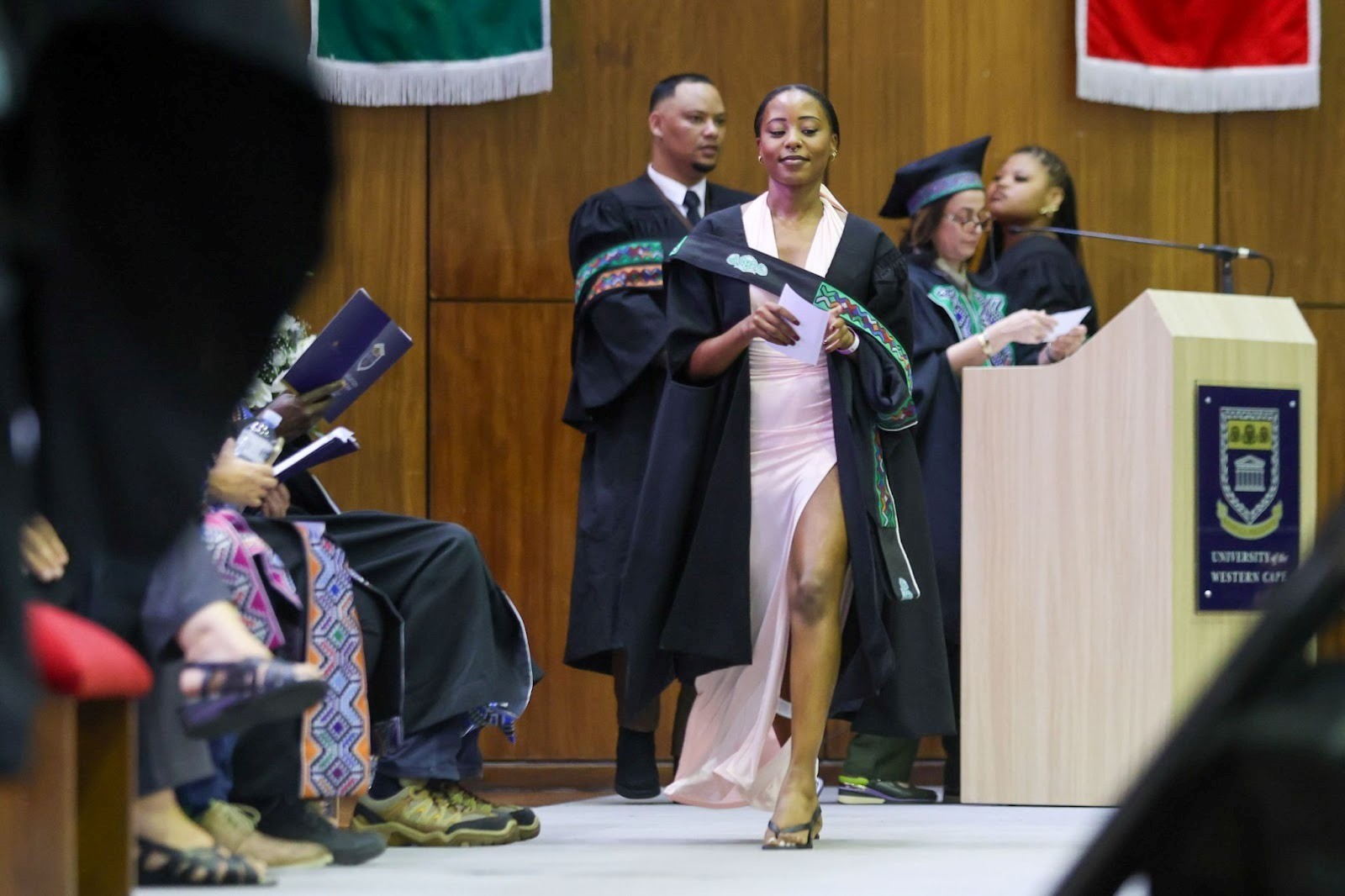
This month, Oniwe rewrote her story when she walked across the stage at UWC’s Jakes Gerwel Hall to receive her honours degree in isiXhosa, graduating with outstanding marks and earning a place on the Dean’s List for her academic achievement. After vowing to abandon the language beyond high school, she says her turning point came at university when her mother, Jennifer Oniwe, insisted she continue with isiXhosa at UWC.
Flexible, inclusive
She credits her renewed drive to the university’s flexible, inclusive teaching approach, which allowed students to engage with isiXhosa at their own proficiency level, including the option to write exams in English. “One of the first things our professor asked was what we were comfortable with,” she said. “That made all the difference.”
A particularly influential figure was her lecturer, Prof Russell Kaschula, from the Department of African Language Studies, who used innovative teaching methods, including a documentary showing white children learning isiXhosa, to highlight the complexities of language acquisition.
Freed from the rigid methods at school and exposed to a more adaptive approach, Oniwe thrived, even achieving 100% in some isiXhosa tests as an undergraduate student. “I started to enjoy it… I finally understood it,” she said.
Her academic journey has since inspired her Master’s research, which interrogates the widespread assumption that all isiXhosa speakers share the same level of proficiency. “There’s a big difference between speaking a language and being academically literate in it. We need to recognise that, especially in our education system.”
Her story highlights wider systemic challenges in many former Model C schools, where African languages are introduced too late, leaving learners at a disadvantage. Her mother, a former teacher, now works with the Western Cape Education Department’s Incremental Introduction of African Languages (IIAL) programme, mentoring teachers to better support these learners.
Mother tongue
For Jennifer, seeing her daughter excel in her mother tongue is a dream come true. “Although my children attended former Model C schools, we were intentional about preserving isiXhosa at home. Many families feel pressured to prioritise English to help their children gain confidence quickly, but that often comes at the cost of losing proficiency in their home language – something we were determined to avoid,” she said.
Looking ahead, Oniwe hopes to become an isiXhosa professor, using her own journey to inspire and support others. “I want to create the kind of environment that helped me succeed… where students aren’t judged, but guided.”
READ ALSO: UWC alumni takes their homegrown tech invention to the global stage