
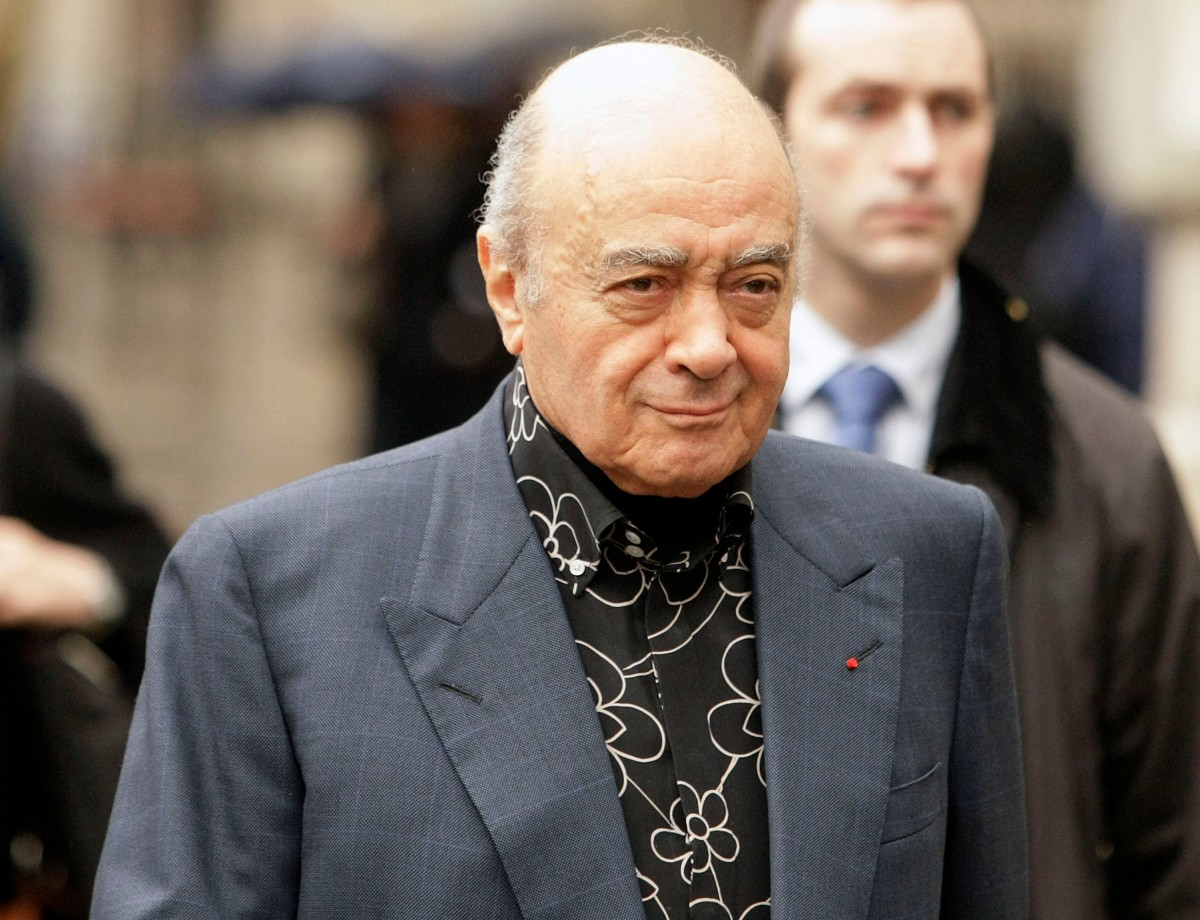
PARIS, France – French authorities are investigating the late Egyptian businessman Mohamed Al-Fayed, father of Dodi Al-Fayed who died with Princess Diana in a 1997 Paris car crash, and his brother Salah amid allegations of a vast system of sex trafficking and abuse on French soil.
Lawyers representing women who have come forward say the pattern of alleged abuse resembles that of US sexual predator Jeffrey Epstein, with victims describing an organised system spanning decades.
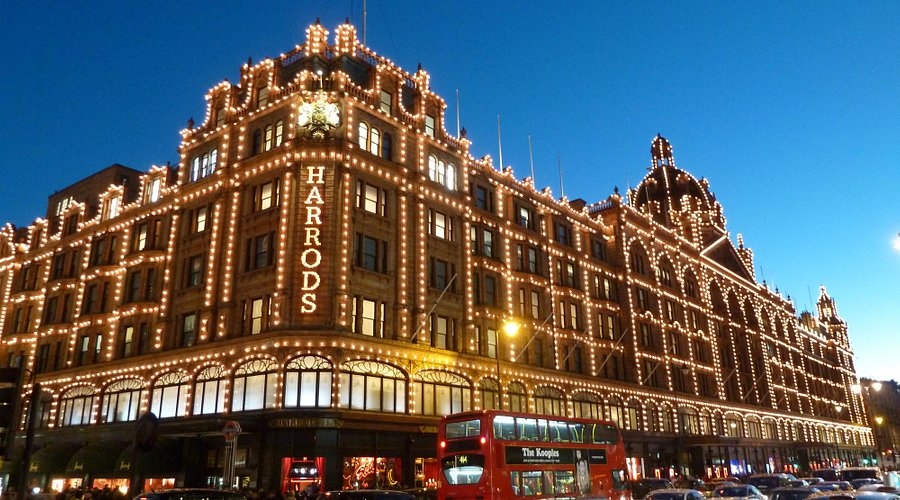
Mohamed Al-Fayed, who died in 2023 aged 94, owned Harrods department store in London, the Ritz hotel in Paris, and Premier League football club Fulham. His brother Salah died in 2010.
The investigation was launched last year after allegations first emerged in a BBC investigation in September 2024, in which several young women who worked at Harrods accused Mohamed Al-Fayed of rape and sexual assault.
British police told AFP that 154 victims have so far come forward regarding the former businessman.
Victims turn to French authorities
Frustrated by London Metropolitan Police’s investigation of alleged crimes spanning more than 35 years, some victims have turned to France seeking justice.
“In England they’re ignoring the trafficking. They just want to make it about Al-Fayed and Harrods,” said Rachael Louw, a former Al-Fayed employee speaking for the first time about her ordeal.
The French investigation is handled by a unit specialised in human trafficking, she told AFP. “It is a relief that our cases are actually being recognised as trafficking.”
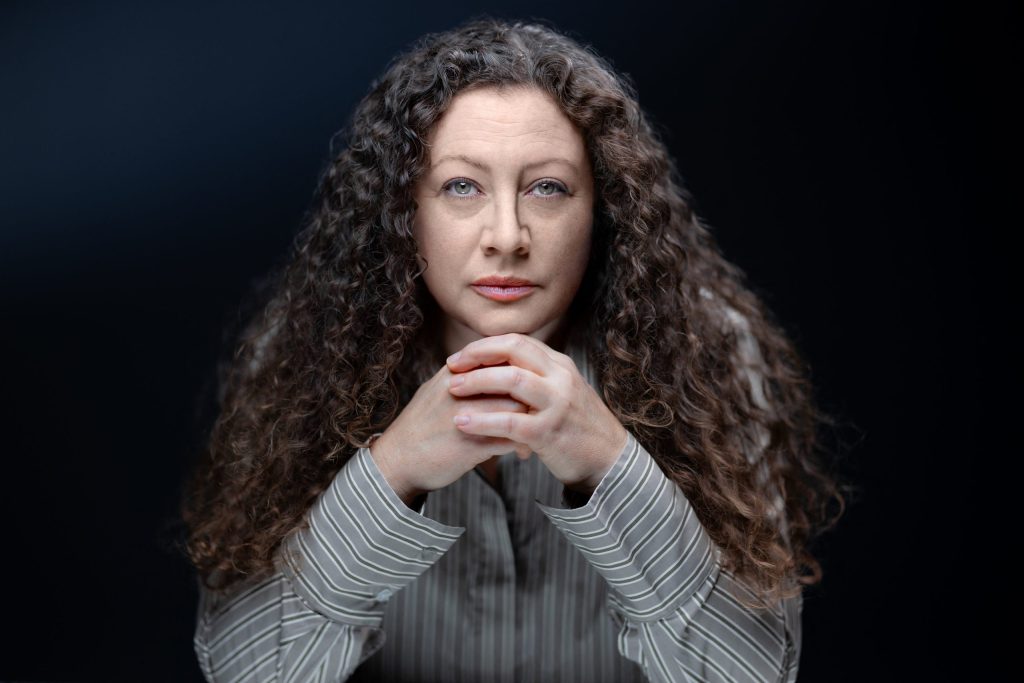
Louw (54) was 23 when her bosses sent her to Salah Fayed’s yacht on the French Riviera. After 31 years, she testified to French investigators on 10 February about what happened there.
She told AFP she was first spotted by Mohamed Al-Fayed in 1993 while working as a sales assistant at Harrods. Shortly after, she was placed on a management training scheme requiring her to submit to a medical examination by a Harley Street doctor before being employed by the chairman’s office in summer 1994.
Invasive medical examinations
The medical appointment went far beyond a standard check-up, with a pelvic examination, thorough breast examination, smear and HIV tests. The results were not kept confidential.
The report, seen by AFP, was handed to Harrods and described Louw’s personal life: her parents’ separation when she was young, her father living in the United States and the deaths of her mother and grandmother. The doctor noted that she took a birth control pill, had a boyfriend and was in excellent health.
The doctor “sent confidential information to arm the rapist”, said French lawyer Eva Joly, who is representing Louw and another former Al-Fayed assistant.
“These young women were like meat, and they wanted to know if they were fit to consume,” said Caroline Joly, another member of the legal team.
Drugged and isolated
Several encounters were arranged between Louw and Salah Fayed at his home in London’s Park Lane, where Louw said she was drugged with a crack cocaine mix.
Louw was then offered a job as an assistant to Salah in France and sent there by private jet. She said she refused further drugs, “and because he didn’t push anymore, I thought it was okay”.
“I had no reason not to trust this man. This was my first job from university.”
Staff confiscated her passport as she flew from London’s Luton airport to his yacht. Once she arrived, nothing resembled the job she signed up for.
“I thought I was supposed to be filing paperwork, making arrangements, organising office work,” she said. Instead “there was no office, no normal working hours, no time off. I was expected to just be with him.”
Louw recalled appearing alongside Salah Fayed at dinners attended by elderly, wealthy men with young girls and lots of touching. When she managed to call her boyfriend, who worked at Harrods, he was fired.
One night, Louw woke to find Salah in her bed, claiming he was lonely. “I went ramrod straight and the rest of the night I was awake just lying there petrified,” she said, fearing any movement would be an invitation for him to touch her.
Escape from the yacht
What prompted her to escape was the prospect of being trapped alone with Salah after he bought a speedboat with only one bedroom, telling her he would take her to sail around the Italian coast.
“I knew that if I went on that boat nothing good would happen,” she said.
Panicked, she booked the first Air France flight out and worked up the courage to ask for her passport back, which she received although it was clear Salah was very angry.
Home again, “I had blocked out” the details of what happened, she said. “I didn’t want to remember.”
For decades she feared she was bound by a confidentiality agreement she had signed at her interview, but seeing other victims speak out against Al-Fayed in 2024, she reconsidered.
“How can I be silent? There has to be a cost to what the perpetrators did. Because if they go unpunished, it emboldens the next man.
“If we women do not speak up we become complicit in our own oppression… powerful men will never change a system that benefits them.”
Pattern of assault at the Ritz
Kristina Svensson, a former personal assistant to Mohamed Al-Fayed, told French police: “Every time I met Mohamed Al-Fayed, he tried to assault me.”
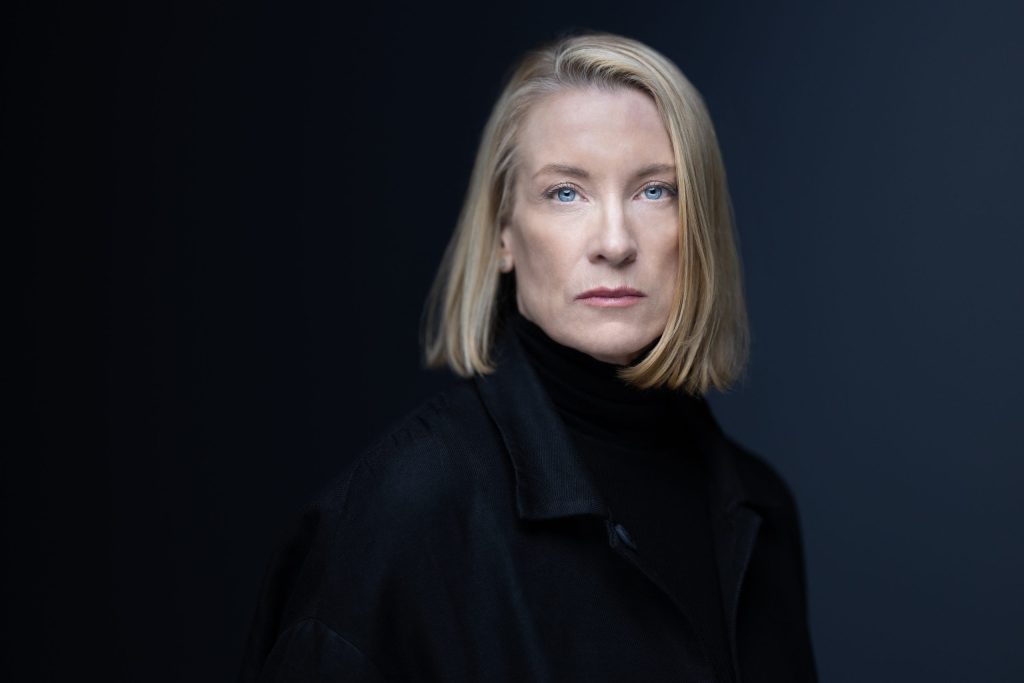
The Swedish woman arrived in France in 1993 and was placed by a temp agency at the Ritz in 1998, then owned by Mohamed Al-Fayed, as his assistant. Svensson (56) was 30 at the time.
She was to help him manage his affairs after the death of his son Dodi with Princess Diana in a Paris car crash, perceived as a prestigious assignment.
During her interview with Ritz management, the questions posed were focused on her appearance and personal background, she said, even pointing out that she was the spitting image of Al-Fayed’s wife.
The Ritz sent her to Harrods in London for an interview with Al-Fayed himself, and organised accommodation for her at a luxury residence he owned.
“I had brought my CV. He wasn’t interested in that. He only asked me personal questions.”
What followed was a regular pattern of meetings with Al-Fayed. Svensson said she was left in a room alone for hours with no instruction, until he eventually arrived and she would endure sexual assault and attempted rape during which “he’d laugh”.
“I hoped that in time he would see that I wasn’t interested in him and that he would take me seriously,” Svensson told police.
“I was a foreigner, with no family or network in the country, no knowledge of French labour law, and no one to lean on financially if I quit.”
In retrospect, Svensson compares herself to a closely watched luxury product which Al-Fayed wanted to possess, a doll on a shelf.
At the Ritz, she recalls that staff warned her that there were microphones and cameras in every corner. At a villa in Saint Tropez, she said a housekeeper suggested that she block her bedroom door at night.
Investigation seeks enablers
Despite the deaths of the brothers, the women hope investigators can still track down who enabled the trafficking network.
“There is no such thing as a small piece of information. Every element is useful for the investigation,” Svensson said, calling on victims and witnesses to speak to police.
The Ritz Paris told AFP in a statement that it was deeply saddened by the testimonies and allegations of abuse and that it is ready to fully cooperate with judicial authorities.
“Our teams do not tolerate any form of inappropriate behaviour, which would be a serious breach of our code of conduct. We want to express our deepest respect to the women who spoke out,” it added.
Harrods said it continues to support the bravery of all women coming forward. “Their claims point to the breadth of abuse by Mohamed Fayed and again raise serious allegations against his brother, Salah Fayed. The picture that has emerged suggests that this pattern of abusive behaviour took place wherever they operated.”
The store said more than 180 survivors had already received counselling support through its independent advocate. Harrods also urged survivors to claim compensation through the Harrods Redress Scheme.
London’s Metropolitan Police said its investigation into those who could have facilitated or enabled Mohamed Al-Fayed’s offending continues and urged victims to come forward.
“The way the Met works has moved on immeasurably, and our teams have transformed the way we investigate rape and sexual offences.”
Comparison to Epstein case
Lawyers for the women say their testimony helps sketch the outlines of a powerful system of trafficking which resembles the one established during the same period by Epstein.
“As with Epstein, with the Al-Fayeds there is a frenzied consumption of young women and an organised system to procure them,” said lawyer Eva Joly, a former judge and European parliament member.
“The pattern is the same: selecting vulnerable young women, transport, accommodation, isolation and money, which is used to intimidate or corrupt.”
As with the Epstein case, while the statute of limitations may have expired, an investigation into the Al-Fayeds can still establish the facts and identify any victims whose cases could still be prosecuted.
“We are only at the beginning of piecing the puzzle together in France,” Joly said.
ALSO READ: Hillary and Bill Clinton face congressional panel on Epstein links



You must be logged in to post a comment.