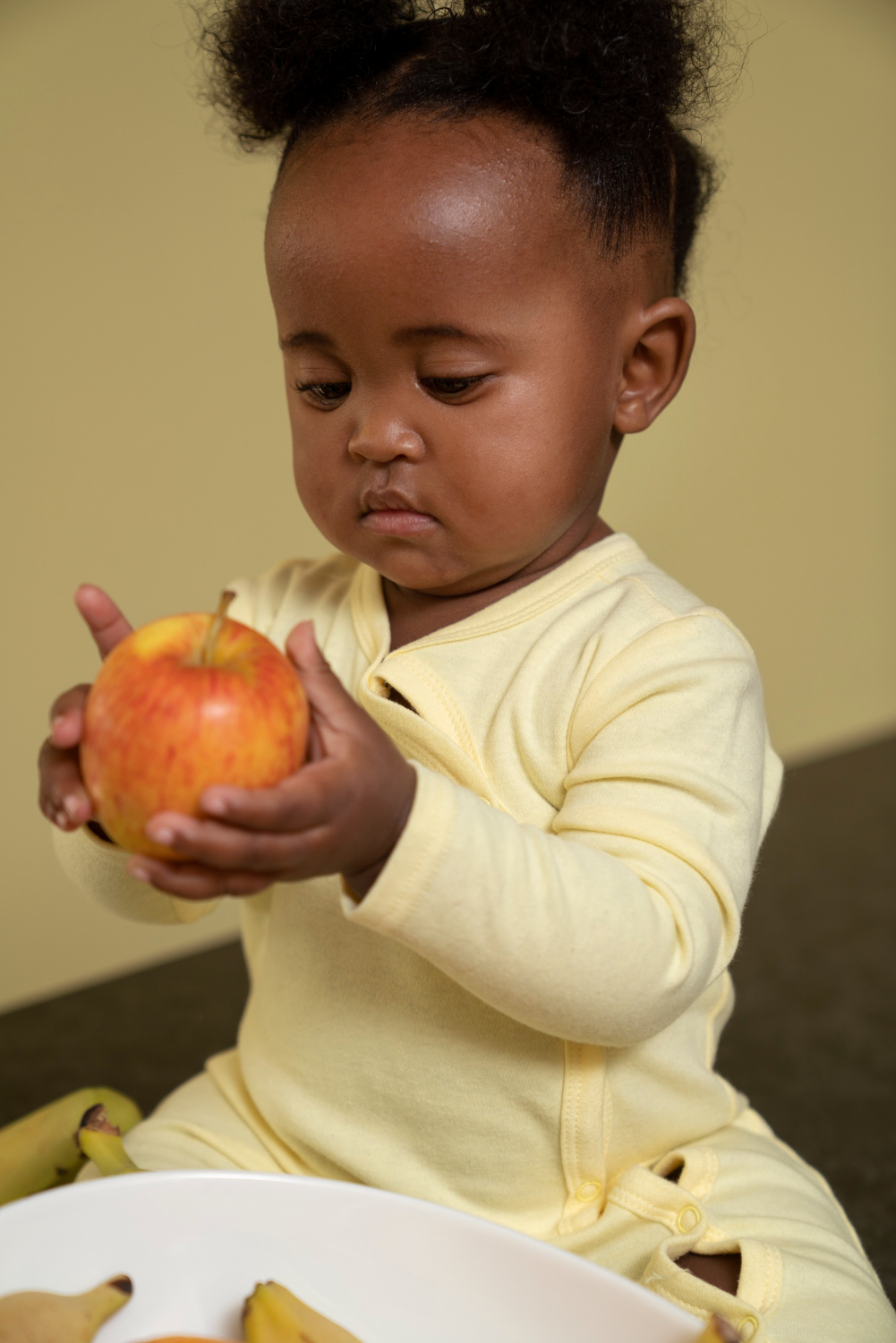
A mother crosses the street, with one or two tiny, fragile children in tow – a familiar sight. Those children may be much older than passers by realise as the percentage of children affected by stunting in South Africa is high.
Statistics show that more than a quarter of South African children younger than five years are stunted due to a lack of nutrition.
A recent UNICEF report on South Africa (UNICEF South Africa Country Program 2026 – 2030) states that child food poverty is the most significant driver of stunting and wasting, and affects a shocking 60% of children under the age of 5 years. Of those children, 23% is severely affected.
It is these statistics that pres. Cyril Ramaphosa addressed in his State of the Nation address this week.
“A stronger South Africa is built on strong communities, and strong communities look after their children.
More than a quarter of children under five years are stunted, increasing their risk of disease and affecting their ability to learn and grow. This is devastating for children and their families and has an impact on our society as a whole,” he said during his address.
An end to childhood stunting by 2030
“This year, we will embark on a mission to end child stunting by 2030 and tackle malnutrition among young children, in line with the National Strategy to Accelerate Action for Children. We will focus on the crucial first 1 000 days of a child’s life.”
According to the president they will build on existing support such as the Child Support Grant. Additional targeted interventions will be implemented to ensure that pregnant women and low-birth children get the protein and nutrients they need. He said that the Medium-Term Budget Policy Statement will set out a clearer allocation of these actions.
According to president Ramaphosa a major contribution to this crisis is excessive alcohol consumption, which affects a child’s development during pregnancy. Alcohol abuse often leads to violence, road accidents and crime.
Efforts to address this problem in the Western Cape is ongoing. According to Mireille Wenger, Provincial Minister of Health and Wellness and Alan Winde, Premier of the Western Cape, they welcome the national recognition of the urgent need to end child stunting.
“During the State of the Nation Address, the President highlighted the devastating impact of stunting on young children and reaffirmed government’s commitment to tackling malnutrition in the crucial first 1 000 days of life. Stunting not only increases a child’s risk of illness but also affects cognitive development, educational attainment and future earning potential, entrenching cycles of poverty that can last a lifetime,” they said in a statement.
The said that the Western Cape Department of Health and Wellness, in partnership with the DG Murray Trust and Shoprite, launched Khulisa Care in 2025.
900 women enrolled in programme
This pilot programme supports underweight pregnant women, mothers at risk of delivering low-birth-weight babies, and infants already born underweight through a combination of nutritious food vouchers and sustained care provided by trained community health workers. The initiative is currently being implemented in Breede Valley, Khayelitsha and Mitchells Plain. There are almost 900 women enrolled, with early collaboration across government, civil society and the private sector already yielding valuable insights.
“Ending child stunting in South Africa will require evidence, partnership and urgency. Through Khulisa Care, we are testing a model that combines nutrition and care in the earliest stages of life, and we are already learning important lessons from our communities and healthcare teams. We welcome national support for interventions that work in practice and the opportunity to explore how models like this can be strengthened and scaled so that every child in South Africa has the chance to grow, learn and thrive,” said Wenger.
The Khulisa Care programme aims to break the cycle of malnutrition by targeting three critical groups namely underweight pregnant women, women at risk of delivering low birth weight babies (less than 2.5 kg), and mothers who have already given birth to babies born with a low birth weight.
Monthly food vouchers for nutritious, protein-rich foods with comprehensive primary healthcare support will be rolled out in three areas of the province. Two areas are urban and one rural.
Babies born with a low birth weight has a three times higher risk of stunting at six to 24 months old. These children face a much higher risk of death within the first month of life and are more likely to experience developmental delays.
The province makes use of the provincial Stunting Baseline Survey which gives them a much clearer understanding of the challenges. One of the key findings was that children who are stunted in the first two years of their life are more likely to score lower on cognitive tests. They tend to complete fewer years of schooling and earn up to 22% less in adulthood.
The pilot programme began rolling out in Worcester in July 2025, with Khayelitsha and Mitchells Plain following. Participating women will receive support from their first antenatal visit until their child turns six months old.