
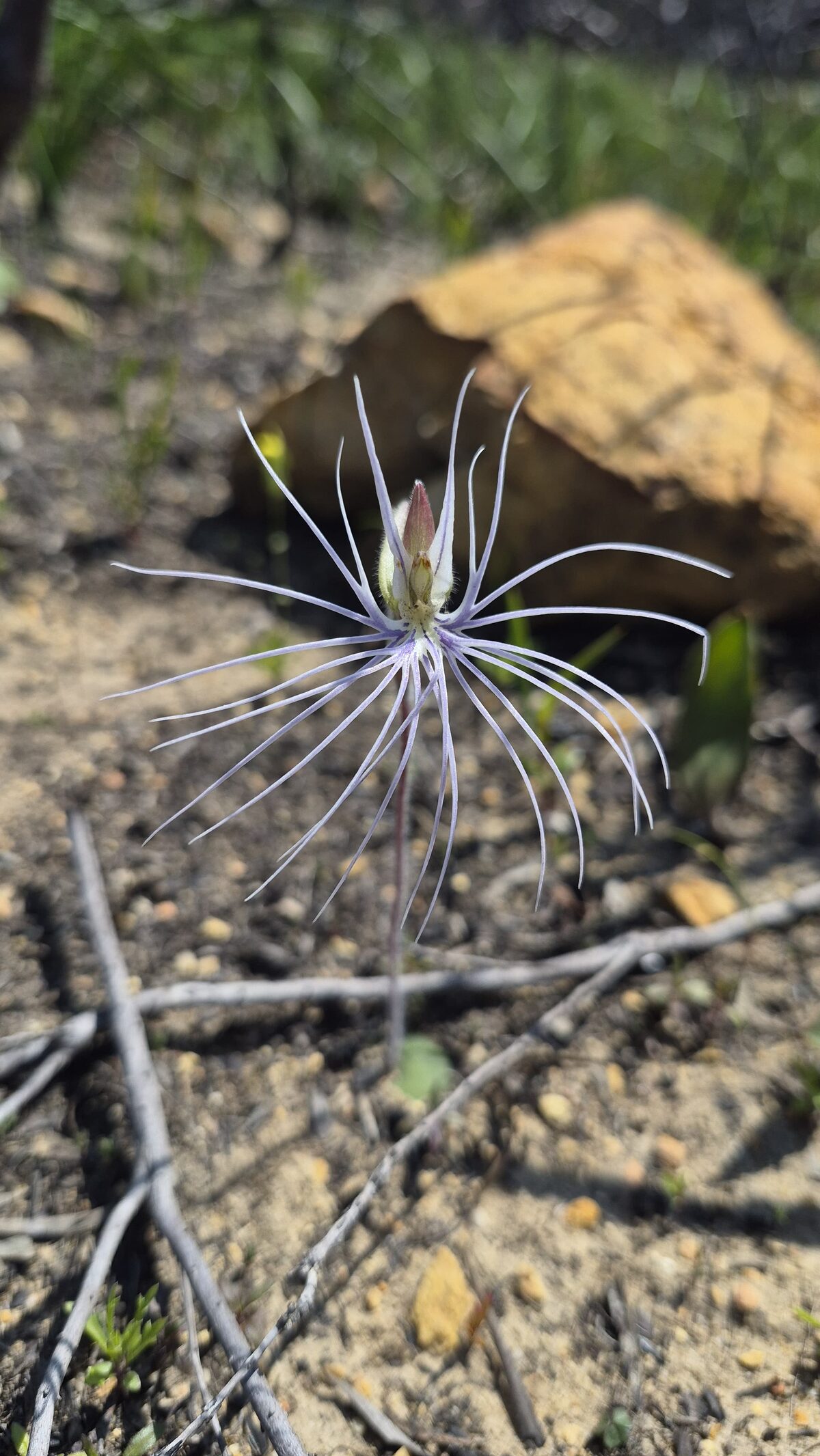
A tiny, spider-like orchid seldom seen in the Overberg has been discovered at Grootbos. The discovery of Holothrix burmanniana has offered a glimpse into the remarkable floral diversity emerging from the reserve’s post-fire landscape.
The sighting comes during what the Grootbos Foundation describes as a unique window of opportunity. It is the first spring following a fire, when rare and specialised fynbos species can emerge from the recovering landscape.
Sean Privett and Rebecca Dames of the Grootbos Foundation said that the orchid is particularly difficult to spot because of its small size and delicate growth form. Its unusual spider-like flower and distinctive relationship with fire make it stand out among the reserve’s orchids.
“Many fynbos species, especially bulbs, are induced to flower following fire,” the foundation said in correspondence with Hermanus Times.
Also read:
Fire removes the dense vegetation canopy, allowing light to reach the ground while nutrients are returned to the soil through ash. Small plants can then rapidly grow, flower and produce seed before disappearing into dormancy.
Significance of discovery
The spider orchid is among the species that can take advantage of this brief post-fire opportunity.
Formerly known as Bartholina burmanniana, the Holothrix burmanniana is a rare, dwarf terrestrial orchid native to the Western Cape of South Africa.
In Afrikaans, this spider orchid is known as the Spinnekopblom and it grows in heavy clay or sandy soils, often in Renosterveld vegetation and stony hill slopes.
Grootbos says it may flower for only one or a few years after a fire before becoming dormant until the next one.
But the orchid is only part of a much bigger botanical story unfolding at the reserve.
Bigger botanical life and story
A total of 20 species previously unknown on Grootbos have been recorded since fires swept through the reserve at the beginning of the year. This has brought its total number of recorded floral species to 1 045.
The discoveries are particularly significant given that Grootbos has been documenting its plant species for nearly three decades.
“That is quite remarkable,” the foundation said, adding that the findings demonstrate the unique role fire plays in fynbos ecosystems.
Its latest discovery was made while the Grootbos team was photographing a population of Moraea lurida. During their work, they unexpectedly encountered the spider orchid.
There is always excitement when a new species is found, particularly when it is as unusual and seldom seen in the Overberg as the H. burmanniana.
Additionally, the reserve’s long-term vegetation studies have also resulted in seven species being discovered that are new to science. This has highlighted the extent of what remains to be understood about the region’s plant life.
Keeping records beyond counting species
For Grootbos, maintaining detailed records is about more than keeping a species count.
Accoring to the foundation, documenting the reserve’s flora reveals its ecological value and strengthens the case for protecting the landscape into the future.
“The more we look, the more we find,” they said. “The richness of these landscapes is virtually unparalleled anywhere on earth.”
For now, the first spring after fire provides researchers with a rare opportunity to look beneath the recovering fynbos canopy and discover what has been waiting there.