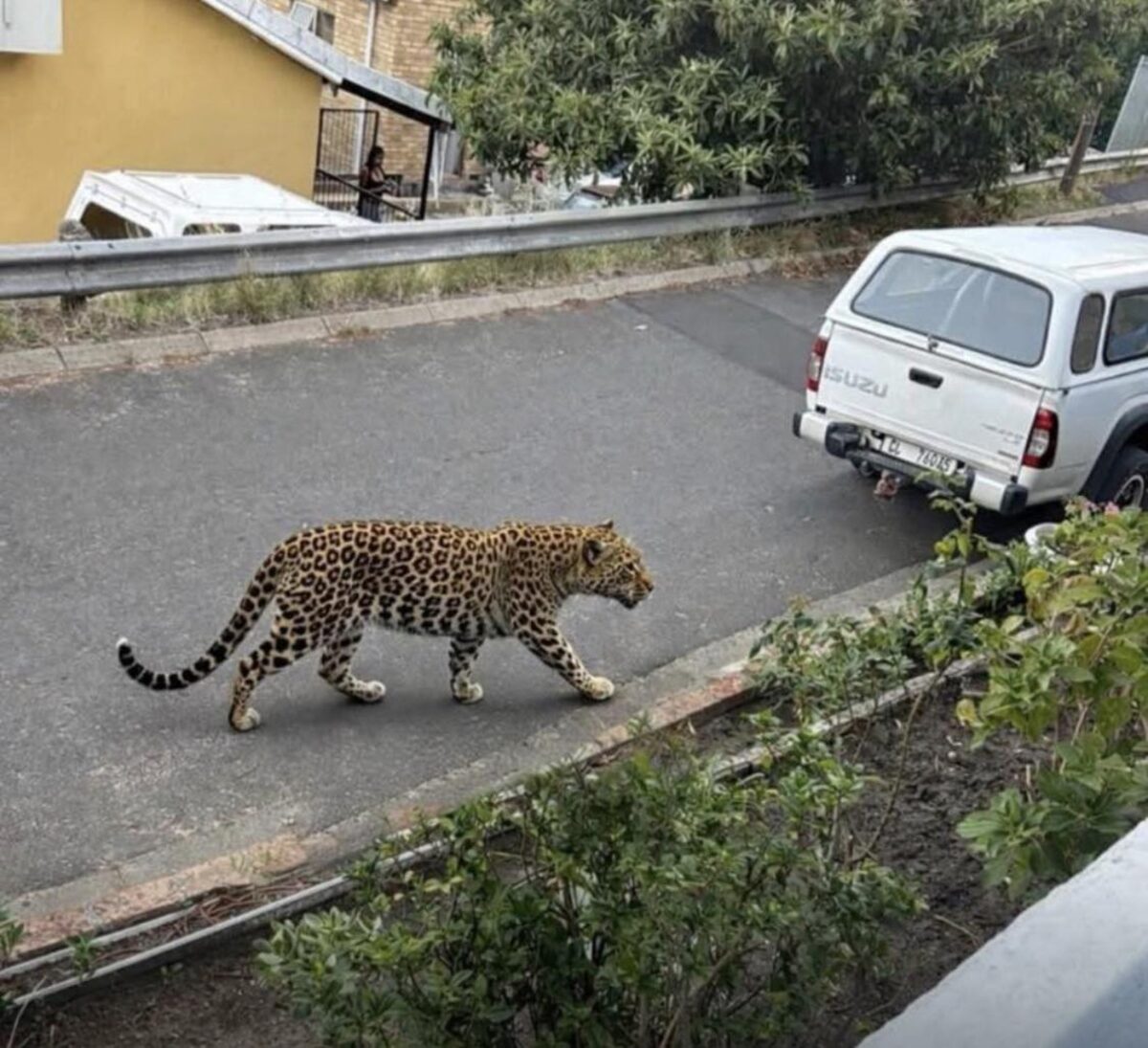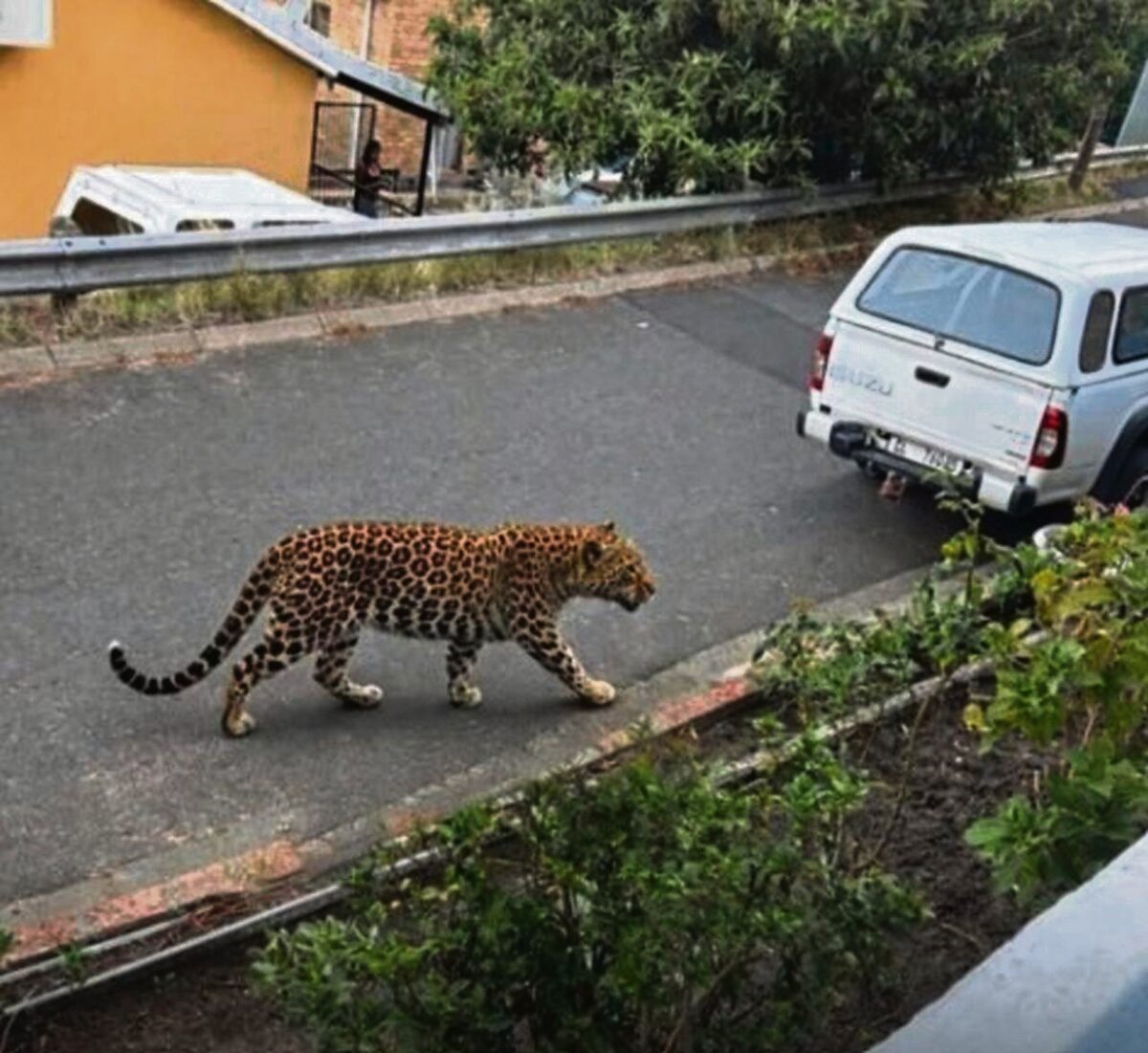
STELLENBOSCH – Two images of a leopard reportedly walking through the streets of Pniel that went viral on social media have been confirmed as being generated by artificial intelligence (AI), raising concerns about misinformation and its impact on wildlife conservation.
The images circulated widely last week, prompting residents in the Winelands to warn one another to stay alert and keep doors closed amid fears that a leopard had entered the town.
However, the Cape Leopard Trust (CLT) has confirmed that the photographs are not real
Images not real
Jeannie Hayward, communications and media manager of the CLT, said the organisation used several methods to determine that the images were artificially generated.
“We used a combination of methods ranging from very careful and critical visual inspection based on what we know about leopard ecology in the region, plus reverse image searching and AI detection tools,” Hayward said.
She explained that the images were likely created after a genuine video clip surfaced online showing a leopard walking along a mountain path on the slopes of Simonsberg.
“The creation of these images was likely prompted by a circulating video clip of a leopard on a mountain path taken by a camera trap on the slopes of Simonsberg very recently,” Hayward said.
According to the CLT, the video itself is authentic and shows a healthy leopard patrolling its territory in the Boland mountains.
Negative impact on conservation
Hayward said the spread of AI-generated wildlife imagery is deeply troubling for conservationists.
“It is very concerning, frustrating, infuriating, and sad. Real raw nature is already so unbelievably diverse and mind-blowingly amazing, there really is no need to create an additional layer of fanciful fake content to confuse matters,” she said.
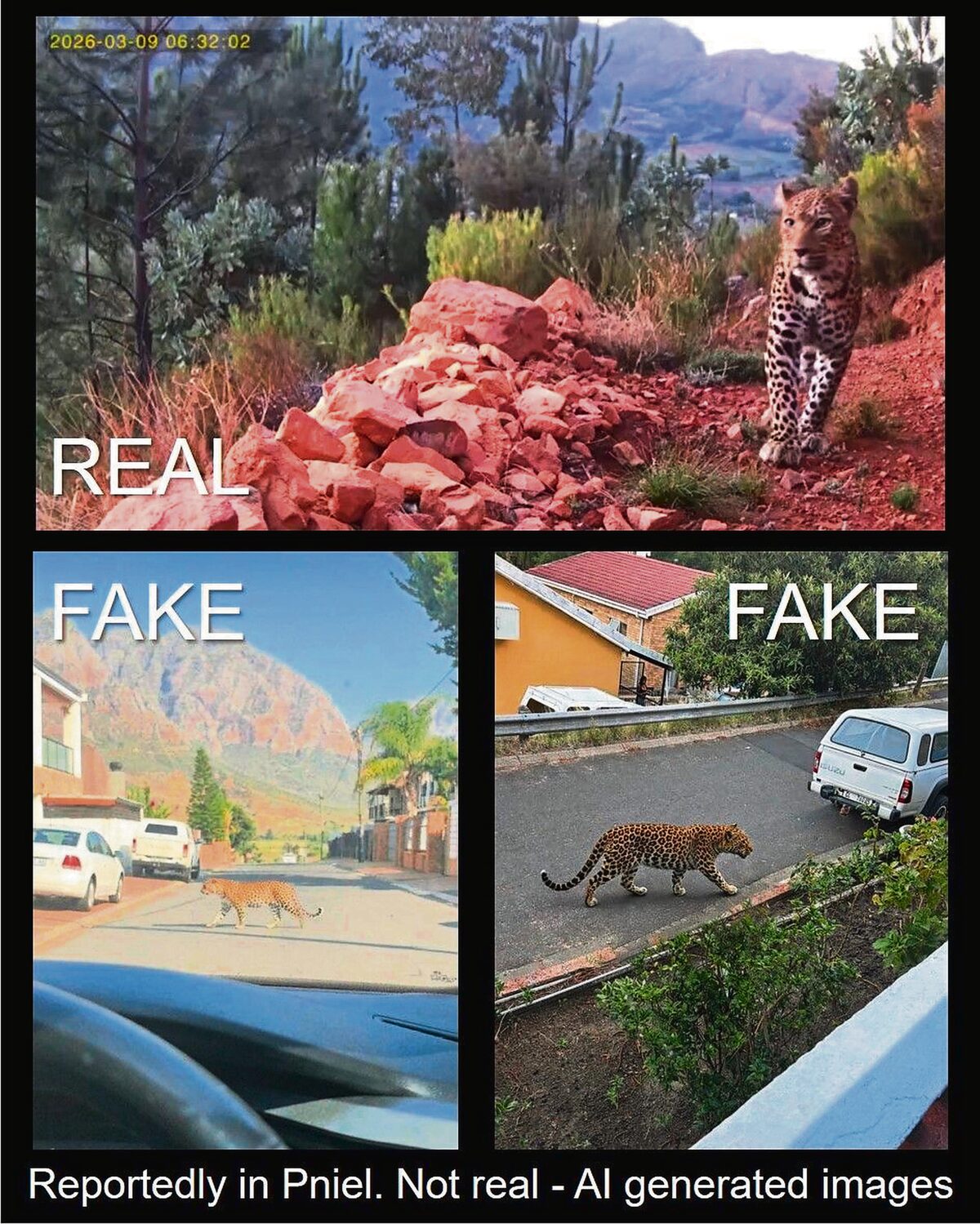
While some AI-generated content is easy to identify, Hayward warned that it is becoming increasingly difficult to distinguish between genuine and fabricated images.
“These AI images are sensationalist and go viral for all the wrong reasons. Unfortunately, this will start happening more and more as AI models become ever more accessible and most people don’t realise the impact and consequences of distributing these images.”
She added that misinformation about leopard behaviour can have serious consequences for conservation.
Hayward said false images showing large leopards casually walking on tarred roads during the day could create the impression that the animals are bold and comfortable around people.
But that is very far from the truth, she said.
Leopards in the Western Cape mountains are highly elusive and generally avoid humans.
Images suggesting they roam freely through built-up areas can spark unnecessary panic among residents while also creating the impression that the animals are common.
In reality they occur at low numbers in the Cape, Hayward said, warning that such misconceptions could undermine conservation efforts and funding aimed at protecting the species.
Although leopards have been photographed by camera traps in the Simonsberg region for years, sightings by people remain rare.
Hayward said the animals occasionally move between mountain areas, including across the Banhoek Valley, but they typically travel at night and avoid towns.
“It is extremely unlikely that a leopard in this region will simply strut so nonchalantly in front of cars approaching and through a built-up suburban area in the day,” she said.
She urged members of the public to verify wildlife images before sharing them online.
“Use reverse image searches and AI detection tools to check whether an image is real or fake – most of these tools are freely available,” Hayward said.
READ: Vals KI-luiperd saai paniek in Pniel
However, she cautioned that such tools are not perfect and encouraged people to apply critical thinking and consult wildlife experts if they are unsure about the authenticity of an image.
“If you are unsure, contact an organisation who specialises in that particular animal or behaviour for guidance,” she said.
Decline in numbers
Research conducted by the Cape Leopard Trust shows that leopard populations in the greater Cape region occur at much lower densities than in savannah and bushveld areas.
Illegal hunting using snares and packs of dogs, along with habitat loss and fragmentation caused by agricultural and urban development, remain among the biggest threats to the species.
READ: KYK | Luiperd op Wemmershoek se damwal gewaar
Hayward said misinformation that fuels fear or misunderstanding about leopards ultimately places additional pressure on already vulnerable populations.